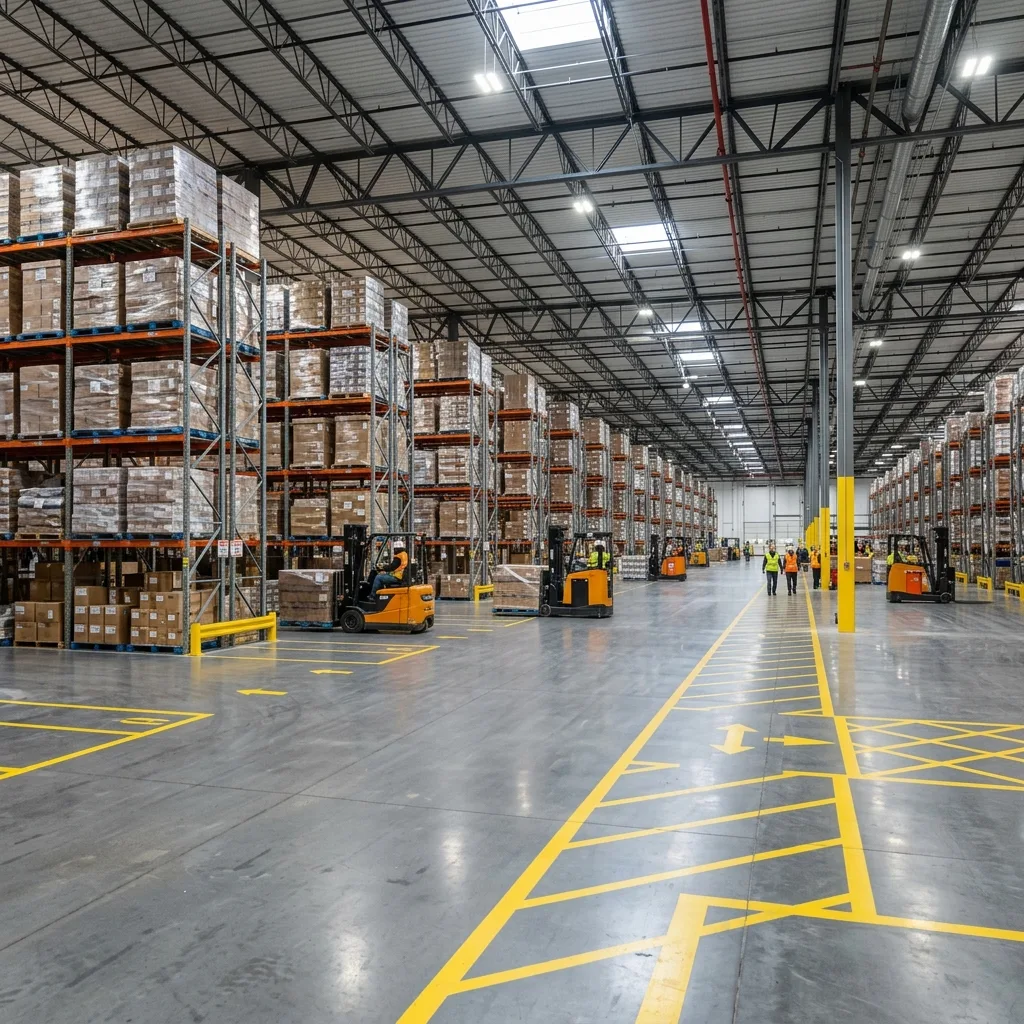
Cold Storage & Freezer Epoxy Flooring in Ottawa & the National Capital Region - Cryogenic & Cold Room Floor Systems
Serving federal-standard food processors, pharmaceutical cold-chain operators, and distribution facilities across the NCR, Ottawa Epoxy Flooring installs polyurea, polyaspartic, and cementitious urethane systems in walk-in cold rooms, blast freezer floors, refrigerated warehouse slabs, food processing cold storage, and pharmaceutical cold chain space throughout Ottawa, ON. Every cold-environment installation follows the same discipline: CSP 3 surface preparation, ASTM F2170 moisture verification before the slab returns to refrigerated service, and coating chemistry validated for continuous operation at -40 C with rapid cycling between ambient and cryogenic temperatures.
Cold storage floors stack multiple failure modes on top of each other in a way that standard epoxy simply cannot address. Continuous service between -20 C and -40 C makes 100% solid epoxy brittle. It loses the elasticity it needs to move with the concrete, and thermal contraction plus freeze-thaw cycling at existing slab cracks propagate delamination inside 6 to 18 months. Blast freezers add a rapid-cycling dimension: a -35 C chamber accepting product loaded at ambient temperature induces thermal shock that cracks standard coatings by interlaminar fracture. Only polyurea with 300 to 400% elongation at -30 C is rated to combine continuous below-freezing service with that thermal shock exposure. On top of the mechanical requirement, CFIA Recommended Code of Practice (RCP) 2019 requires seamless, non-porous, thermally stable floor surfaces in federally inspected food establishment freezers. Broadcast flake with open voids and troweled mortar with unfilled joints do not comply.
Cold storage projects typically run 1,000 to 20,000 sq ft and are phased in sections so refrigerated operations stay online throughout the install. Installed pricing runs $8 to $15 per sq ft based on temperature rating, thermal shock specification, and drainage detailing. Every project ships with installation records and product technical data sheets.
Coverage runs across the NCR from central Ottawa through Kanata, Nepean, Orleans, Barrhaven, Stittsville, Manotick, Rockcliffe, Vanier, and out into Gatineau, Kemptville, Arnprior, Rockland, and Carp.
Cold Storage and Freezer Epoxy Flooring in Ottawa
Walk-in cold rooms, blast freezers, refrigerated warehouses, and food processing cold storage across Ottawa and the National Capital Region get polyurea and cementitious urethane floor systems from Ottawa Epoxy Flooring. Our polyurea coatings maintain 300 to 400% elongation at -30 C, which is the only chemistry rated for continuous cryogenic service combined with the thermal shock cycling that causes standard epoxy to delaminate inside 6 to 18 months.
What Is Cold Storage Epoxy Flooring?
Cold storage and freezer flooring is a category of thermally stable, elastomeric coating systems engineered for continuous service between -10 C and -40 C. Standard epoxy becomes brittle below freezing and cannot handle thermal shock or freeze-thaw cycling. Polyurea systems with sub-zero elongation ratings are the industry-standard specification for blast freezer and cold chain facility flooring.
What Does a Freezer Floor System Include?
- CSP 3 diamond-ground surface preparation performed during warm-up
- ASTM F2170 moisture verification on the warmed slab
- Polyurea or polyaspartic base coat rated for thermal shock
- Non-skid aggregate for forklift traction at sub-zero temperatures
- Thermal contraction joint detailing at every slab control joint
- CFIA RCP 2019 compliance documentation for federally inspected facilities
How Much Does Cold Storage Epoxy Cost
Installed pricing across Ottawa and the NCR runs $8 to $15 per sq ft depending on temperature rating, thermal shock specification, and compliance documentation required. Most projects run 1,000 to 20,000 sq ft.
Why Our Climate Makes Proper Freezer Floor Specification Critical
Ottawa’s ambient conditions layer extra complexity onto cold storage flooring that milder regions do not deal with. Outdoor temperatures in January routinely fall to -25 C, which means loading dock doors opening onto freezer corridors introduce a smaller delta than they would in summer, but the rapid swing between a -35 C blast chamber and +30 C ambient loading in July is the most extreme thermal shock any coating in Canadian commercial refrigeration will face.
Slab-on-grade cold storage buildings in Kanata, Nepean, and along the Highway 417 corridor are poured on Leda clay, a marine deposit with poor drainage that elevates moisture vapour emission through the slab. When a warm-up period starts for floor installation, that moisture migrates upward and condenses on the cooling surface. Standard epoxy primer over that film bonds to water rather than concrete and lets go within weeks once the floor returns to operating temperature. Our moisture-tolerant primer chemistry and mandatory ASTM F2170 testing before application are the direct response to this Ottawa-specific substrate condition.
Inside a continuously refrigerated space, the 80 to 100 exterior freeze-thaw cycles per winter do not apply directly. They do, however, affect the loading dock threshold zones where the cold floor transitions to ambient temperature, and those transitions are where most freezer floor failures originate. Every threshold and door transition gets detailed with flexible polyurea joint filler rated for the full thermal range, not rigid epoxy mortar that fractures under cyclic movement.
Thermal Shock Resistance and Temperature Cycling
Rapid temperature cycling is the defining condition inside cold storage rooms, blast freezers, and cryogenic chambers. Conventional industrial epoxy flooring becomes brittle below -10 C and fractures under sudden thermal shock. Our answer is polyurea chemistry that holds 300 to 400% elongation at -30 C and bridges concrete slab contraction seamlessly at every joint.
Service ratings on our polyurea formulations extend down to -40 C, which is what walk-in coolers, refrigerated warehouses, and cold chain distribution centres across the NCR actually need. These coatings hold adhesion through continuous freeze-thaw cycling. Building expansion and contraction joints into the coating design eliminates the delamination and cracking that would otherwise compromise sanitation and safety in an active cold facility.
Moisture Management on Cold Slabs
Condensation on frozen slab surfaces traps moisture beneath the coating and blisters or debonds it during defrost cycles. Our moisture-tolerant primers are formulated specifically to adhere to cold, damp concrete, which standard epoxy primers, requiring a fully dry substrate, simply cannot do.
Before installation, ASTM F2170 moisture testing evaluates in-slab humidity to confirm vapour pressure sits within acceptable limits. If the reading exceeds threshold, a vapour mitigation layer goes down to defeat osmotic blistering during defrost cycles. The combination of mechanical surface prep and vapour control is what separates a freezer floor that runs 15 to 20 years from one that delaminates in eighteen months.
Polyurea Versus Standard Epoxy in Freezer Service
Polyurea flooring delivers the flexibility and tensile elongation that keeps a film intact at freezer temperatures. Maintaining 300 to 400% elongation at -30 C allows the system to absorb the contraction stresses that fracture standard epoxy. Traditional epoxy coating exhibits brittle fracture below -10 C, which rules it out for cryogenic storage and blast freezer flooring.
| Feature | Function | Typical Temperature Range |
|---|---|---|
| Polyurea Joint Filler | Bridges contraction joints | down to -40 C |
| Moisture-Tolerant Primer | Prevents bond loss on cold slabs | below 0 C |
| Polyaspartic Topcoat | Seals surface, fast cure | -20 C and above |
Food Processing, Pharmaceutical, and Distribution Applications
Warehouse and Distribution Freezers
NCR logistics hubs need warehouse epoxy flooring that can absorb heavy forklift traffic, pallet rack loading, and sub-zero continuous operations. Our commercial-grade polyurea and hybrid polyurea-polyaspartic coatings are formulated for exactly that combination of impact resistance and frost resilience. A moisture-tolerant primer bonds on cold slabs where condensation would defeat standard primer adhesion.
Food Processing Cold Rooms and Blast Freezers
Food processors need finishes that meet CFIA RCP 2019 hygiene standards while resisting chemical cleaners, fat, brine, and acidic residues. CFIA-compliant commercial kitchen epoxy goes into processing rooms, spiral freezers, and blast tunnels running at -20 C and below. Our polyurea chemistry bridges thermal contraction joints and eliminates the cracks and delaminations that trap bacteria.
Pharmaceutical Storage and Cryogenic Facilities
Refrigerated pharmaceutical storage and vaccine distribution centres need floors that hold structural integrity under temperature stratification and humidity variation. Moisture-tolerant primers bond our systems to cold concrete, and defrost-cycle condensation near loading docks and walk-in chambers does not produce osmotic blistering. Cryogenic storage facilities receive polyurea with -40 C service ratings.
Long-Term Value and Maintenance
Thermal shock, heavy pallets, and constant condensation are the daily reality inside cold storage. Our polyurea systems hold flexibility and adhesion where standard epoxies become brittle below -10 C. Properly specified polyurea floors in high-traffic warehouse applications routinely exceed 15 to 20 years of service, with maintenance recoating at 8 to 12 year intervals for heavily trafficked blast freezer areas.
Damaged sections can be re-primed with fast-cure polyaspartic resin in under eight hours, which minimises cold chain disruption. Inspection every 12 to 18 months confirms joint performance and checks compression loading in high-traffic zones.
Related Questions Cold Storage Operators Ask
Why do standard epoxy floors fail in walk-in freezers while polyurea does not?
The mechanism is thermal brittleness combined with concrete movement. Standard epoxy, even at 100% solids, loses flexibility past -10 C. As the slab contracts at freezing temperatures and the concrete joints shift, a rigid epoxy film cannot flex with the movement. It fractures at the weakest points. Polyurea maintains 300 to 400% elongation even at -30 C, so it moves with the slab instead of cracking.
What happens if you skip the warm-up period before installing a freezer floor?
Bond failure, plain and simple. Cold concrete below +5 C prevents proper primer adhesion regardless of which primer product is used. The coating appears to bond during application but releases at the bond line within weeks once the floor returns to operating temperature. Warm-up runs 48 to 72 hours minimum, section by section, and ASTM F2170 moisture testing on the warmed slab is the verification step before any coating goes down.
Can food plants get CFIA compliance documentation from the floor installer?
Yes, and they should demand it. CFIA RCP 2019 compliance documentation includes the product technical data sheet confirming non-porous impermeable coating, the installation record confirming seamless application with coved junctions and no open joints, and the material traceability records confirming no hazardous substances were introduced to the food contact zone. That documentation package is standard on every food plant project we handle.
What is the realistic service life difference between polyurea and standard epoxy in a -20 C distribution freezer?
In a -20 C continuous service distribution freezer with daily forklift traffic, standard epoxy typically delaminates at control joints and high-stress areas inside 6 to 18 months. Polyurea in the same environment runs 12 to 20 years before a maintenance recoat is required. The chemistry premium is recovered many times over by eliminating the repeat installations standard epoxy forces.
Cold Storage Epoxy Pricing
Temperature rating and thermal shock specification affect final price.
Why Ottawa Customers Choose Ottawa Epoxy Flooring for Cold Storage Epoxy
Polyurea Chemistry, Not Standard Epoxy
Freezer floors get polyurea with 300 to 400% elongation at -30 C. Standard epoxy loses flexibility past -10 C and delaminates in 6 to 18 months of cold service. We do not compromise on the chemistry.
Moisture-Tolerant Primers for Cold Slabs
Cold slabs collect condensation, and standard epoxy primers cannot bond through that film. Our moisture-tolerant primer formulations adhere on damp and frosted substrates, and ASTM F2170 in-situ testing confirms the reading before any coating goes down.
CFIA RCP 2019 Compliance Included
Every food processing and pharmaceutical cold room install ships with the compliance documentation that federally inspected facility audits require. Seamless coving, joint detailing, and material traceability are all built into the price.
Cold Chain Maintained Throughout Install
Section-by-section phasing keeps most of the freezer operational the entire time. Temperature and humidity are logged in adjoining zones throughout to protect temperature-sensitive product.
How Cold Storage Epoxy Works
Temperature Zone Assessment
Facility temperature range, cycle frequency, CFIA compliance requirements, and forklift load profile all get reviewed before we choose between polyurea, polyaspartic, or cementitious urethane.
Warm-Up & CSP 3 Surface Prep
Section warm-up to +5 C minimum for 48 to 72 hours is coordinated first. Then CSP 3 diamond grinding, ASTM F2170 moisture testing, and flexible polyurea crack repair before any primer touches the slab.
Phased Cold-Chain-Safe Application
Section-by-section shifts move through the facility. Moisture-tolerant primer, polyurea or polyaspartic base coat, non-skid aggregate, and thermal contraction joint detailing all go down while the rest of the operation stays cold.
CFIA Compliance Documentation
Handover includes product technical data sheets, temperature service rating certificates, CFIA RCP 2019 compliance documentation, ASTM F2170 moisture test logs, and full installation records.
Ready for a Free On-Site Assessment?
Same-day quotes across Ottawa. WSIB-certified, $2M liability on every project.
What Customers Say About Our Cold Storage Epoxy
"We run a refrigerated distribution warehouse in Nepean and our blast freezer floors were delaminating every 18 months. Standard epoxy failed at the control joints every single time. Ottawa Epoxy specified polyurea with the right elongation rating, detailed every thermal contraction joint properly, and phased the install in overnight sections so the freezer never came off temperature. Two full winter cycles later, no cracks."
"Food processing plant in Stittsville, CFIA inspection requirements on our blast tunnel floors. This crew knew exactly what RCP 2019 requires. Seamless coving, no open joints, all the right documentation. They warmed the floor section by section, ran the CSP 3 prep, and got the polyurea system down overnight. Our CFIA inspector reviewed the floor and the doc package with no comments."
"Pharmaceutical cold chain facility in Kanata, refrigerated at -20 C. We needed compliance documentation for temperature-sensitive product storage plus a floor that could take the condensation cycles when the loading dock doors open in summer. Ottawa Epoxy tested the slab properly, used the right primer for cold concrete, and delivered the full CFIA documentation at handover. Eighteen months of heavy pallet jack and forklift traffic in, and no coating failures anywhere."
Cold Storage Epoxy FAQs
Which coating chemistry is used on freezer floors?
Below -10 C, polyurea or polyaspartic systems with 300 to 400% elongation at sub-zero temperatures are the correct specification. Standard 100% solid epoxy loses flexibility at freezing temperatures, cracks under thermal shock, and delaminates. Polyurea holds elasticity and adhesion continuously at -40 C service.
How do you handle thermal contraction joints in blast freezers and walk-in coolers?
Contraction joints in freezer floors take flexible polyurea joint fillers, not rigid epoxy mortar. The filler needs enough elongation to absorb concrete movement as the slab contracts at operating temperature. Every joint and edge gets detailed with a reinforced flexible sealant that finishes flush to the floor surface.
How do you manage condensation on a cold slab during installation?
Facility warm-up to +5 C minimum for 48 to 72 hours before installation is the first line of defence, backed by localised dehumidification where the schedule requires it. Where residual moisture cannot be fully eliminated, moisture-tolerant primers rated to adhere under damp and frosted substrate conditions take over.
What ASTM F2170 readings signal elevated risk on a refrigerated slab?
Anything above 80% RH raises the risk of osmotic blistering or bond failure under an impermeable coating. When we see elevated numbers, we either apply a vapour mitigation primer or extend the warm-up window until the slab equilibrates within the coating manufacturer's tolerance range.
Can epoxy go on a cold storage slab that is already in refrigerated service?
Yes, provided the slab is warmed to at least +5 C for a minimum 48 to 72 hours before installation and held there through cure. Section-by-section warm-up and installation scheduling keeps most of the freezer operational throughout the process.
What should I budget for cold storage epoxy in Ottawa?
Installed pricing across Ottawa and the NCR runs $8 to $15 per sq ft. Temperature rating, thermal shock cycling specification, and drain detailing all affect where a specific project lands. Most cold storage jobs run 1,000 to 20,000 sq ft.
Does cold storage flooring need to meet CFIA requirements?
Yes, for federally registered establishments under the Safe Food for Canadians Regulations. CFIA RCP 2019 requires food contact zone and freezer floors to be seamless, non-porous, impermeable, thermally stable, and cleanable.
What is the service life of cold storage epoxy?
A properly installed polyurea system in cold storage service lasts 10 to 20 years depending on temperature cycling frequency, forklift traffic intensity, and cleaning protocol. Heavily trafficked blast freezer floors typically need a maintenance recoat between years 8 and 12.
Can freezer floors be repaired instead of fully replaced?
Yes, provided the delamination is localised and the existing system still adheres in the bonded areas. Pull tests inform the assessment. Failed sections get ground and re-coated with compatible polyurea chemistry. Full replacement is our recommendation once delamination exceeds 30% of the floor area.
Related Services
Industrial Epoxy Flooring in Ottawa & the National Capital Region
Heavy-build industrial epoxy for NCR manufacturing plants, distribution warehouses, food processing facilities, chemical storage, and automotive service operations. 80 to 100 mil broadcast systems rated for Class 1 to 3 forklift traffic, 12,000+ lb point loads, and chemical spill exposure. Pricing runs $3 per sq ft for open-plan warehouse epoxy up to $18 per sq ft for novolac chemical-resistant work. WSIB-certified, $2M liability, full compliance documentation.

Commercial Kitchen Epoxy Flooring in Ottawa & the National Capital Region
For NCR restaurants and food-service operators, we build CFIA-compliant seamless epoxy floors with 4 to 6 inch integral coving, quartz anti-slip broadcast, and zero-VOC chemistry. Installed pricing typically sits at $5 to $11 per sq ft, with most kitchens wrapped inside two overnight shifts. Health-inspection documentation and off-hours scheduling are standard on every project.
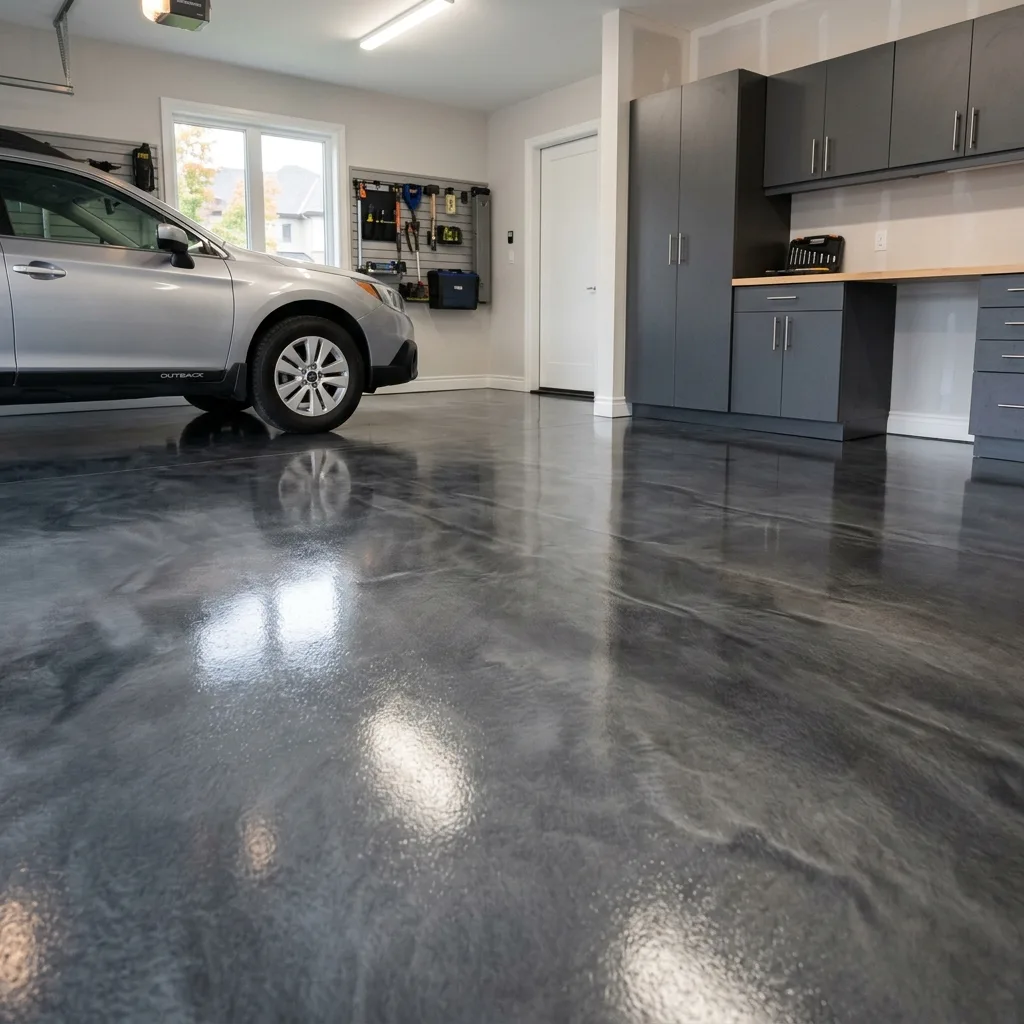
Wash Bay & Washdown Epoxy Flooring in Ottawa & the National Capital Region
Polyurea and urethane cement floor systems for truck wash bays, fleet maintenance shops, food plant washdown zones, and industrial cleaning stations across Ottawa and the NCR. Rated for hot pressure washing, alkaline degreasers, and petroleum contamination. From $7 to $12 per sq ft installed, WSIB-certified with $2M liability.
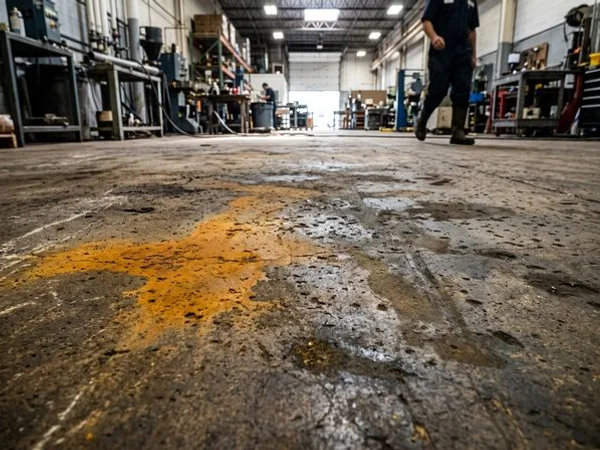
Secondary Containment Coatings in Ottawa & the National Capital Region
Immersion-rated novolac epoxy, vinyl ester, and polyurea secondary containment coatings for fuel tank berms, chemical storage rooms, transformer pads, and industrial spill floors across Ottawa and the NCR. TSSA-compliant, chemical-profile-specific specifications. From $10 to $18 per sq ft installed with full compliance documentation, WSIB certification, and $2M liability on every project.
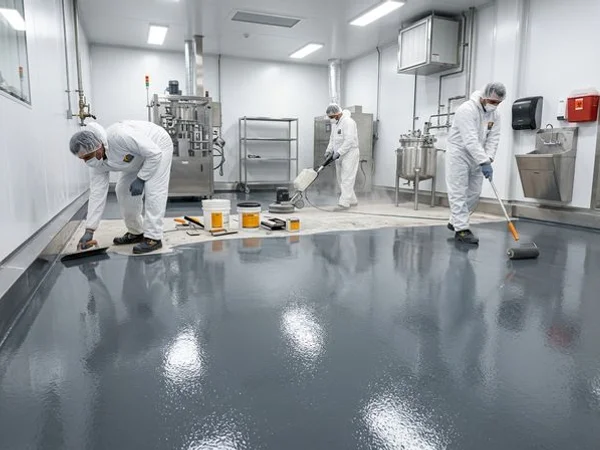
Pharmaceutical Cleanroom Epoxy Flooring in Ottawa & the National Capital Region
Novolac base coats, ESD-dissipative topcoats, and zero-particle-emission chemistry engineered for ISO 5 to 8 pharmaceutical cleanrooms, compounding pharmacies, and Health Canada-licensed drug premises across Ottawa and the National Capital Region. Installed pricing $12 to $20 per sq ft; phased overnight scheduling preserves cleanroom classification throughout. WSIB coverage, $2M commercial general liability, and a complete GMP compliance package accompany every project.
Ready to Book Cold Storage Epoxy?
Same-day free on-site assessment. WSIB-certified, $2M liability on every project.