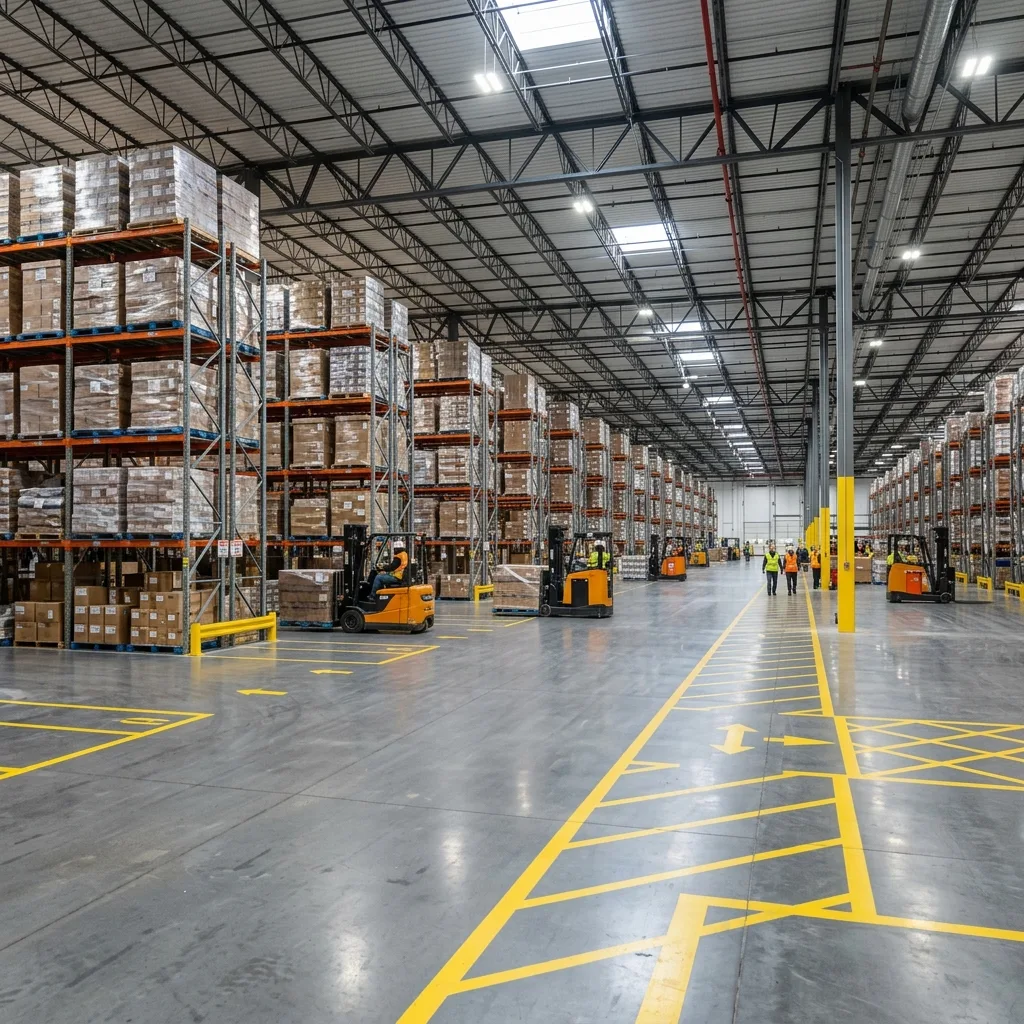
Parking Garage Epoxy Coating in Ottawa & the National Capital Region - Traffic Deck & Hangar Floor Professionals
Serving condo boards, commercial property managers, and federal facility operators across the National Capital Region, Ottawa Epoxy Flooring installs diamond-ground polyurea traffic deck membranes, chloride-impermeable broadcast systems, and slope-to-drain waterproofing on suspended parkades, at-grade lots, and aircraft hangars. Every parking deck project bundles line marking, stall numbering, directional arrows, and phased section scheduling so the structure remains accessible from the first shift to the last.
Parking decks are Ontario's most chemically aggressive concrete environment. Vehicles track sodium chloride, magnesium chloride, and calcium chloride blends onto the surface daily through the winter months, and the resulting chloride ions penetrate unprotected concrete at 5 to 10 mm per year, seeding rebar corrosion inside a decade. Ottawa's 224 cm annual snowfall and the City's aggressive salting programme place NCR decks among the heaviest chloride-loaded structures in Canada. The baseline traffic deck specification here is a polyurea membrane rated to 400 percent elongation at -30 C, capable of bridging expansion joint movement without tearing through freeze-thaw cycles.
Parking deck jobs typically fall between 5,000 and 100,000 sq ft and run in phased overnight shifts across 1 to 4 weeks depending on deck size and traffic. Installed pricing ranges from $4 to $8 per sq ft based on membrane depth, deck system class, and line marking scope. Every specification is rated for Ontario freeze-thaw exposure and chloride-driven corrosion.
Coverage spans central Ottawa and reaches Kanata, Nepean, Orleans, Barrhaven, Gatineau, Stittsville, Rockcliffe Park, Carp, Rockland, Kemptville, and Arnprior.
Why NCR Parking Structures Demand a Different Specification
Nothing in our portfolio takes the punishment a parking deck absorbs. Constant vehicle traffic, oil drips and fuel spatter, wide temperature swings, and, on suspended decks, the added structural role of holding water back from the level below.
Ottawa’s climate raises that specification bar further than milder Ontario cities require. The National Capital Region cycles through 80 to 100 freeze-thaw events per winter alongside 224 cm of annual snowfall. Municipal salting is aggressive, and vehicles track heavy chloride loads onto deck surfaces daily through the cold months. Structures coated in the 2000s and 2010s with conventional rigid materials are now showing what happens when the spec is too light: spalled concrete, corroding rebar, and recurring water infiltration claims from the units below.
The correct system depends on what the deck actually does. At-grade lots receive vehicle-rated high-build epoxy with embedded line marking. Suspended condo or commercial decks call for waterproof traffic-deck membranes with crack-bridging capability. Aircraft hangars need chemical and fuel resistance plus aviation-spec line marking. Federal facility contracts add compliance documentation on top of the base scope.
WSIB coverage, $2M commercial general liability, and full compliance documentation accompany every condo corp, commercial, and aviation contract we sign. As Ottawa’s full-spectrum epoxy flooring contractor, parking deck work runs on the same in-house crew and equipment that installs our warehouse epoxy flooring systems.
What Is Included
- Structure-specific survey covering at-grade slabs, suspended decks, and hangars
- Substrate repair, semi-rigid crack stitching, and expansion joint detailing
- Vehicle-rated high-build epoxy or waterproof traffic-deck membrane
- Petroleum, hydraulic fluid, and glycol-resistant topcoats
- Embedded stall lines, arrows, and wayfinding
- Overnight and multi-shift sequencing
- Full compliance documentation for condo corps and federal contracts
Waterproof Traffic-Deck Membranes vs Rigid Epoxy
The gap between a traffic-deck membrane and a standard parking garage epoxy is a matter of structural function, not quality grade. Rigid epoxy, even applied at 100 percent solids and 100 mils dry film thickness, offers zero crack-bridging capability and no continuous waterproofing plane. When a suspended parking deck moves under thermal cycling and vehicle load, a rigid coating cracks at every existing hairline, cold joint, and differential deflection zone. Once cracked, it becomes a direct channel for chloride and water into the concrete, and rebar corrosion accelerates from there.
A properly engineered traffic-deck membrane assembly runs in multiple layers. The sequence opens with a penetrating concrete primer, followed by a base membrane coat at 60 to 80 mils. A polyester reinforcing fleece embeds into that base coat at cracks, construction joints, and drain flashings. A second membrane coat brings the film to full thickness and waterproof continuity. The wear course tops the assembly, a high-build aliphatic polyaspartic or polyurea at 40 to 60 mils, chosen for flexibility, abrasion resistance, and UV stability. Total installed thickness lands between 150 and 220 mils. Any Ottawa suspended deck requires a system meeting ASTM C836 crack-bridging at -29 C given the local climate range.
Cost between the two system classes is substantial. High-build epoxy on at-grade lots installs at $8 to $14 per sq ft CAD; suspended-deck membrane systems with full expansion joint detailing run $18 to $32 per sq ft. On a 20,000 sq ft suspended deck in a mid-rise condo, that gap represents $200,000 to $360,000 in installation cost. A single water-infiltration claim through a failed coating can exceed the entire delta inside two or three years of failure, which is why underspec’ing is a false economy at the RFQ stage.
Vehicle-Rated Coatings for At-Grade Lots and Hangars
Vehicle-rated high-build epoxy for at-grade lots is formulated at 100 percent solids and applied at 80 to 125 mils dry film thickness. The resulting compression strength stands up to point loads from passenger vehicles and light commercial trucks. Anti-slip aluminium oxide at 60 to 80 grit broadcasts into the wear course and locks under a UV-stable aliphatic polyurea topcoat that will not yellow under salt exposure, petroleum spatter, or direct sunlight.
Hangar floors introduce a different chemical exposure profile. Jet-A, Skydrol hydraulic fluid, and deicing glycols all attack standard epoxy resin over time. Facilities for fixed-base operators and private aviation clients are specified with novolac epoxy base coats, which give broader chemical resistance than standard bisphenol-A. Where electrostatic discharge is a concern around fuel handling, conductive epoxy primer systems tested to ASTM F150 are installed with verified surface resistance between 25,000 and 1,000,000 ohms.
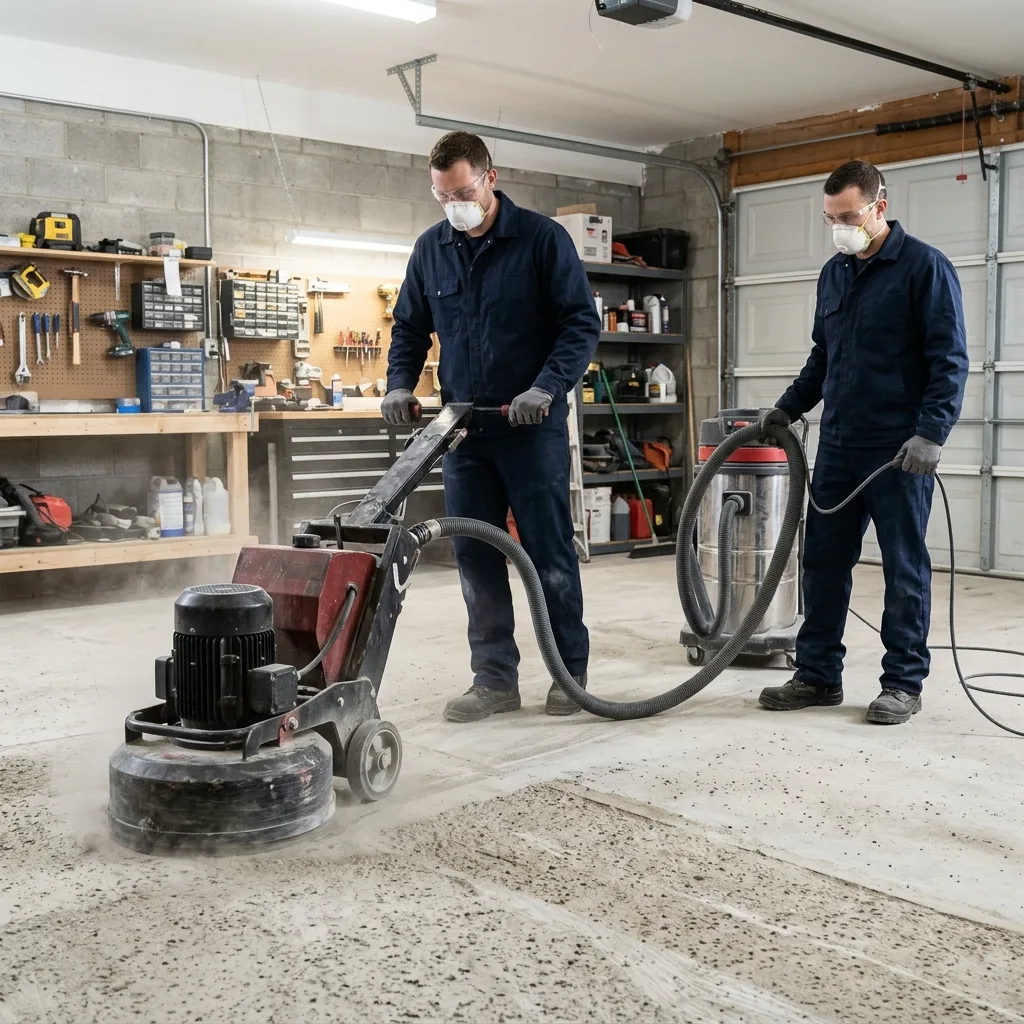
Surface preparation on every high-traffic deck project runs to CSP 3 to 4 profile using ride-on diamond grinders and rotary scarifiers. No coating manufacturer’s warranty is valid on a substrate prepped below CSP 3.
Line Marking, Stall Striping, and Wayfinding
A parking deck coating installed without embedded line marking is an incomplete project. Drive-aisle widths, stall boundaries, accessible parking designations, fire lane clearances, and pedestrian crossings are governed by City of Ottawa zoning by-laws and the Accessibility for Ontarians with Disabilities Act.
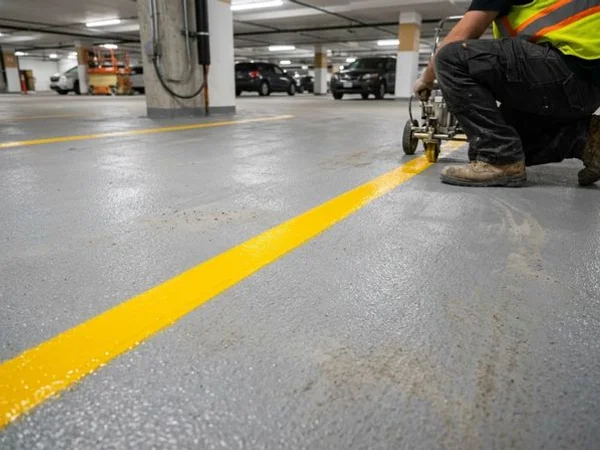
Painted-on lines and symbols wear off under tire abrasion inside one or two seasons, particularly in structures where snow removal equipment operates on the deck through Ottawa’s long winter. All stall striping and line marking here embeds under the topcoat, which means the markings are protected by the full film thickness and last as long as the deck coating itself.
Accessible parking stalls require specific dimensions and the international accessibility symbol installed to Ontario Building Code standards. Accessible stall counts and dimensions are cross-checked against the building permit drawings before the layout tape goes down. Wayfinding, directional arrows, entrance and exit designations, and level numbering are also taped and poured under the topcoat using the same method.
Questions Ottawa Property Managers Ask
How much does epoxy coating a parking garage cost in the NCR?
At-grade lots with a two-coat 100 percent solids epoxy system, embedded anti-slip aggregate, and line marking typically install at $8 to $14 per sq ft. Suspended condo or commercial decks that need a full traffic-deck membrane with expansion joint detailing run $18 to $32 per sq ft. Substrate condition is the single largest cost variable.
How long does the coating last in Ottawa’s climate?
A correctly specified aliphatic polyurea or polyaspartic topcoat on an at-grade lot delivers 8 to 12 years of service before a maintenance recoat is warranted. Suspended-deck membrane assemblies with properly detailed expansion joints reach 15 to 20 year service lives. The 80 to 100 freeze-thaw cycles the region sees each winter are the primary durability driver.
Can line marking be done without closing the entire structure?
Yes. Work runs level-by-level or zone-by-zone, keeping the balance of the structure open through the project. Overnight and weekend scheduling is available for high-occupancy condo towers where daytime closures would be impractical.
Do NCR condo corporations require WSIB clearance for parking deck work?
Yes. Nearly every condo corporation and commercial property management company requires a current WSIB clearance letter and certificate of insurance before a contractor can start on common-element areas. Both documents accompany the signed contract, and updated clearance letters are available at any point during a multi-phase project.
Our Parking & Hangar Results in Ottawa
Parking & Hangar Pricing
Why Ottawa Customers Choose Ottawa Epoxy Flooring for Parking & Hangar
Bakor and Tremco Deck Builds
Above-habitable suspended decks get a proper waterproof crack-bridging membrane assembly, not a coat of paint over a moving joint.
Fluid-Resistant Chemistry
The finish coat is engineered against motor oil, hydraulic fluid, gasoline, and de-icer runoff from every vehicle pulling in.
Level-by-Level Sequencing
Overnight or weekend zone rotations keep tenant and condo parking access live while each level is coated and cured.
Property Manager Compliance Kit
WSIB clearance, $2M CGL certificates, and RCA-approved documentation ready for condo boards and aviation tenants.
How Parking & Hangar Works
Structure Survey
Deck class documented on-site: at-grade slab, suspended deck, hangar apron. Traffic loads and waterproofing needs mapped.
Substrate Repair
Semi-rigid crack stitching, spall repair, and expansion joint prep with backer rod and flexible sealant.
Membrane + Topcoat
Waterproof membrane assembly on suspended decks, or high-build vehicle-rated wear course on at-grade slabs.
Line Marking + Reopen
Stall lines, arrows, accessibility symbols, and safety zones taped and locked under the final topcoat.
Ready for a Free On-Site Assessment?
Same-day quotes across Ottawa. WSIB-certified, $2M liability on every project.
What Customers Say About Our Parking & Hangar
"Overnight recoat of our Centretown condo amenity room. The building manager was thrilled with how quiet and clean the crew kept the job through the residents' quiet hours."
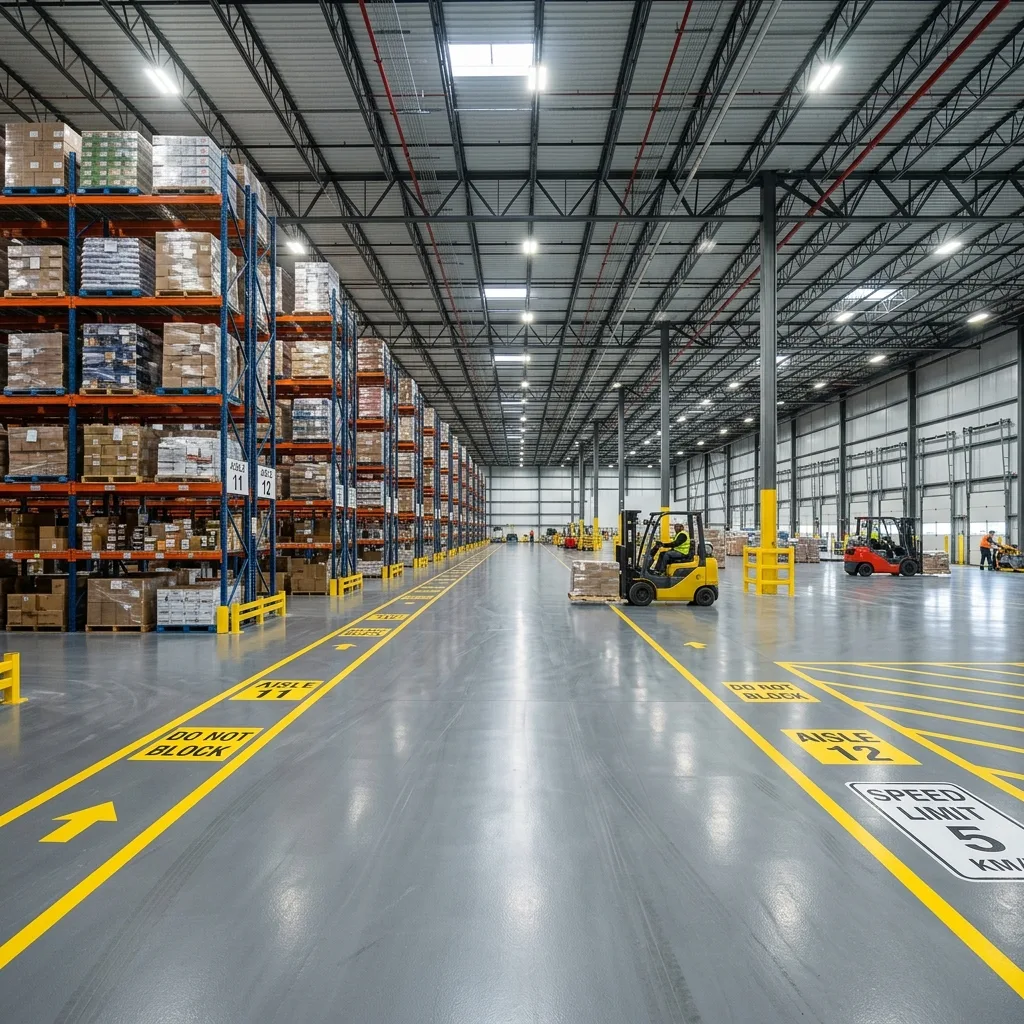
"Nepean warehouse parking area, diamond ground to CSP 3, 100 percent solids epoxy, aggregate broadcast into the topcoat. Forklifts and delivery trucks over it every day, two winters in, and no delamination anywhere."
"Suspended parking deck for our Kanata condo, membrane installed level-by-level. Zero issues, waterproofing is holding perfectly through the freeze-thaw cycles."
Parking & Hangar FAQs
Do you install waterproof traffic-deck membranes?
Yes. Any suspended deck above habitable space requires a waterproof, crack-bridging membrane assembly, not standard epoxy. Bakor, Tremco, and equivalent systems are installed with detailed expansion joint work.
Do you handle aircraft hangar floors?
Yes. High-build epoxy with chemical and fuel resistance, ESD provisions where required, and aviation-spec line marking. Off-hours scheduling suits active facilities.
How is parking garage line marking handled?
Stall lines, arrows, and safety zones embed under the topcoat for permanent visibility. No peeling tape, no painted lines that fade inside a single Ottawa winter.
Can you work around daytime condo traffic?
Yes. Level-by-level or section-by-section sequencing, coordinated with property management and security, plus overnight and weekend shifts.
What does a parking garage coating cost in Ottawa?
At-grade lots with high-build epoxy typically run $8 to $14 per sq ft installed depending on substrate condition and line marking scope. Suspended decks with a full waterproof traffic-deck membrane range $18 to $32 per sq ft due to the added waterproofing layers, expansion joint detailing, and membrane material cost. Hangar floors with chemical-resistant topcoats and ESD provisions sit at $12 to $22 per sq ft. All pricing is CAD and requires an on-site survey.
How long does a project take?
A single at-grade lot of 5,000 to 10,000 sq ft finishes in 3 to 5 days including prep, coating, and line marking cure. A multi-level suspended condo deck sequences over 2 to 4 weeks, one level at a time, so the balance of the structure remains open. Overnight and weekend shifts are available around building access windows.
How long does the coating last in an Ottawa parking garage?
A correctly installed polyaspartic or aliphatic polyurea topcoat on a parking deck runs 8 to 12 years under normal vehicle traffic before a maintenance recoat. Traffic-deck membranes on suspended structures carry 15 to 20 year service lives when expansion joints are detailed properly. Ottawa's 80 to 100 freeze-thaw cycles per winter are the dominant durability variable.
What separates a traffic-deck membrane from standard parking garage epoxy?
Standard high-build epoxy is a rigid coating that suits at-grade slabs where the structure below does not need waterproofing. A traffic-deck membrane is a flexible, crack-bridging, fully waterproof multi-layer system built onto suspended decks to keep water and chloride out of the concrete and the living space below. Membranes cost 2 to 3 times more per sq ft than standard epoxy for that reason.
Do you carry WSIB and liability insurance for parking garage work?
Yes. Active WSIB coverage and $2M commercial general liability. Certificates of insurance and WSIB clearance letters accompany every commercial and condo contract at no additional cost.
Can you resurface a parking garage with an existing failed coating?
Yes, once the failed coating is removed. Diamond grinding at CSP 3 to 4 profile strips old paint, failed epoxy, or degraded waterproofing back to bare concrete. Coating over a failed system is the single most common cause of early delamination we see on referral inspections.
Do you handle expansion joint work in parking garages?
Yes. Expansion joint detailing is bundled into every suspended-deck project. Failed or open joints are cleaned, prepared, and treated with a flexible sealant or backer-rod-and-sealant assembly matched to the membrane system going down.
Is anti-slip grit included in the coating?
Broadcast anti-slip aggregate is standard on all vehicle-trafficked surfaces and any pedestrian walkway zones inside the structure. Aluminium oxide or silica carbide grit broadcast into the topcoat produces a permanent traction profile that does not wear off like surface-sprinkled additives.
Parking Garage Epoxy Coating by city
Local pages with area-specific detail across the NCR:
Parking Garage Epoxy Coating in Ottawa
Local parking & hangar for Ottawa homes and businesses.
Learn more →Parking Garage Epoxy Coating in Kanata
Local parking & hangar for Kanata homes and businesses.
Learn more →Parking Garage Epoxy Coating in Nepean
Local parking & hangar for Nepean homes and businesses.
Learn more →Parking Garage Epoxy Coating in Barrhaven
Local parking & hangar for Barrhaven homes and businesses.
Learn more →Parking Garage Epoxy Coating in Orleans
Local parking & hangar for Orleans homes and businesses.
Learn more →Parking Garage Epoxy Coating in Gatineau
Local parking & hangar for Gatineau homes and businesses.
Learn more →Parking Garage Epoxy Coating in Rockcliffe Park
Local parking & hangar for Rockcliffe Park homes and businesses.
Learn more →Parking Garage Epoxy Coating in Vanier
Local parking & hangar for Vanier homes and businesses.
Learn more →Parking Garage Epoxy Coating in Westboro
Local parking & hangar for Westboro homes and businesses.
Learn more →Parking Garage Epoxy Coating in The Glebe
Local parking & hangar for The Glebe homes and businesses.
Learn more →Related Services
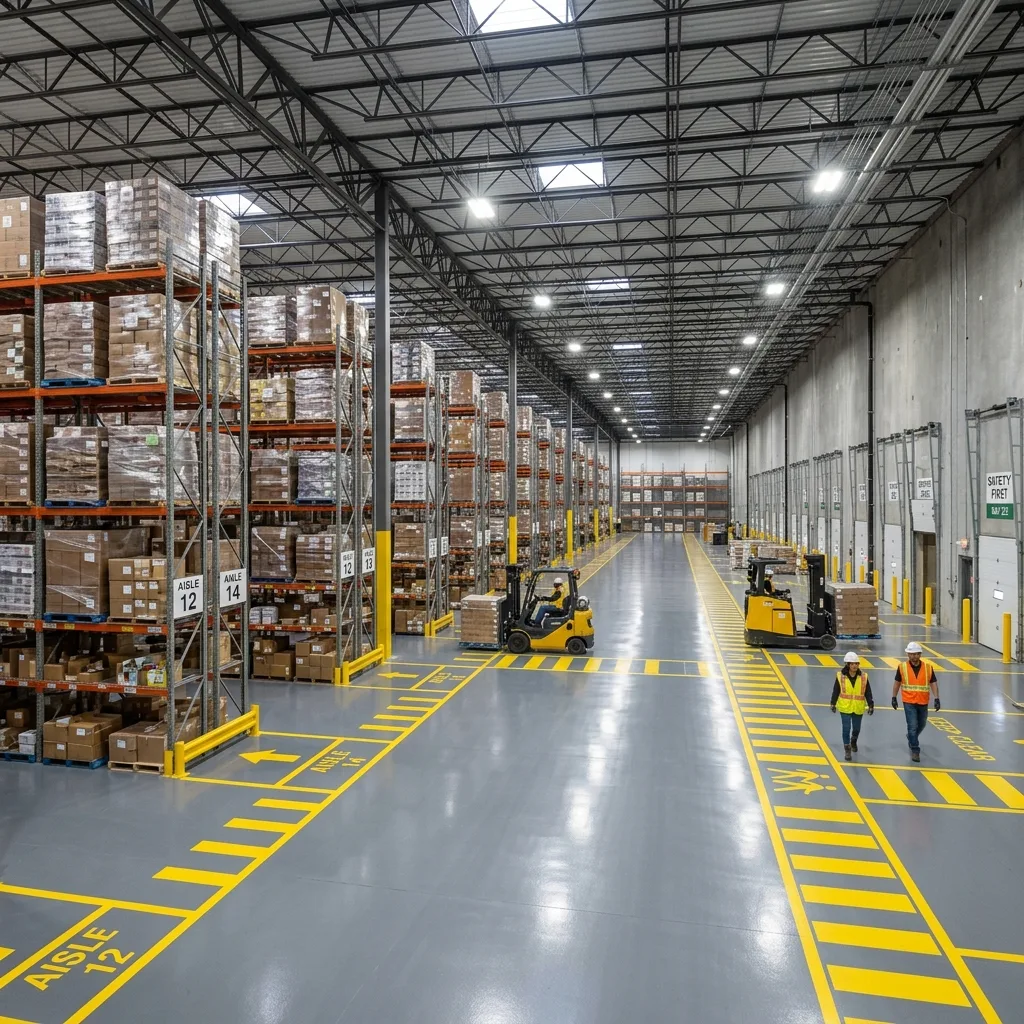
Warehouse Epoxy Flooring in Ottawa & the National Capital Region
Forklift-rated 100 percent solid epoxy systems with shot-blast prep, chemical-resistant topcoat, and embedded aisle marking for NCR distribution centres, logistics hubs, and federal warehouse operations. From $3 to $7 per sq ft installed, phased weekend windows keep operations running, WSIB-certified crews and $2M liability on every commercial project.
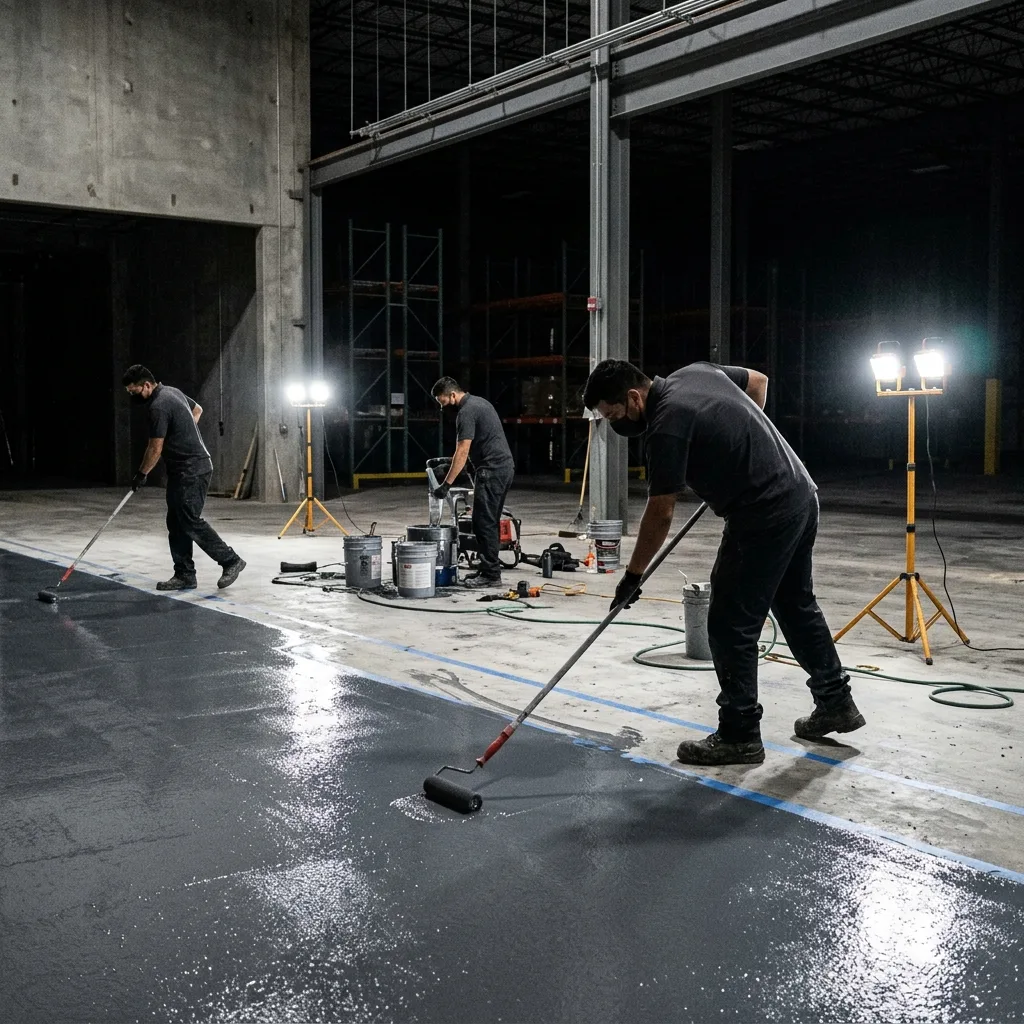
Commercial & Industrial Epoxy Flooring in Ottawa & the National Capital Region
Shot-blasted 100% solid commercial-grade epoxy systems built for manufacturing plants, distribution centres, and 24-hour food operations across Ottawa. Installed pricing runs $10 to $15 per sq ft with off-hours scheduling that returns your floor before the next shift starts. WSIB-certified crews, $2M liability, and full compliance documentation on every project.
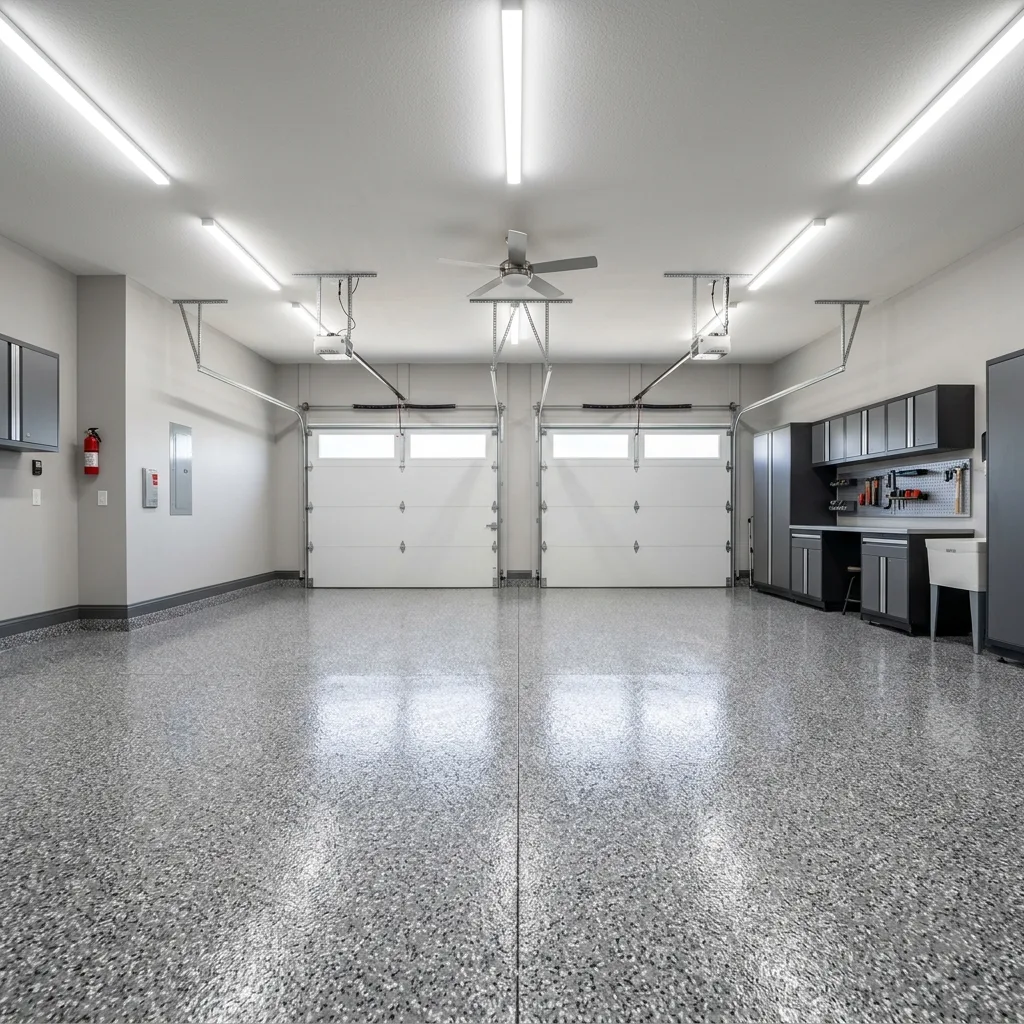
Concrete Repair & Restoration in Ottawa & the National Capital Region
Carbon-fibre crack stitching, polyurea injection, spall patching with epoxy mortar, and self-levelling underlayment restore any NCR concrete slab back to a CSP 3 bondable substrate before coating. Crack work opens at $8 to $18 per linear foot; slab resurfacing from $3 per sq ft. CSP 3 is grind-gauge confirmed before any coating is applied.
Ready to Book Parking & Hangar?
Same-day free on-site assessment. WSIB-certified, $2M liability on every project.