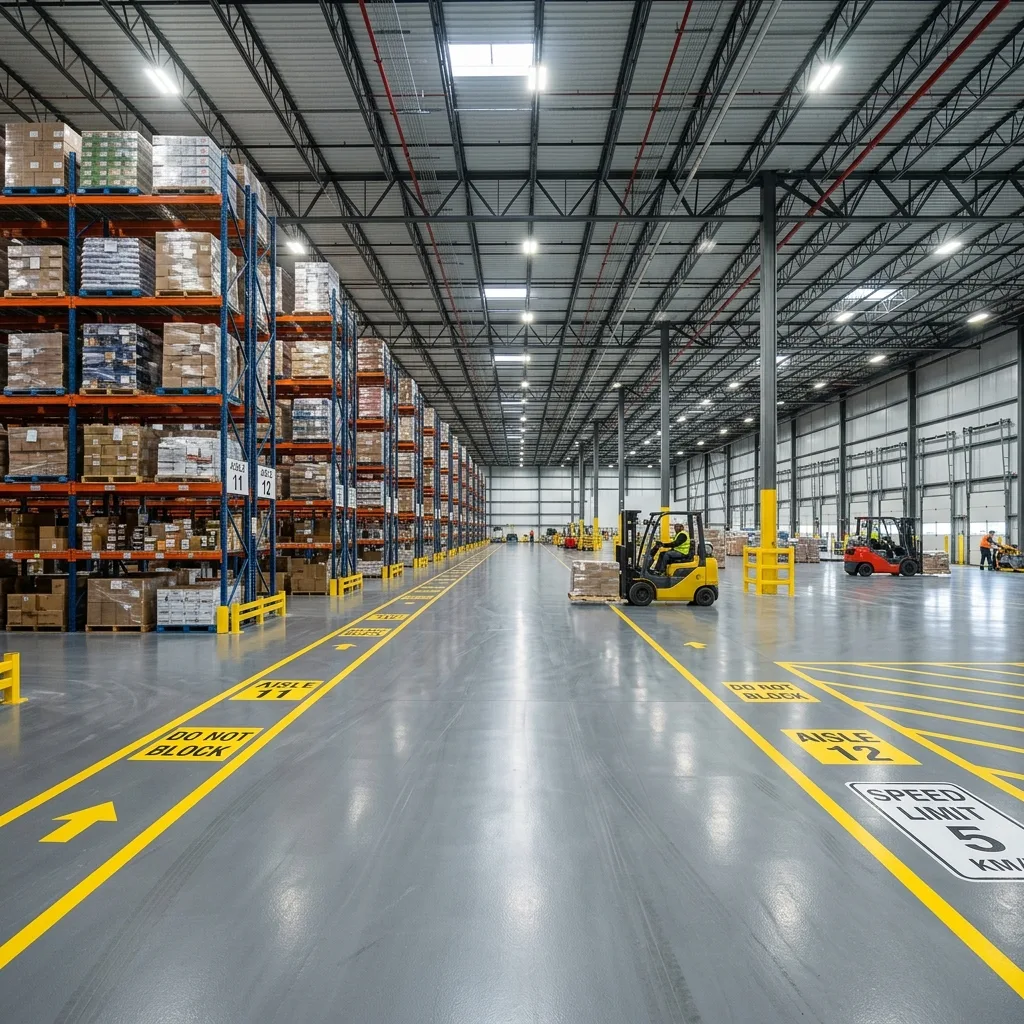
Warehouse Epoxy Flooring in Ottawa & the National Capital Region - Forklift-Rated Heavy-Duty Floor Coating Professionals
Our Ottawa crews install shot-blast-prepared, high-build 100 percent solid broadcast epoxy systems for distribution centres, logistics hubs, cold storage rooms, and large-format storage warehouses across the National Capital Region. Ottawa Epoxy Flooring spec's chemical-resistant topcoats for forklift traffic and 10,000+ lb pallet racking loads, integrates aisle line marking, and runs phased section-by-section application so operations do not have to stop for the install.
Standard coating specs miss the point loads a warehouse floor actually sees. A 5,000 lb reach truck applies that load through polyurethane drive wheels roughly 4 inches wide, generating contact pressures above 300 psi at every acceleration and turn. A 40 percent solids waterborne coating at 6 to 8 mils DFT lifts within 12 months under those loads. A 100 percent solids broadcast system at 80 to 100 mils total build is the floor of the specification for an Ottawa distribution centre carrying Class 1 through 3 forklift traffic and racking base plate loads.
Warehouse projects at 10,000 to 100,000 sq ft finish in phased off-hours shifts across 1 to 4 weeks depending on facility access and cure scheduling. Pricing ranges from $5 to $9 per sq ft installed based on high-build thickness, chemical resistance specification, topcoat tier, and line marking complexity.
Ottawa Epoxy Flooring services Kanata, Nepean, Orleans, Barrhaven, Gatineau, Stittsville, Vanier, Carp, Rockland, Kemptville, and Arnprior for warehouse and distribution floor installations.
What Makes a Warehouse Floor Hold Up
Surface prep and system spec are what decide whether a warehouse floor lasts. Forklift point loads, pallet drops, and the constant abrasion of wheels and skids will destroy any coating that was not engineered for them. Months, not years.
Warehouse builds start with full shot-blast surface preparation to open an aggressive concrete profile. From there, high-build 100 percent solid epoxy with aggregate broadcast where the traffic warrants it, then a hard-wearing chemical-resistant topcoat over the top. Aisle marking, safety zones, and wayfinding striping are embedded under the topcoat so they do not peel, fade, or wear off. As Ottawa’s full-spectrum epoxy flooring contractor, we run warehouse jobs with the same crew that handles our commercial and industrial epoxy work.
Every install is scheduled around your shipping cadence so the daytime operation never stops. WSIB certification, $2M liability, and full compliance documentation come standard for 3PL, distribution, federal, and institutional contracts.
Forklift-Rated Systems for Ottawa Distribution Centres
Not every epoxy system marketed as “industrial” is actually rated for sustained forklift wheel loads. A standard 5,000 lb counterbalance forklift carrying a full pallet concentrates load on a small polyurethane tyre contact patch. That is enough to crush a thin-film coating or stress a poorly bonded system until it delaminates. Distribution centres along Hunt Club Road and Merivale Road, particularly those built in the 1990s and early 2000s, typically carry 4,000 to 5,500 psi concrete that needs a CSP 4 to CSP 6 profile before a high-build system will bond reliably. Shot blasting is the only method that opens that profile.
For a busy warehouse main floor, the correct system is a 100 percent solids epoxy base coat at 60 to 80 mils DFT, broadcast with 20/40 or 30/60 aluminium oxide or flint aggregate for hardness and traction, then sealed with an aliphatic polyurea or aliphatic polyurethane topcoat at Shore D 70 to 85.
Staging areas and order-picking aisles that mix pedestrian traffic with powered equipment need a broadcast anti-slip texture bringing the coefficient of friction above 0.6, in line with WSIB slip-and-fall prevention guidance for Ontario industrial floors.
What is Included
- Site walk and traffic audit before quoting
- Full shot-blast surface preparation
- Substrate repair, joint detailing, and high-spot milling
- High-build 100 percent solid epoxy with aggregate broadcast as needed
- Embedded aisle and safety line marking under the topcoat
- Chemical and abrasion-resistant topcoat matched to your chemistry
- Off-hours and weekend scheduling
- WSIB, insurance, and compliance documentation
Chemical Resistance and Novolac Upgrades
Facilities with concentrated chemical exposure (battery charging stations, parts wash zones, any pocket where hydraulic fluid pools) get a novolac epoxy intermediate coat. Novolac chemistry runs a tighter cross-link density than standard bisphenol-A epoxy, which delivers substantially better resistance to acids, caustics, and solvents per ASTM C267.
Ottawa auto-parts distribution operations often need novolac in the battery maintenance zones even when the rest of the floor runs a standard high-build system. A mixed-spec approach like this typically budgets $6 to $8 per sq ft for the standard zones and $10 to $13 per sq ft for the novolac sections.
Third-party logistics operators running two-shift operations care about fast return. Aliphatic polyurea topcoats reach light forklift traffic in 12 to 16 hours at 20 degrees Celsius, versus 48 to 72 hours for a conventional epoxy topcoat. The trade-off is cost. Polyurea topcoat adds $1.50 to $2.00 per sq ft over a standard aliphatic polyurethane finish, but for a facility processing high daily throughput, that delta is negligible against the downtime cost.
Embedded Line Marking and Safety Striping
Warehouse line marking sits under the combined authority of WSIB Ontario guidelines, the Ontario Fire Code, and, where applicable, NFPA 101 Life Safety Code requirements. The consistent failure mode of surface-applied line marking (whether epoxy paint or vinyl tape) is that it wears off at tyre contact zones within 12 to 18 months of regular forklift traffic.
Embedded line marking applies the stripe colour directly onto the cured base coat before the topcoat goes on. The topcoat encapsulates the stripe at the same film build as the rest of the floor, so the mark sits inside the coating rather than on top of it. In a busy Ottawa distribution centre running 50 to 70 forklift passes per aisle per day, embedded marking lasts the full service life of the floor, typically 8 to 15 years before a recoat is warranted.
Cost for a line marking package integrated into a new epoxy install runs $0.75 to $1.50 per linear foot based on stripe width, colour count, and whether stencilled text (bay numbers, weight limits, “KEEP CLEAR” blocks) is part of the package. A typical 15,000 sq ft warehouse with 800 linear feet of aisle marking and 200 linear feet of hazard striping would budget $1,200 to $2,400 for the marking component alone.
Cold Storage and Freezer Room Coatings
Cold storage and refrigerated distribution centres across the NCR need coatings that stay flexible and bonded at temperatures as low as -30 degrees Celsius. Standard 100 percent solid epoxy turns brittle at sub-zero temperatures and delaminates from the concrete slab through thermal cycling as the freezer room swings between operating temperature and defrost.
The correct spec for cold storage is a 100 percent solid polyurea or polyaspartic coating with a glass transition temperature well below the operating temperature of the room. Products with a T-g below -40 degrees Celsius stay flexible and hold bond strength through the full cold storage range. Installation requires slab temperatures above 5 degrees Celsius, which may mean warming the space before coating and working quickly before the slab drops. Penetrations, drain edges, and wall-floor coving joints all get sealed with a cold-flexible polyurea sealant rather than a rigid epoxy caulk.
Warehouse Epoxy Costs
Most warehouse projects run $5 to $9 per sq ft depending on floor condition, system spec, and line marking. A 10,000 sq ft distribution facility with standard high-build epoxy and embedded aisle marking typically lands between $50,000 and $90,000 all in. Shot-blast prep, substrate repairs, and novolac upgrades for chemical exposure add to that base cost.
Questions Warehouse Operators Ask
How thick should epoxy be on a warehouse floor with daily forklift use?
Sixty mils DFT is the accepted floor for a forklift-rated warehouse, delivered through a high-build 100 percent solids base coat broadcast with aggregate. Facilities with heavy reach-truck or counterbalance traffic should target 80 mils or add a reinforced intermediate coat. Thin-film coatings at 10 to 20 mils have no place in a working warehouse.
Can a warehouse epoxy floor be installed in sections so operations keep running?
Yes, and that is the standard approach for large active facilities. The floor gets zoned into phases (typically two to four sections depending on rack layout) with each phase scheduled overnight or on a weekend. Every section is sealed and returned to forklift traffic before we move to the next. The critical detail is a clean saw-cut transition joint between completed and pending sections so both cures bond flush at the seam.
What concrete repair is typically needed before coating a warehouse floor?
Most warehouse slabs carry some combination of control joint deterioration, racking anchor holes, spalled patches at dock leveller edges, and hairline cracks from thermal cycling. All of these get repaired before coating. Repair costs typically add $0.50 to $2.00 per sq ft to the overall project budget depending on the slab’s condition.
Our Warehouse Epoxy Results in Ottawa
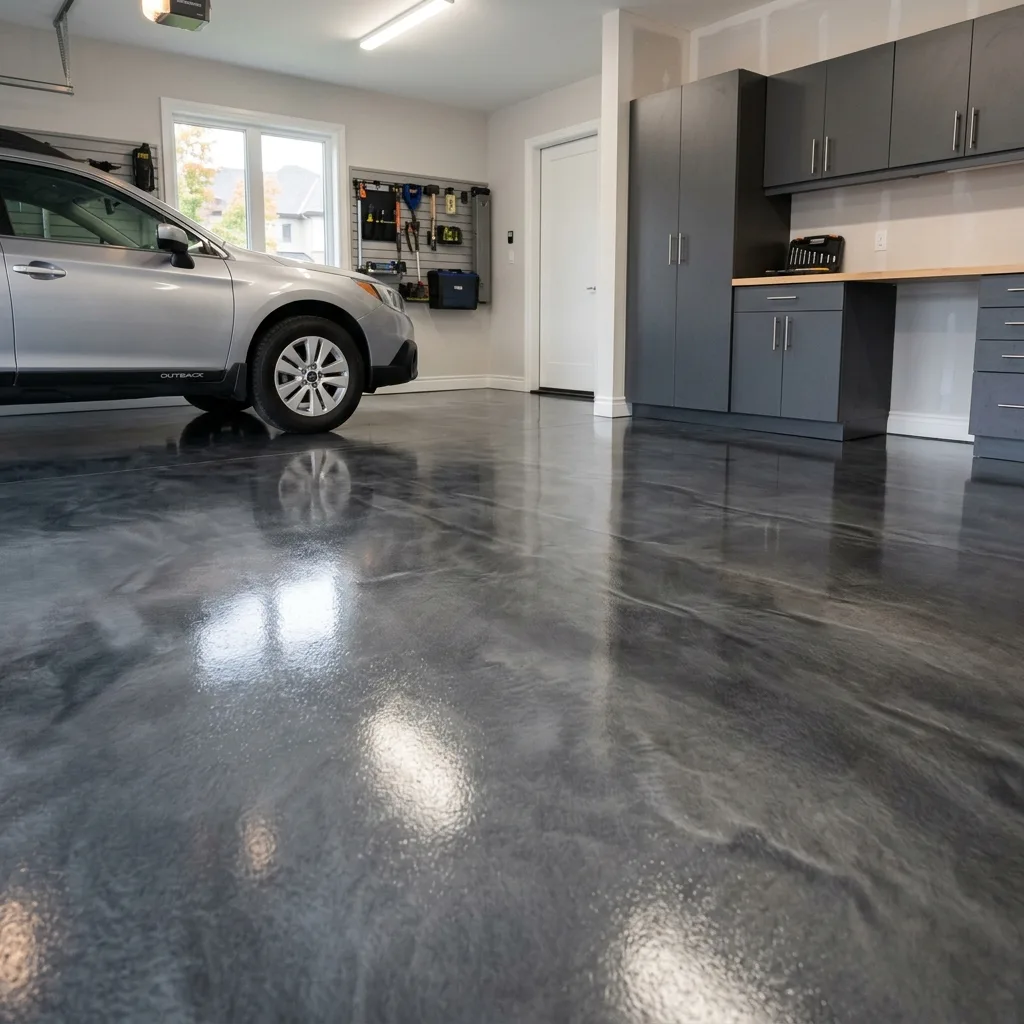
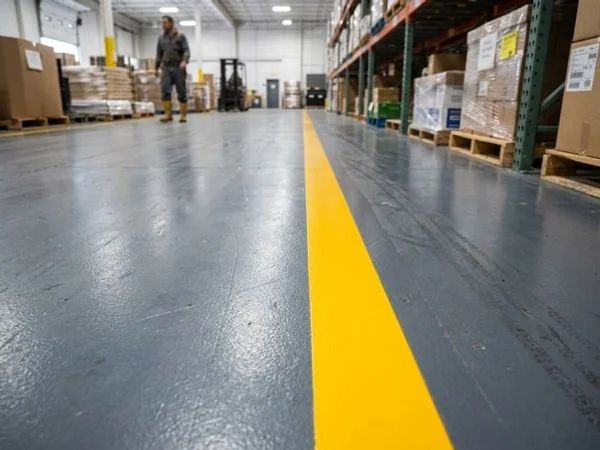
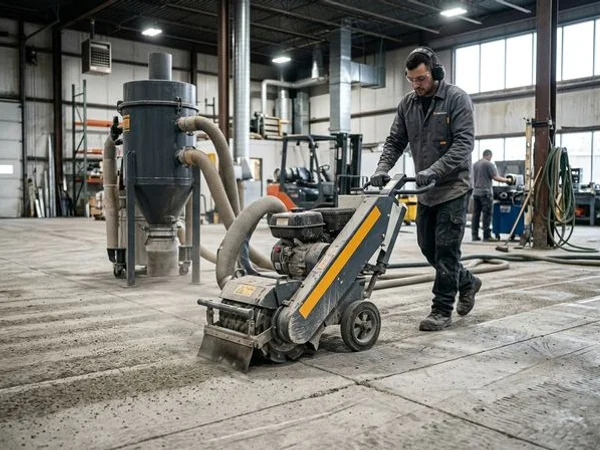
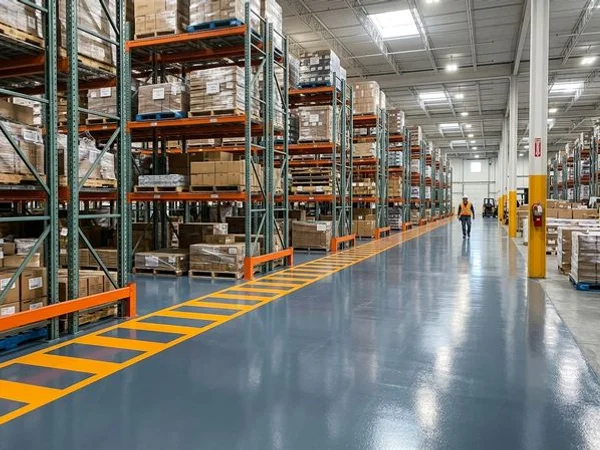
Warehouse Epoxy Pricing
Scaled to traffic class, chemical exposure, and aggregate spec.
Why Ottawa Customers Choose Ottawa Epoxy Flooring for Warehouse Epoxy
Wheel-Load Sized
Every spec is scaled to the actual reach truck, counterbalance, and pallet drop pattern in your building.
Buried Aisle Marking
Stripes go on beneath the wear coat, so tyres never touch them and shutdown repaints stop.
Shift-Around Installs
Round-the-clock crew rotation means dock doors keep loading through your busy daytime hours.
Documented Compliance
Every federal, institutional, and 3PL bid packet gets the WSIB clearance and $2M CGL paperwork it needs.
How Warehouse Epoxy Works
Site Walk & Traffic Audit
Point loads, chemistry, aisle layout, and downtime constraints get scoped and documented before pricing goes out.
Shot-Blast Prep
An aggressive surface profile is opened up for mechanical bonding to high-build systems.
High-Build Coat
Heavy-duty epoxy goes down with aggregate broadcast sized to forklift wheel loads and pallet drop impact.
Line Marking + Handover
Aisle and safety striping is embedded under the topcoat for permanent visibility, then the floor gets handed back.
Ready for a Free On-Site Assessment?
Same-day quotes across Ottawa. WSIB-certified, $2M liability on every project.
What Customers Say About Our Warehouse Epoxy
"Ottawa Epoxy coated our 8,000 sq ft Nepean distribution centre over one night. Shot-blast prep to CSP 5, high-build 100 percent solids epoxy, embedded yellow aisle striping. The WSIB documentation was ready before we asked for it."
"Coated our small warehouse unit off-hours. Forklift-rated, on time, no surprise costs."
"They scoped our 3PL floor properly, used a high-build system, and the line marking is dead clean. Two years of forklift traffic and zero issues."
Warehouse Epoxy FAQs
Will the floor handle forklift traffic?
Yes. Warehouse system specs are built around the actual wheel loads, point loads from racking, and pallet-drop impact of the facility. High-build epoxy with aggregate broadcast handles the rest where the traffic demands it.
Do you install line marking?
Yes. Aisle marking, safety striping, and wayfinding are embedded under the topcoat, which means they last the life of the floor rather than peeling off like tape or wearing away like surface paint.
Can installation happen while we're operating?
Off-hours is what we strongly recommend for warehouse work to keep operations running. Overnight or weekend scheduling covers most facilities, and phased work with coned-off sections is available where needed.
What about chemical spills?
The system gets spec'd against the chemistry. Battery acid, solvents, or hot caustics move the spec up to novolac epoxy or polyurethane cement. We do not oversell a standard system into the wrong chemistry.
How soon can forklifts return?
System-dependent. Standard high-build epoxy is ready for foot traffic in about 24 hours and forklift traffic in 48 to 72. Fast-cure systems can accept traffic the next morning.
What is the cost in Ottawa?
Most NCR warehouse projects run $5 to $9 per sq ft, driven by floor condition, system spec, and whether line marking is included. A 10,000 sq ft distribution facility with standard high-build epoxy and embedded aisle marking usually lands between $50,000 and $90,000 all in. Shot-blast prep, substrate repairs, and novolac upgrades for chemical exposure add to that base.
High-build epoxy versus polyurethane cement?
High-build 100 percent solids epoxy is the right call for most NCR warehouses. It handles forklift traffic, point loads, and moderate chemical exposure at a lower cost. Polyurethane cement is reserved for floors with thermal cycling (freeze-thaw), heavy-duty caustic exposure, or food-grade CFIA requirements, where it justifies the premium at $12 to $18 per sq ft.
Warranty on a warehouse floor?
Warehouse builds carry a 5-year material and labour warranty against delamination and adhesion loss when installed over a properly shot-blasted substrate. Wear warranty is traffic-class dependent. Standard forklift-rated builds are warranted for 3 years of normal forklift and pallet-jack use.
Do you work in leased distribution centres where landlord approval is required?
Yes. Specification sheets, SDS documentation, and attendance at landlord or property manager site meetings are all part of the process. Our systems are reversible in the sense that they can be diamond-ground out at end-of-lease if required, which satisfies most institutional landlord requirements.
How long does a large warehouse take to coat?
A standard 10,000 sq ft warehouse floor with shot-blast prep, high-build coat, and embedded line marking typically takes 3 to 5 nights of off-hours work. Larger 40,000 to 60,000 sq ft logistics buildings are phased over 2 to 3 weekends to keep dock operations running.
Can damaged sections of an existing epoxy floor be repaired before recoating?
Yes. Spalled concrete, racking anchor holes, joint failures, and delaminated patches all get repaired in place before the new system goes down. Repair costs run $2 to $6 per sq ft of affected area based on depth and density of damage.
Is a concrete moisture test required before coating?
Always. Relative humidity gets tested using ASTM F2170 in-situ probes before any warehouse job. NCR warehouse slabs regularly read above the 75 percent RH threshold that triggers a moisture-mitigating primer, largely due to the Leda clay substrate common across Kanata and Nepean industrial zones. Skipping this step is the single most common reason warehouse epoxy floors delaminate within the first year.
Warehouse Epoxy Flooring by city
Local pages with area-specific detail across the NCR:
Warehouse Epoxy Flooring in Ottawa
Local warehouse epoxy for Ottawa homes and businesses.
Learn more →Warehouse Epoxy Flooring in Kanata
Local warehouse epoxy for Kanata homes and businesses.
Learn more →Warehouse Epoxy Flooring in Nepean
Local warehouse epoxy for Nepean homes and businesses.
Learn more →Warehouse Epoxy Flooring in Barrhaven
Local warehouse epoxy for Barrhaven homes and businesses.
Learn more →Warehouse Epoxy Flooring in Orleans
Local warehouse epoxy for Orleans homes and businesses.
Learn more →Warehouse Epoxy Flooring in Gatineau
Local warehouse epoxy for Gatineau homes and businesses.
Learn more →Warehouse Epoxy Flooring in Rockcliffe Park
Local warehouse epoxy for Rockcliffe Park homes and businesses.
Learn more →Warehouse Epoxy Flooring in Vanier
Local warehouse epoxy for Vanier homes and businesses.
Learn more →Warehouse Epoxy Flooring in Westboro
Local warehouse epoxy for Westboro homes and businesses.
Learn more →Warehouse Epoxy Flooring in The Glebe
Local warehouse epoxy for The Glebe homes and businesses.
Learn more →Related Services
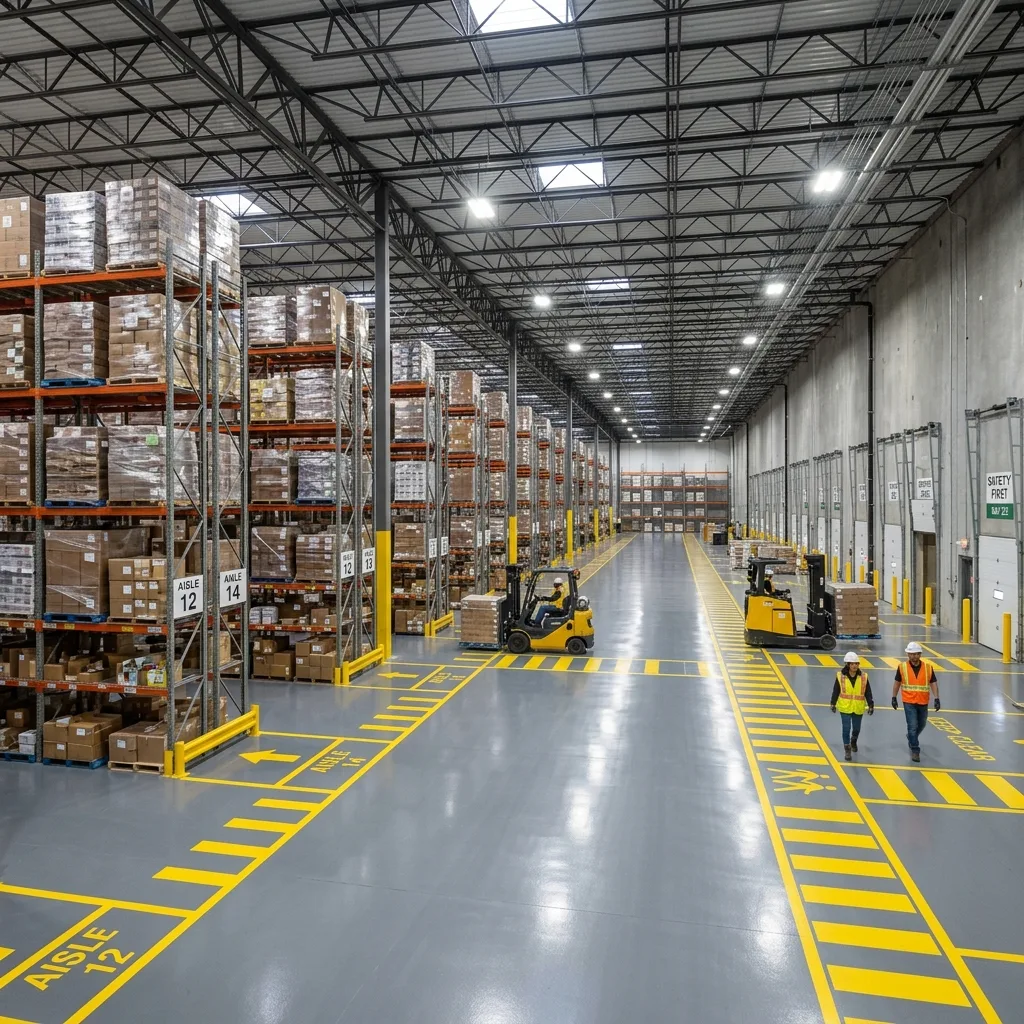
Commercial & Industrial Epoxy Flooring in Ottawa & the National Capital Region
Shot-blasted 100% solid commercial-grade epoxy systems built for manufacturing plants, distribution centres, and 24-hour food operations across Ottawa. Installed pricing runs $10 to $15 per sq ft with off-hours scheduling that returns your floor before the next shift starts. WSIB-certified crews, $2M liability, and full compliance documentation on every project.
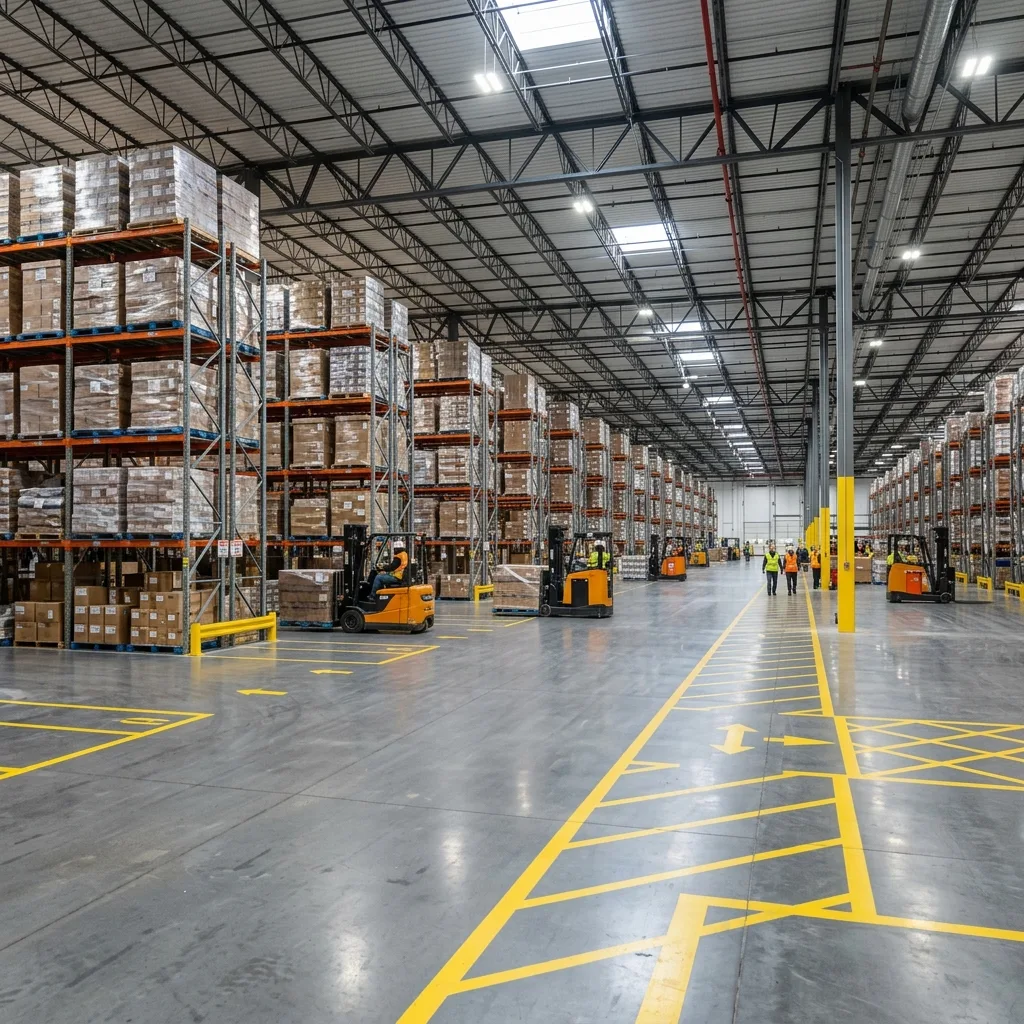
Parking Garage Epoxy Coating in Ottawa & the National Capital Region
Vehicle-rated polyurea and polyaspartic deck coatings for Ottawa parkades, condo garages, and hangars, engineered to the NCR's chloride load and 80 to 100 freeze-thaw cycles per season. Line marking, stall numbering, and wayfinding embed under the topcoat. Installed pricing runs $4 to $9 per sq ft; phased overnight and weekend sequencing keeps every level operational. WSIB coverage and $2M commercial general liability documented at contract signing.
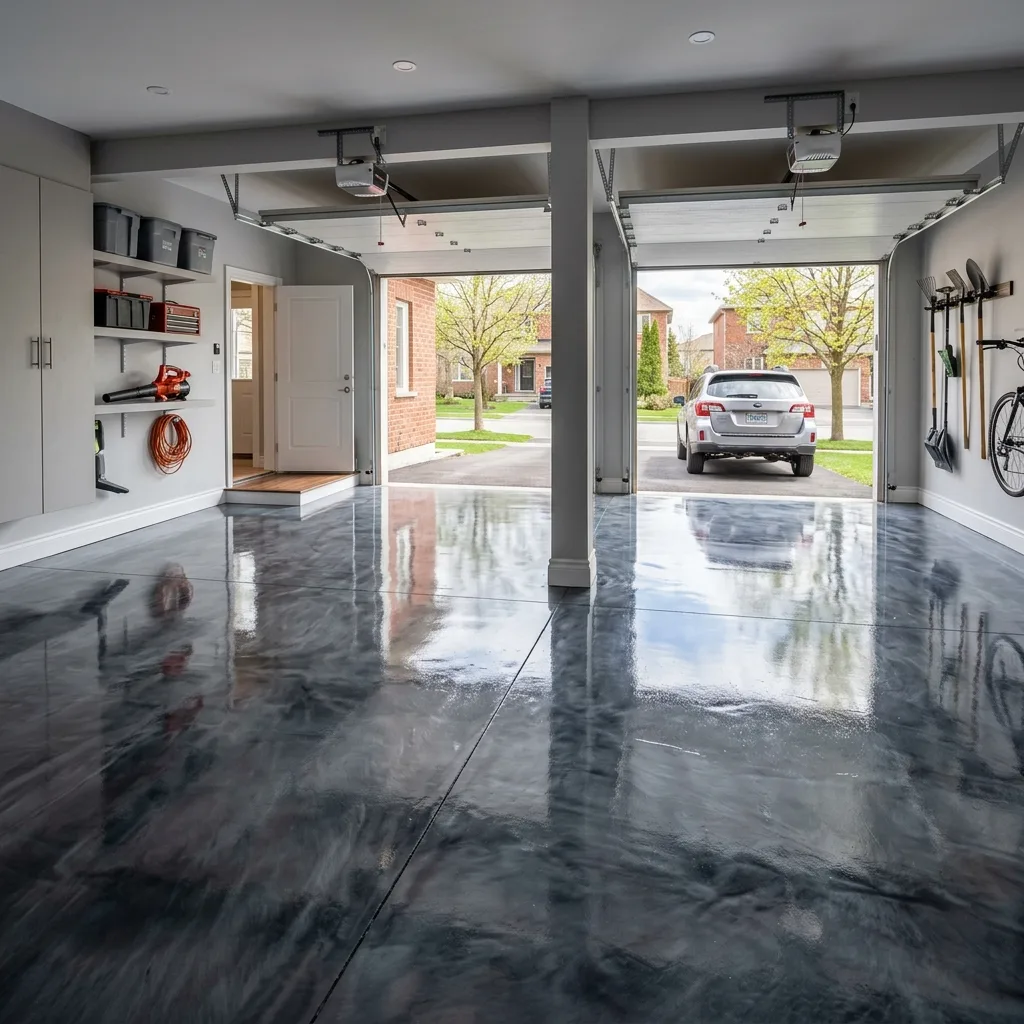
Concrete Polishing in Ottawa & the National Capital Region
Progressive diamond grinding up to 1,500-grit sealed with a lithium silicate densifier produces a polished concrete surface that reflects light and eliminates any wax or topcoat schedule. Installed pricing runs $3 to $8 per sq ft; most commercial floors are complete inside 2 to 3 days. Retail, restaurant, and federal office builds in the NCR pick polishing for its 20-year-plus lifespan.
Ready to Book Warehouse Epoxy?
Same-day free on-site assessment. WSIB-certified, $2M liability on every project.