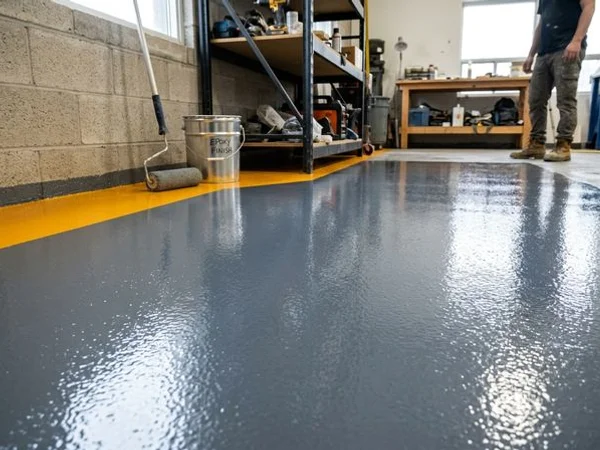
Epoxy Floor Repair & Recoat in Ottawa & the National Capital Region - Re-Grind and Restoration Professionals
Serving federal and residential clients across the National Capital Region, Ottawa Epoxy Flooring diagnoses, repairs, and recoats failing epoxy floors on residential garages, basements, and commercial slabs throughout Ottawa, ON. Every project opens with a failure diagnosis (delamination, moisture bleed, peeling topcoat, or chemical breakdown), followed by mechanical diamond grinding back to bare concrete, substrate crack and spall repair, moisture mitigation priming, and a fresh 100% solid epoxy base coat under a polyaspartic topcoat.
In Ottawa, most epoxy floor failures trace back to one of three causes. First, acid etching in place of diamond grinding leaves calcium salt residue that blocks mechanical bond. Second, solvent-based coatings applied over moisture-positive slabs without ASTM F2170 testing delaminate as vapour pressure builds behind the film. Third, 40 to 60% solids waterborne systems shrink 30 to 50% during cure, producing a thin, brittle film that fractures under Ottawa's 80 to 100 freeze-thaw cycles per winter. A proper repair does not recoat over the failure. It removes the failed coating mechanically back to bare concrete, identifies the root cause, and lays a 100% solid system over a correctly profiled CSP 3 surface.
Repair and recoat projects typically run 400 to 3,000 sq ft and wrap in one to two days. Installed pricing sits at $4 to $8 per sq ft depending on removal difficulty, substrate condition, and the recoat system specified. Every recoated floor ships with the same Warranty as a new installation.
Ottawa Epoxy Flooring provides epoxy floor repair and recoating to Ottawa, ON and surrounding communities, including Kanata, Nepean, Orleans, Barrhaven, Westboro, The Glebe, Stittsville, Manotick, Gatineau, Kemptville, and Arnprior.
Diagnosing and Fixing a Failed Epoxy Floor
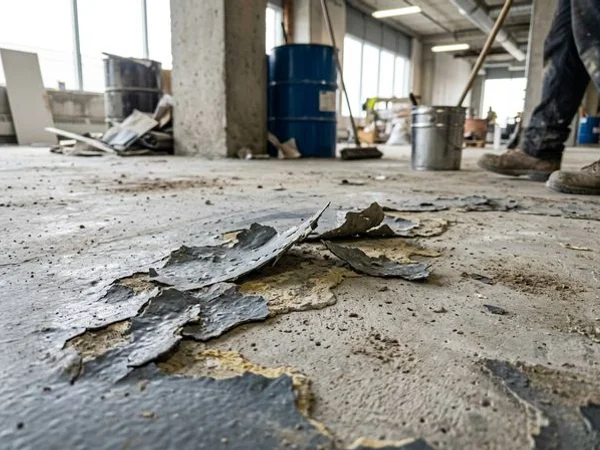
Failed epoxy typically fails one of three ways. It peels at the edges, it bubbles and lifts, or it wears through in high-traffic zones. Root cause almost always sits in one of three buckets: bad prep (acid etched rather than diamond ground), moisture vapour driving up from below, or a budget solvent-based product that was the wrong call from the start.
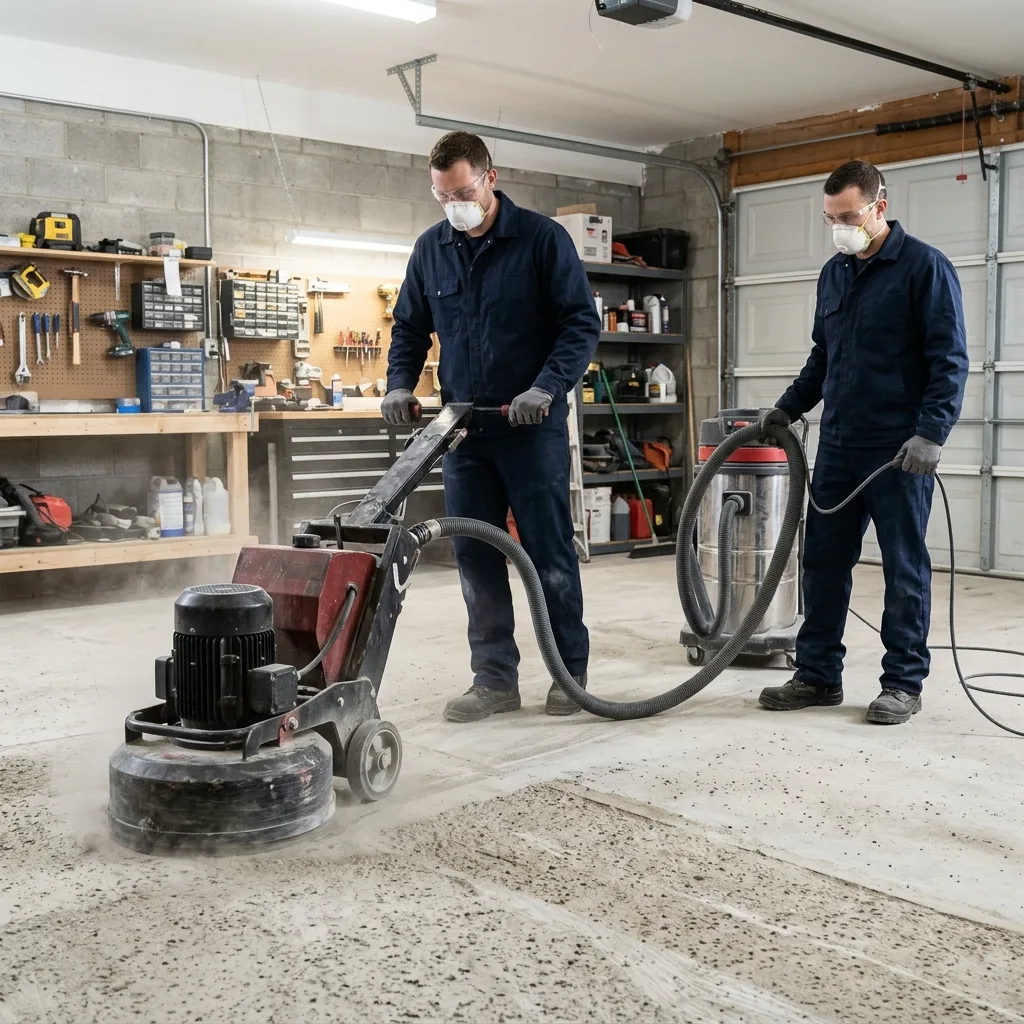
We identify which one is happening, remove the failed coating mechanically, repair the substrate, and recoat in 100% solid commercial-grade epoxy. Done correctly, the recoated floor carries the same Warranty as a fresh install from Ottawa’s full-spectrum epoxy flooring contractor. Where the slab itself is damaged, the recoat starts with proper concrete repair and restoration before any new coating goes down.
Anti-slip upgrades are also offered for floors that are otherwise sound but slippery. A grit broadcast goes down under a fresh traffic-resistant topcoat for commercial kitchens, medical facilities, and pool decks.
What’s Included
- Failure diagnosis (prep, moisture, or material)
- Mechanical removal of failed coating via diamond grinding
- Substrate repair: crack stitching, spall patching, moisture mitigation
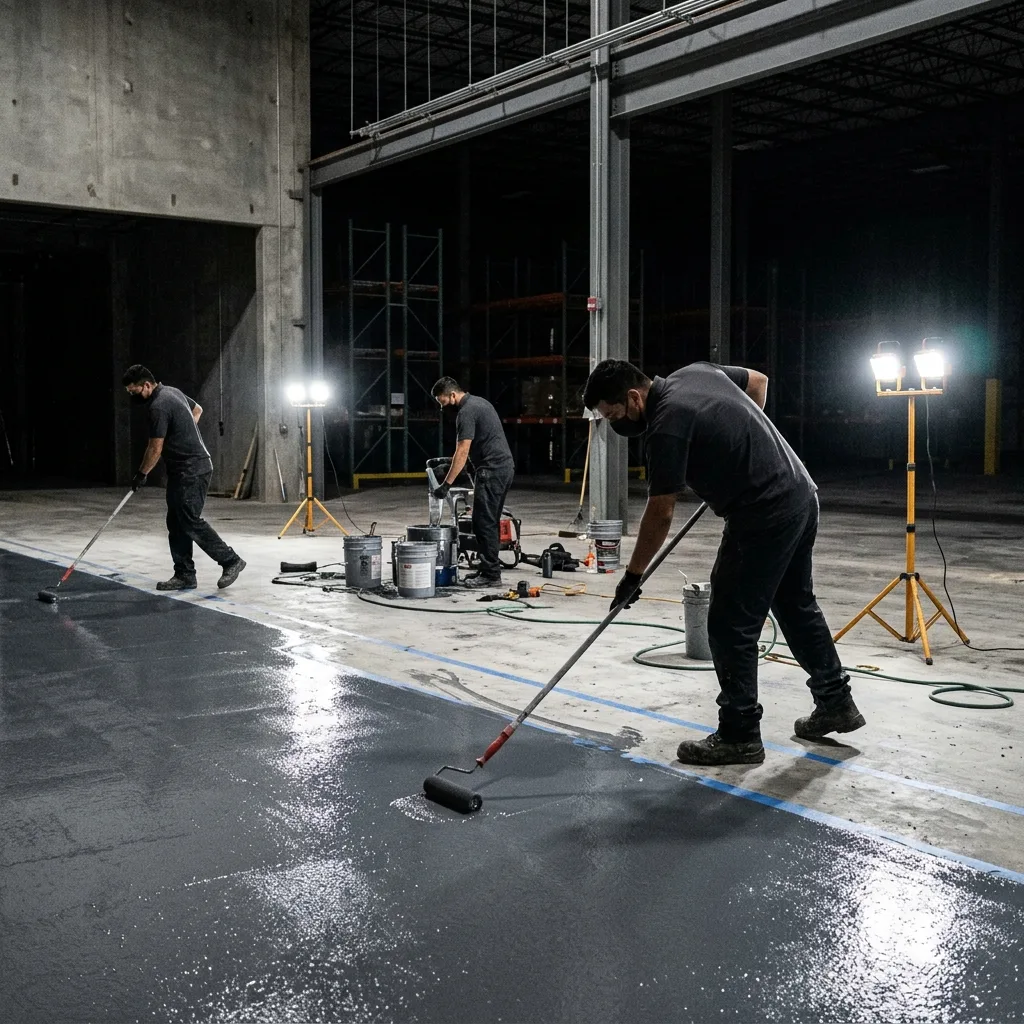
- Fresh 100% solid epoxy system installation
- Anti-slip grit broadcast upgrade option
- Warranty on the new system
- Documented before/after for your records
Why Epoxy Floors Peel, and How We Fix a Failed Install
Delamination and peeling trace to one of three failure modes, and each demands a different corrective path. The first is inadequate surface preparation, specifically acid etching in place of mechanical diamond grinding. Acid etching raises surface pH and leaves contamination in the pores, producing a profile well below the CSP 2 to 3 that most 100% solid epoxy systems require for a durable mechanical bond. Floors installed this way in older Nepean and Orleans residential garages, where budget contractors are common, typically start lifting at the edges inside six to eighteen months.
The second failure mode is moisture vapour transmission. Ottawa’s Leda clay soil generates sustained hydrostatic pressure against below-grade slabs, particularly in Centretown and The Glebe where older slab construction runs to the 1960s and 1970s without a below-slab polyethylene vapour barrier. ASTM F2170 in-situ relative humidity probes on these slabs routinely return readings above 85% RH, well beyond the 75 to 80% threshold specified by commercial epoxy manufacturers. Apply a solvent-based or low-solid water-based coating over a slab in that condition and vapour pressure builds behind the film, producing the signature blister-and-bubble pattern many Ottawa homeowners mistake for a product defect.
The third failure mode is material selection. Solvent-based epoxy paints sold at home improvement retailers usually contain 30 to 50% solids by volume. Solvent evaporates during cure, so dry film thickness drops to 2 to 4 mils, roughly one-tenth the 20 to 40 mil build of a commercial 100% solid system. That thin film has almost no structural resistance to abrasion or thermal cycling, and Ottawa’s 80 to 100 freeze-thaw cycles per winter accelerate delamination well beyond what happens in a milder climate. In all three cases, the corrective sequence opens with mechanical removal using a 10-inch or larger planetary grinder running 16 or 30-grit PCD tooling, then ASTM F2170 moisture testing, substrate repair, a moisture-mitigating primer where readings exceed threshold, and a fresh 100% solid epoxy system as the base coat. New coatings never go over failed ones.
How We Diagnose a Failed Epoxy Floor Before Quoting
Most contractors offering epoxy repair quote from photos or a quick walkthrough. We use a structured diagnostic before a number lands on paper, because misdiagnosing the failure mode means the repair will fail the same way the original install did.
Diagnostics open with an ASTM F2170 in-situ relative humidity test. Two probes are drilled to 40% of slab depth and sealed for 24 hours. The reading tells us whether moisture vapour drive is actively contributing or whether the failure was purely mechanical. Centretown and Sandy Hill slabs from the 1960s and 1970s almost always return readings above 80% RH because they have no below-slab vapour barrier, which makes a moisture-tolerant primer mandatory, not optional, before any recoat. Skip that test and apply a standard epoxy primer over a high-RH slab, and the same blister-and-bubble failure repeats within one winter.
Next comes a pull-off adhesion test using a portable ASTM D4541 pneumatic dolly. A 50 mm aluminium disc is glued to the failed coating, the adhesive is allowed to cure, and the disc is pulled with a controlled force gauge. Readings above 200 psi at the concrete interface confirm the substrate is sound for a recoat. Readings below 150 psi, or failures that pull aggregate off the concrete face with the disc, confirm the substrate itself is compromised and needs to be ground back further than the coating delamination zone before a new system can bond reliably.
The third step is a scrape-and-probe inspection of delamination boundaries. Failed coatings rarely fail uniformly. There is usually a well-defined perimeter where bonded and unbonded zones meet. That boundary is mapped across the floor and the delamination percentage is calculated. If unbonded area covers more than 30% of the total floor, a full strip-and-recoat is almost always more economical than trying to address isolated patches. Under that threshold, mechanical removal of the failed zones and feathering the repair edges into intact coating produces a visually clean, structurally sound result.
The diagnostic report (moisture readings, adhesion results, and delamination map) goes to the client before the quote, so you know exactly why the floor failed and what is being done to prevent the same outcome on the next system.
Recoat vs Full Replacement: When to Do Which
Four variables drive the recoat-versus-replace decision: extent of delamination, condition of the substrate, number of previously applied coating layers, and the client’s budget ceiling. A recoat, meaning mechanical removal of the failed system, substrate repair, and fresh 100% solid application, is the right call when delamination covers under roughly 30% of the floor and the concrete underneath shows no widespread spalling or structural cracking. In that case, a full recoat on a standard two-car garage in Barrhaven or Orleans typically runs $1,600 to $2,900 CAD depending on substrate repair scope, versus $3,500 to $5,200 CAD for a full strip-and-reinstall with a fresh decorative flake or quartz broadcast system.
Full replacement makes economic sense in two scenarios. First, when the existing floor has received multiple coatings over the years (stacked layers of paint, solvent-based epoxy, and failed topcoats totalling 15 to 25 mils of built-up film with poor intercoat adhesion throughout). Grinding through that stack is labour-intensive, and the prep cost often approaches the cost of starting fresh. Second, when the slab is heavily spalled or scaled and surface deterioration exceeds what crack stitching and spall patching can economically address. On slabs like this, particularly in older Kanata industrial units, the correct path is a full skim coat of polymer-modified cementitious overlay to re-establish a flat, sound substrate, then a fresh system on top.
For floors that are structurally sound but showing surface wear (loss of gloss, fine abrasion scratches, or fading colour in high-traffic wheel paths) a topcoat recoat is a practical intermediate option. The existing coating is scuff-sanded to CSP 1 using 60-grit abrasive, wiped with a solvent wash, then a fresh 100% aliphatic polyurea or polyaspartic topcoat is applied at 3 to 5 mils DFT. Topcoat-only recoats on a sound base typically run $4 to $7 per sq ft installed, making them the most cost-effective way to add five to ten years of service life before a full system replacement is warranted.
Related Questions Ottawa Homeowners Ask
How do I know if the floor can be recoated versus needing full replacement?
Pull up a corner of the existing coating and read the bond. If the epoxy breaks adhesively at the concrete interface rather than cohesively through the film, the substrate is likely sound enough for a recoat after mechanical re-grinding. If the concrete face crumbles or pulls away with the coating, the slab itself is deteriorating and a full assessment, including ASTM F2170 moisture testing, is the right starting point before committing to any system.
How long does the repair take
Most residential repair and recoat jobs wrap in two days. Day one covers diamond grinding, substrate repair, and the moisture-mitigating primer. Day two covers the 100% solid base coat and polyaspartic topcoat. A polyaspartic finish is walkable at 24 hours and vehicle-ready at 72. Larger commercial floors in Nepean or Kanata warehouses may take three to four days depending on floor area and the number of isolated spall repairs required.
What does it cost to fix a peeling garage floor
A diagnostic, full mechanical re-grind, moisture-mitigation primer, and 100% solid recoat on a two-car garage (400 to 500 sq ft) typically runs $1,600 to $2,900 CAD depending on substrate condition. Anti-slip topcoat upgrades on a sound existing floor start at roughly $550 to $850 CAD for the same footprint. Floors with widespread spalling or multiple failed coating layers requiring extra grinding time sit at the higher end of that range.
Can moisture in a slab be corrected before recoating?
Yes, and it must be addressed before any new coating goes down, otherwise the same failure repeats. A two-component moisture-mitigating epoxy primer formulated to tolerate slab RH up to 98% goes on first, chemically bonding to concrete even under active vapour drive. Where hydrostatic pressure is persistent, the moisture primer is combined with a negative-side crystalline waterproofing treatment applied at the slab perimeter. That combination is a common requirement in below-grade garages and basement floors across Centretown and The Glebe where Leda clay drives constant moisture pressure.
Is an anti-slip upgrade safe for commercial kitchens and CFIA-regulated facilities?
Yes, provided the grit broadcast material and topcoat are food-safe and hit the coefficient of friction values specified under CFIA facility standards. Aluminium oxide broadcast aggregate goes under a 100% solid aliphatic epoxy or polyurea topcoat that is non-porous, seamless, and compatible with steam cleaning and commercial sanitisers. Kanata and Nepean facilities handling or storing food should confirm NFPA 1 slip-resistance ratings during scoping so the correct aggregate size and broadcast density can be locked to the floor’s traffic pattern.
Our Epoxy Repair Results in Ottawa
Why Ottawa Customers Choose Ottawa Epoxy Flooring for Epoxy Repair
Root-Cause Report
Every failure is diagnosed with moisture probes and pull tests before we write a price.
Commercial Chemistry Only
Nothing from the box-store shelf comes back on. Only the 100 percent solid commercial resin lines.
Same Warranty as New
When we own prep and product from start to finish, the recoat gets the fresh-install guarantee.
Grip Broadcast Upgrade
Slippery but structurally sound floors get an aluminum oxide broadcast under a fresh wear coat.
How Epoxy Repair Works
Failure Diagnosis
We identify why the floor failed (prep, moisture, or wrong material) before writing a quote.
Re-Grind & Re-Prep
Mechanical removal of the failed coating and a full diamond grind back to sound substrate.
Substrate Repair
Crack stitching, spall repair, and moisture mitigation as the diagnostic requires.
Recoat With 100% Solids
Fresh 100% solid system, full warranty. Now it holds.
Ready for a Free On-Site Assessment?
Same-day quotes across Ottawa. WSIB-certified, $2M liability on every project.
What Customers Say About Our Epoxy Repair
"The previous contractor used solvent-based epoxy in our Nepean garage. Failed inside one winter. Ottawa Epoxy did a full diamond grind to CSP 3, the moisture test came back clean, and the recoat went in 100% solids. Warranty on file."
"Old failed floor in the basement. Moisture issue was diagnosed first, vapour barrier went in, then the recoat. Zero issues since."
"Straight assessment of why the old floor failed. Recoat has held up perfectly through two Ottawa winters."
Epoxy Repair FAQs
Why is my epoxy floor peeling?
It is almost always one of three causes. The prep was acid etched rather than diamond ground, moisture is driving up through the slab (no vapour barrier), or the product was a solvent-based budget epoxy. We diagnose which one before quoting the fix.
Can you grind a failed epoxy floor back off?
Yes. Mechanical removal with diamond grinders lifts the failed coating off and leaves a sound substrate for the new system. We do not paint over a problem.
Are you recoating with the same product?
No. Recoats go down in 100% solid commercial-grade epoxy. Never the solvent-based budget products that are the single most common cause of failure.
What is the recoat warranty?
Same Warranty as a fresh install, because we control prep and materials end-to-end.
Can you just add anti-slip to a sound existing floor?
Yes. If the current coating is sound, we broadcast grit under a fresh traffic-resistant topcoat. Common on medical, commercial kitchen, and pool-deck floors.
What should we budget for epoxy floor repair in Ottawa?
Repair pricing depends on the extent of failure and floor area. A diagnostic plus a mechanical re-grind and full recoat on a two-car garage (400 to 500 sq ft) typically runs $1,600 to $2,900 CAD using 100% solid commercial-grade systems. Anti-slip topcoat upgrades on a sound existing floor start at roughly $550 to $850 CAD for the same area.
How long does a repair take?
Most residential repair and recoat jobs in Ottawa wrap in two days. Day one is mechanical removal, substrate repair, and primer. Day two is the finish coat. A polyaspartic topcoat opens to foot traffic in as little as 24 hours. Larger commercial projects in Nepean or Kanata warehouses may run three to four days depending on floor size and substrate repair count.
Repair or full replacement, how do we decide?
If the concrete substrate is sound and delamination covers under roughly 30% of the floor, a re-grind and recoat is almost always the cost-effective call. Full replacement, stripping to bare concrete and starting fresh, makes sense when the slab is widely spalled, the existing coating is a thick stack of multiple failed layers, or ASTM F2170 moisture emissions exceed the system threshold.
What is driving moisture-based epoxy failure in Ottawa specifically?
Ottawa sits on Leda clay, a post-glacial marine clay that holds moisture aggressively and puts sustained hydrostatic pressure against basement and garage slabs. Many pre-1990s slabs have no below-slab vapour barrier, so vapour drive is constant. When a solvent-based or water-based coating goes on without a moisture-tolerant primer, vapour builds behind the film and bubbles and delaminates within one to three winters.
Can you work in an occupied commercial building?
Yes. Work is phased in sections so the facility stays operational. Low-VOC 100% solid epoxy systems and aliphatic polyurea topcoats produce minimal off-gassing, which matters in occupied food-processing plants, medical clinics, and auto dealerships across Kanata and Nepean. WHMIS documentation is provided on all materials.
Will the recoat match the colour of the original floor?
An exact colour match to an aged floor is rarely possible, because existing coatings fade and shift with time. Two options are typically presented: a full recoat for a uniform result across the whole floor, or a decorative broadcast build using flake or quartz aggregate to blend any visible transition. Most clients pick the full recoat for a clean, consistent finish.
Which standard governs moisture testing before recoat?
ASTM F2170 is followed for in-situ relative humidity testing with concrete probes, and ASTM F1869 calcium chloride testing where clients want both methods. Most 100% solid epoxy manufacturers spec a maximum slab RH of 75 to 80% before application. Above that threshold, a moisture-mitigating epoxy primer formulated to block vapour transmission goes down before the finish system.
Epoxy Floor Repair & Recoat by city
Local pages with area-specific detail across the NCR:
Epoxy Floor Repair & Recoat in Ottawa
Local epoxy repair for Ottawa homes and businesses.
Learn more →Epoxy Floor Repair & Recoat in Kanata
Local epoxy repair for Kanata homes and businesses.
Learn more →Epoxy Floor Repair & Recoat in Nepean
Local epoxy repair for Nepean homes and businesses.
Learn more →Epoxy Floor Repair & Recoat in Barrhaven
Local epoxy repair for Barrhaven homes and businesses.
Learn more →Epoxy Floor Repair & Recoat in Orleans
Local epoxy repair for Orleans homes and businesses.
Learn more →Epoxy Floor Repair & Recoat in Gatineau
Local epoxy repair for Gatineau homes and businesses.
Learn more →Epoxy Floor Repair & Recoat in Rockcliffe Park
Local epoxy repair for Rockcliffe Park homes and businesses.
Learn more →Epoxy Floor Repair & Recoat in Vanier
Local epoxy repair for Vanier homes and businesses.
Learn more →Epoxy Floor Repair & Recoat in Westboro
Local epoxy repair for Westboro homes and businesses.
Learn more →Epoxy Floor Repair & Recoat in The Glebe
Local epoxy repair for The Glebe homes and businesses.
Learn more →Related Services
Concrete Repair & Restoration in Ottawa & the National Capital Region
Carbon-fibre crack stitching, polyurea injection, spall patching with epoxy mortar, and self-levelling underlayment restore any NCR concrete slab back to a CSP 3 bondable substrate before coating. Crack work opens at $8 to $18 per linear foot; slab resurfacing from $3 per sq ft. CSP 3 is grind-gauge confirmed before any coating is applied.
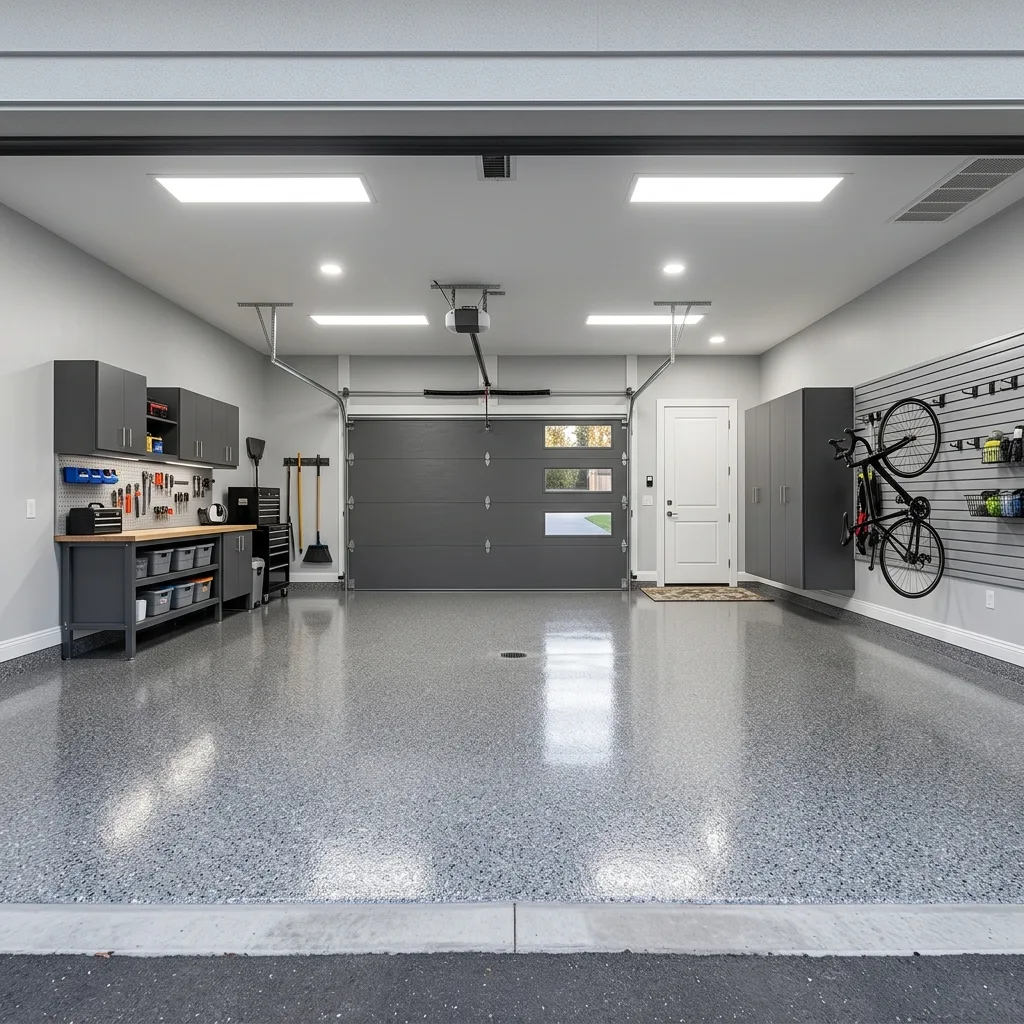
Garage Floor Epoxy in Ottawa & the National Capital Region
Salt-proof, hot-tire-resistant garage floor systems built for NCR winters. Diamond-ground to CSP 3, ASTM F2170 moisture verified, 100% solid epoxy base with quartz or metallic flake, and a UV-stable polyaspartic topcoat. A 400 sq ft single-car garage runs roughly $2,400 to $3,800 installed and wraps in one to two days. Anti-slip grit and WSIB coverage standard.
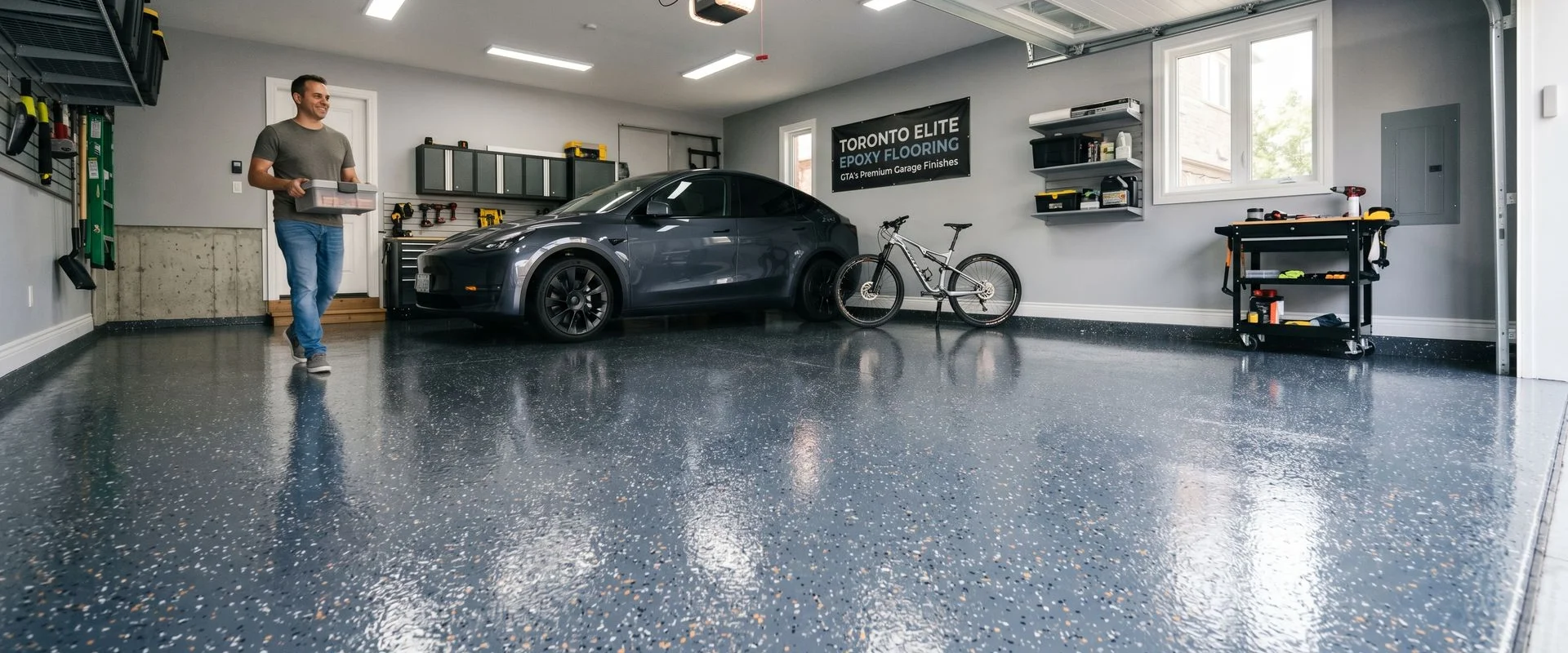
Polyaspartic Floor Coating in Ottawa & the National Capital Region
Aliphatic polyaspartic returns most residential garages to vehicle traffic inside 24 hours, roughly four times harder than a standard epoxy topcoat with full UV stability and cold-weather application down to -20 C. Installed pricing runs $5.50 to $9 per sq ft; a typical two-car garage finishes in a single day. WSIB coverage and $2M commercial general liability on every NCR install.
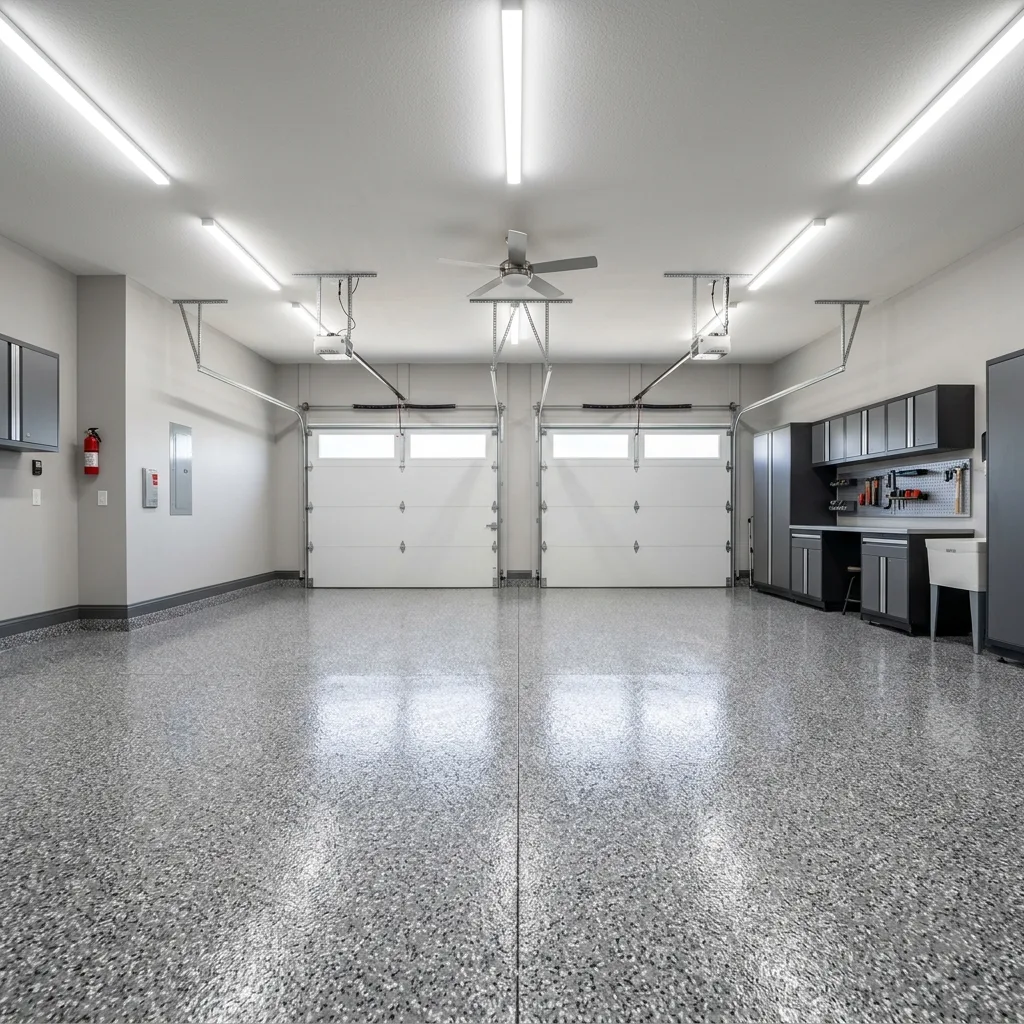
Ready to Book Epoxy Repair?
Same-day free on-site assessment. WSIB-certified, $2M liability on every project.