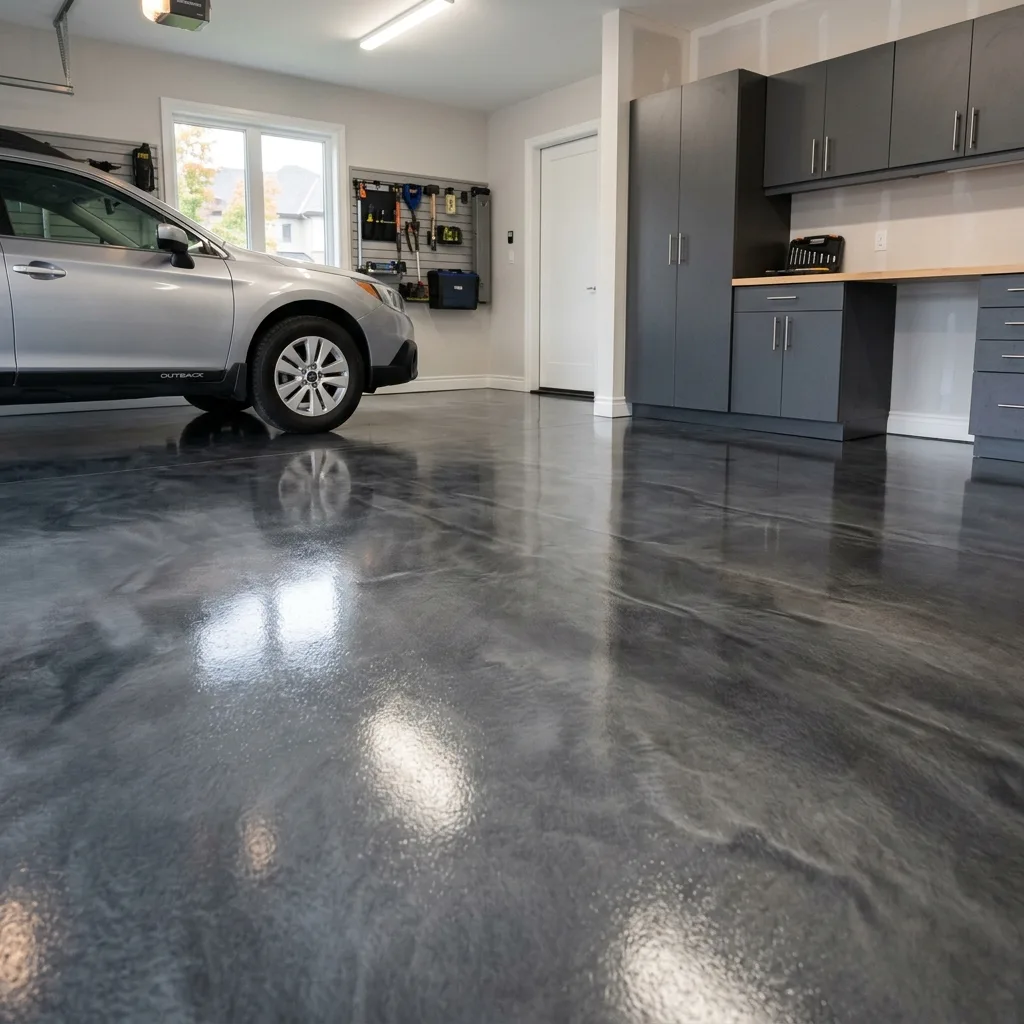
Wash Bay & Washdown Epoxy in Ottawa & the National Capital Region - Truck Fleet & High-Pressure Floor Systems
For Ottawa fleet operators, food processors, and industrial facility managers, Ottawa Epoxy Flooring installs polyurea, urethane cement, and broadcast epoxy floor systems in truck and fleet wash bays, automotive detailing bays, food plant wet process areas, industrial parts washdown stations, and commercial vehicle maintenance shops throughout the National Capital Region. Slope-to-drain verification, seamless floor-to-drain transitions, and chemical resistance validation for the specific cleaning agents and degreaser concentrations used in the facility come standard on every wash bay install.
Wash bay floors fail faster than almost any other industrial floor because three failure modes attack simultaneously, and standard epoxy cannot withstand the combination. Hot pressure washing at 60 to 82 degrees Celsius with 1,500 to 3,000 PSI contact cycles the surface through rapid expansion and contraction, while alkaline degreaser concentrations of 1 to 5 percent sodium or potassium hydroxide dissolve the amine-cured epoxy binder surface. Urethane cement is the only seamless floor chemistry rated for continuous hot water exposure, alkaline cleaning agents, and high-pressure wash equipment simultaneously. Petroleum-heavy truck wash bays get a polyurea topcoat rated for 150+ mg/L oil and fuel exposure as an additional chemical resistance layer above the urethane cement base. Drain placement and 1:100 (1 percent) minimum slope to drain are critical installation requirements, because standing water and degreaser pooling in flat wash bay floors causes continuous chemical attack and surface degradation within 3 to 6 months.
Wash bay projects at 200 to 2,000 sq ft complete in 1 to 3 days depending on size and drain detailing complexity. Pricing ranges from $7 to $12 per sq ft installed based on chemical resistance specification, slope correction required, and drain detailing. WSIB-certified installation on every project.
Ottawa Epoxy Flooring services Kanata, Nepean, Orleans, Barrhaven, Stittsville, Gatineau, Kemptville, Arnprior, Rockland, Carp, and Manotick for wash bay and washdown epoxy work.
Wash Bay and Washdown Epoxy Flooring in Ottawa
Ottawa Epoxy Flooring installs urethane cement and polyurea floor systems for truck wash bays, fleet maintenance facilities, food plant wet process areas, and industrial washdown stations across Ottawa and the National Capital Region. Our urethane cement base coats stand up to the continuous hot pressure washing, alkaline degreaser concentrations, and petroleum contamination that reduce standard epoxy to a failed floor inside 6 to 18 months.
What Is Wash Bay Epoxy Flooring?
Wash bay flooring means urethane cement and polyurea floor systems built for the simultaneous chemical, thermal, and mechanical demands of commercial and industrial high-pressure washdown environments. Where standard epoxy cannot hold chemical resistance and adhesion at 60 to 82 degrees Celsius hot water contact under alkaline cleaning agents, urethane cement can, which is why it dominates the specification across fleet wash, food plant, and industrial cleaning applications.
What Does a Wash Bay Floor System Include?
- CSP 3 diamond-ground surface preparation
- Slope verification and correction to 1:100 minimum drain fall
- Urethane cement base coat (hot wash and alkaline degreaser resistant)
- Petroleum-resistant polyurea topcoat (truck wash applications)
- Seamless floor-to-drain stainless steel transition
- Non-skid aggregate broadcast for wet surface traction
How Much Does Wash Bay Flooring Cost
Wash bay and washdown epoxy runs $7 to $12 per sq ft installed across Ottawa and the NCR, driven by chemical resistance specification, slope correction, and drain detailing. Most projects run 200 to 2,000 sq ft.
Why Wash Bay Floors Face Accelerated Failure
The Ottawa climate adds a thermal cycling dimension to wash bay floor failure that milder-region facilities do not experience. When a truck wash bay door opens in January to receive a vehicle caked in salt-laden slush, the slab surface temperature can drop from the heated interior to below freezing inside a few minutes. The hot pressure wash that follows then subjects the same surface to 60 to 82 degree Celsius water contact. That thermal range, from sub-zero to near-boiling within a single wash cycle, is the most extreme thermal shock any commercial floor coating faces. Standard epoxy cannot absorb that expansion and contraction range without delaminating from the slab.
Ottawa’s 224 cm of annual snowfall means truck and fleet wash operations run at peak frequency from November through April. Salt, sand, and calcium chloride de-icing compounds applied to local roads track into wash bays with every vehicle, adding corrosive chemistry on top of the thermal shock and alkaline degreaser exposure. Urethane cement is the only base coat chemistry rated for this combination.
Slab-on-grade wash bay buildings constructed on Leda clay across Nepean, Kanata, and the Highway 417 corridor frequently show elevated moisture vapour emission through the concrete. ASTM F2170 testing is mandatory before any wash bay coating, because urethane cement’s 95 percent RH slab tolerance, versus standard epoxy’s 80 percent RH limit, is often the deciding factor in whether the floor survives its first year.
Specialized Wash Bay and Washdown Floor Applications
We install seamless, high-build epoxy and urethane cement flooring engineered for constant moisture, temperature swings, and chemical exposure. Slope-to-drain layouts, trench drain integration, and multilayer moisture mitigation all get built into the specifications that keep long-term performance intact.
Truck and Fleet Wash Bays
Fleet facilities need heavy-duty surfacing that shrugs off mechanical stress, hot water, and detergent exposure. Our 5-layer builds combine cementitious urethane base coats with polyurea topcoats to handle 1,500 to 3,000 PSI pressure washes and 60 to 82 degree Celsius thermal shock cycles.
Every installation opens with CSP 4 to 6 diamond grinding for mechanical adhesion and confirmed ASTM F2170 moisture readings to head off vapour-driven failure. The slope-to-drain standard sits at 1:100 minimum, which delivers controlled drainage without surface pooling even under continuous rinsing.
A sealed, slip-resistant finish removes standing water risk in wash bays used by large service fleets or transport rigs. The build maintains resistance to 1 to 5 percent sodium hydroxide degreasers commonly applied in heavy-equipment washing. Nepean fleet operators running 10+ vehicle wash cycles daily see the most dramatic service life difference when they switch from standard epoxy to urethane cement.
Automotive Detailing Bay Requirements
Automotive detailing bays run on easy-clean, glossy finishes that hold presentation while absorbing hot rinse cycles. We install low-maintenance resin floors that resist waxes, shampoos, and light solvents common in detailing work.
CSP 3 diamond grinding and multilayer epoxy builds optimised for lighter rolling loads are the standard specification. A silica aggregate broadcast delivers safe traction when wet, and the system seals under a UV-stable polyurea topcoat for colour retention under direct lighting.
Drainage-integrated slope designs support efficient water evacuation while limiting downtime. Our urethane cement upgrades deliver heat and chemical resilience for detailing programmes that use steam cleaning or alkaline degreasing cycles.
Food Plant Wet Process Flooring
Food and beverage facilities have to meet CFIA RCP 2019 sanitary requirements and stand up to organic acids, fats, and moisture exposure. Our cementitious urethane formulations hold structural integrity through daily washdowns and thermal cycling to 82 degrees Celsius.
Trench drain integration, 1:100 slope-to-drain grading, and non-slip broadcast layers meet hygiene and safety regulations. Every installation goes through ASTM F2170 testing to verify slab moisture prior to coating.
Seamless systems eliminate the bacterial harborage points that tile creates, delivering a continuous food-safe surface for wet processing lines. Stittsville and Kanata food processing facilities under CFIA oversight receive compliance documentation packages covering material specs, moisture test logs, and installation records.
Industrial Parts Washdown Areas
Industrial parts cleaning zones often use high-pH degreasers and continuous hot wash cycles that degrade standard epoxy. Our urethane cement systems resist chemical attack from 1 to 5 percent sodium hydroxide and absorb long exposures to 3,000 PSI wash pressure without softening or delamination.
The five-layer build typically includes:
- Moisture-tolerant primer
- Urethane cement body coat
- Silica broadcast
- Intermediate epoxy tie-coat
- Polyurea topcoat
Washdown stations handling heavy components and mechanical assemblies, where traditional coatings often fail within a year, get this specification. Proper surface prep (CSP 4 to 5) locks bond strength, and sloped trench installations control wastewater flow across loading zones.
Municipal and Transit Facility Wash Areas
Municipal garages and transit depots put flooring through constant thermal and chemical challenge. Our designs support large vehicle wash operations, integrating durable aggregates for slip reduction and 150+ mg/L oil and fuel resistance compliance.
A 1:100 minimum floor slope directs runoff to trench drains designed for interceptor systems. Phased overnight scheduling completes installations without full facility shutdowns. OC Transpo maintenance facilities and municipal garages running daily vehicle wash operations get section-by-section scheduling that keeps at least partial operations running throughout.
Performance Under Extreme Conditions
High-performance wash bay flooring has to endure extreme thermal cycling, caustic cleaning agents, and fuel or oil contamination. Our installation methods and material selections meet industrial and municipal facility standards.
Thermal Shock and Hot Pressure Wash Resilience
Urethane cement and cementitious urethane flooring systems tolerate rapid temperature changes from 60 to 82 degrees Celsius, which is what environments running 1,500 to 3,000 PSI hot pressure washing require. Standard commercial-grade epoxy cracks or delaminates under those conditions. Urethane cement holds bond integrity under sudden heat exposure because its cross-link density and thermal flexibility are engineered for it.
Each installation opens with CSP 3 diamond grinding for epoxy or CSP 4 to 6 for urethane systems, which secures surface texture and adhesion. Thermal cycling tests verify dimensional stability even when the floor shifts between boiling rinse water and ambient temperature.
Alkaline Degreaser and Chemical Exposure Resistance
Frequent cleaning in washdown zones involves 1 to 5 percent sodium hydroxide (NaOH) or potassium hydroxide degreasers that degrade standard resin floors. Our epoxy and urethane formulations resist saponification and hold gloss and cohesion after repeated chemical exposure. Alkaline immersion tests confirm minimal degradation to surface hardness.
pH tolerance also gets verified alongside vapour transmission measured through ASTM F2170 in-situ moisture testing, which keeps the concrete slab from promoting blistering. Processing areas under CFIA RCP 2019 guidelines get floors that withstand the sanitation chemistry used in food facilities without contamination risk.
Oil and Fuel Contamination Control
Hydrocarbon runoff from trucks and machinery is a wash bay constant. Our systems deliver 150+ mg/L oil and fuel resistance, blocking surface staining or chemical infiltration into the substrate. The dense urethane matrix repels diesel, lubricants, and hydraulic oils, preserving skid resistance and colour stability.
A polyurea topcoat further hardens impermeability against petroleum-based contamination, while silica aggregate broadcast delivers consistent texture under wet conditions. That combination allows continuous oil residue cleaning without softening or etching the floor surface.
Urethane Cement Versus Standard Epoxy in Washdown Environments
Urethane cement gets specified when moisture, temperature, and chemical exposure push past what standard epoxy can absorb. Those conditions occur daily across wash bays, food plant wet zones, and fleet washdown areas running high-pressure and alkaline cleaning routines.
Failure Risks: Delamination and Chemical Attack
Delamination usually starts with poor substrate prep or moisture vapour pressure. Our epoxy floor installers verify CSP 3 diamond grinding on every project, and urethane cement systems typically get a CSP 4 to 6 anchor profile to lock a strong bond under high thermal and moisture loads.
Chemical attack is the other major factor. Standard epoxy softens or fades under 1 to 5 percent sodium hydroxide (NaOH) degreasers. Urethane cement mortars hold adhesion and surface integrity because their inorganic matrix resists alkalis. Environments using oil separators rated above 150 mg/L for fuel runoff get polyurea topcoats for the additional hydrocarbon resistance required.
Thermal and Moisture Tolerance Comparison
Thermal shock is the critical test of system stability. Urethane cement rated for 60 to 82 degree Celsius hot washdown handles direct cleaning from 1,500 to 3,000 PSI pressure washers without peeling or whitening. Epoxy coatings, even high-solids varieties, are more prone to cracking when steam or hot rinse cycles pass 60 degrees Celsius.
Moisture vapour failures are minimised through ASTM F2170 in-situ testing before installation. Urethane cement tolerates up to 95 percent slab relative humidity, while typical commercial epoxy formulations perform best below 80 percent RH. Leda clay substrates across the NCR frequently drive slab moisture readings up, and this tolerance difference is the deciding factor in whether a wash bay floor survives.
Durability and Life-Cycle Performance
Urethane cement systems consistently deliver 10 to 15 years of service in heavy wash bay use, versus 5 to 8 years for standard epoxies under similar cleaning intensity. A 5-layer system build forms a sealed composite structure that resists hot water expansion and chemical intrusion.
A 1:100 slope-to-drain design and trench drain interface handle flow without stagnant pooling, which drops microbial growth and structural stress. Urethane overlays also absorb the frequent sanitation cycles required under CFIA RCP 2019, combined with our WSIB certification and $2M liability coverage.
Related Questions Facility Managers Ask
What’s the difference between urethane cement and polyurea for wash bay floors?
Urethane cement is the base coat, delivering thermal resistance, moisture tolerance up to 95 percent RH, and chemical resistance to alkalis. Polyurea is the topcoat, delivering wear surface, oil and fuel resistance at 150+ mg/L, and UV stability. Both are needed in a complete wash bay system. In low-chemical detailing bay applications, a polyurea-only build over an epoxy base is sufficient. Hot washdown and food plant applications require the urethane cement base.
How long does a wash bay install take without shutting the facility?
Most wash bay projects finish in 1 to 3 days depending on size and drain detailing complexity. Section-by-section overnight installation keeps at least partial wash bay capacity running throughout. A 2,000 sq ft truck wash bay with trench drain integration typically takes 2 overnight shifts: one for decontamination, grinding, and slope correction, one for the 5-layer system application. The floor is ready for vehicle traffic 24 to 48 hours after the final polyurea topcoat.
Do wash bay floors in food plants need CFIA compliance documentation?
Yes, for federally registered food establishments. CFIA RCP 2019 requires floors in wet process areas to be seamless, impermeable, slip-resistant, and coved at wall junctions. Compliance documentation covering material specifications, ASTM F2170 moisture test logs, CSP profile confirmation, and installation records ships with every project. Stittsville and Kanata food manufacturers operating under federal licences should request this documentation before the first inspection.
How does hot pressure washing damage standard epoxy floors in wash bays?
Standard epoxy expands rapidly when hit by 60 to 82 degree Celsius pressure wash water and contracts when ambient temperatures drop. The same thermal cycle that causes concrete pavement to crack over time applies to the coating. Epoxy resins, being more rigid than urethane cement, cannot absorb that expansion and contraction without delaminating from the slab or developing surface cracks. The alkaline degreasers used simultaneously accelerate surface degradation by attacking the amine-cured epoxy binder. In Ottawa, sub-zero ambient temperatures when bay doors open between wash cycles create an even wider thermal range than facilities in milder climates face.
Wash Bay Epoxy Pricing
Chemical resistance specification and slope correction affect final price.
Why Ottawa Customers Choose Ottawa Epoxy Flooring for Wash Bay Epoxy
Steam and Pressure Rated
The urethane cement body coat swallows the combined attack of 82 degree wash water and 3,000 PSI wands that softens standard epoxy inside eighteen months.
Slope Confirmed by Digital Level
Every floor gets the minimum one-in-hundred drainage fall verified with a laser before the first primer coat. Pooling degreaser never gets a chance to eat the film.
Federal Food Plant Ready
The seamless urethane cement system passes CFIA RCP 2019 audits at federally inspected washdown facilities without a bacterial harbourage point.
One Bay at a Time
Zoned overnight sequencing keeps adjacent bays live and rinsing. Most facilities log zero lost operating shifts through the install.
How Wash Bay Epoxy Works
Site Assessment & Slope Survey
Drain locations, existing slope fall, chemical exposure profile, and slab condition get evaluated before the coating system is specified.
Decontamination & Diamond Grinding
Petroleum contamination is stripped with alkaline degreaser treatment, then CSP 3-4 diamond grinding opens the slab for mechanical adhesion.
5-Layer System Application
Urethane cement body coat, silica aggregate broadcast, intermediate tie coat, and polyurea topcoat go down with verified cure times between layers.
Drain Integration & Compliance Documentation
Trench drain transitions are sealed flush, slope is verified with digital levels, and ASTM F2170 moisture readings are logged in the compliance report.
Ready for a Free On-Site Assessment?
Same-day quotes across Ottawa. WSIB-certified, $2M liability on every project.
What Customers Say About Our Wash Bay Epoxy
"Fourteen-bay truck wash in Nepean. The floor we had before started cracking around the drains inside two years. Ottawa Epoxy ground everything back to concrete, corrected the slope, and installed urethane cement throughout. Three years on and the floor still looks new. The chemical resistance to our NaOH degreaser is exactly what they told us it would be."
"Federally inspected processing facility in Stittsville. We needed CFIA-compliant flooring in the wet washdown zone. Ottawa Epoxy specified a seamless urethane cement system with integral coving and delivered the exact compliance documentation our inspector asked for. Install ran overnight, no lost production shifts. Passed CFIA review on the first inspection."
"City transit maintenance facility, around 40 buses washed daily. The old epoxy paint was peeling within six months of every repaint. Ottawa Epoxy put in a proper urethane cement system with polyurea topcoat. Slope to the trench drains is dead accurate and the surface takes our hot pressure washing without any issue. Should have done this years ago."
Wash Bay Epoxy FAQs
What coating goes into a wash bay?
Wash bays need urethane cement base coats rather than standard epoxy. Urethane cement absorbs continuous hot water pressure washing at 60 to 82 C, alkaline degreaser concentrations of 1 to 5 percent NaOH or KOH, and the hydraulic impact of 1,500 to 3,000 PSI wash equipment simultaneously. Standard epoxy softens and blisters under this combination within 6 to 18 months. Petroleum-heavy truck wash environments get a polyurea topcoat over the urethane base for 150+ mg/L oil and fuel resistance.
Does the floor require a slope to drain?
Yes. Minimum 1:100 (1 percent) slope to drain is required. Standing water and degreaser pooling in flat wash bay floors causes continuous chemical attack and surface breakdown within 3 to 6 months. Where existing slabs are flat or sloped incorrectly, we use a cementitious topping or polymer-modified overlay to build the correct drainage fall before applying the urethane cement system.
What surface prep does wash bay flooring need?
Epoxy and polyurea wash bay floors need CSP 3 diamond grinding as a minimum. Urethane cement systems require CSP 4 to 6 mechanical profiling to achieve the deeper anchor pattern that maintains bond strength under continuous thermal cycling and wet chemical exposure. Petroleum-contaminated slabs undergo alkaline degreaser treatment and grind dust colour verification before grinding begins. ASTM F2170 in-situ moisture testing happens on every slab before any coating application.
What's in a 5-layer wash bay build?
Our standard wash bay build is: (1) moisture-tolerant primer penetrant, (2) urethane cement body coat for thermal and chemical resistance, (3) silica aggregate broadcast for slip resistance, (4) intermediate epoxy tie coat to lock the build, and (5) polyurea topcoat for UV stability, petroleum resistance, and surface durability. The polyurea topcoat handles the 1,500 to 3,000 PSI wash impact and delivers 150+ mg/L oil and fuel resistance.
Will the floor withstand 3,000 PSI pressure washing and alkaline degreasers?
Yes. Both urethane cement base coats and polyurea topcoat systems are rated for 1,500 to 3,000 PSI wash pressure and repeated exposure to 1 to 5 percent NaOH or KOH alkaline degreasers. Quarterly inspection of drain transitions and coving edges, prompt resealing of any wear zones, and wiping petroleum spills rather than allowing extended pooling preserve topcoat service life.
What does wash bay epoxy flooring cost in Ottawa?
Wash bay and washdown epoxy runs $7 to $12 per sq ft installed across Ottawa and the NCR. Slope correction, trench drain detailing, CFIA compliance documentation, and chemical resistance specification (urethane cement versus standard epoxy) are the main pricing drivers within that range. Most projects run 200 to 2,000 sq ft and finish in 1 to 3 days.
Can wash bay flooring go over existing concrete?
Yes, provided the existing slab is structurally sound and free of contamination. CSP 3 diamond grinding strips surface contamination, laitance, and any prior coating. Oil and petroleum contamination gets cleaned with alkaline degreaser before grinding. Severely contaminated slabs may need a primer penetrant treatment before urethane cement application to ensure full adhesion under wet service.
Is urethane cement better than epoxy for food plant washdown floors?
Yes. Food plant washdown areas using hot steam cleaning and alkaline sanitisers need urethane cement for thermal stability and chemical resistance. The CFIA requires seamless, impermeable floor surfaces in food processing wet process areas, and urethane cement is the system of choice for federally inspected facilities. Standard epoxy does not survive 82 C steam combined with daily QAC sanitiser and NaOH cleaning protocols.
How long does wash bay flooring last?
A properly installed urethane cement system in wash bay service runs 8 to 15 years depending on washing frequency, chemical concentrations, and pressure settings. Urethane cement tolerates up to 95 percent slab RH versus 80 percent RH for standard epoxy, and that moisture tolerance difference often decides whether a wash bay floor survives its first year. Annual inspection of drain seals and topcoat recoats at the 5 to 7 year mark extend base system life.
Related Services
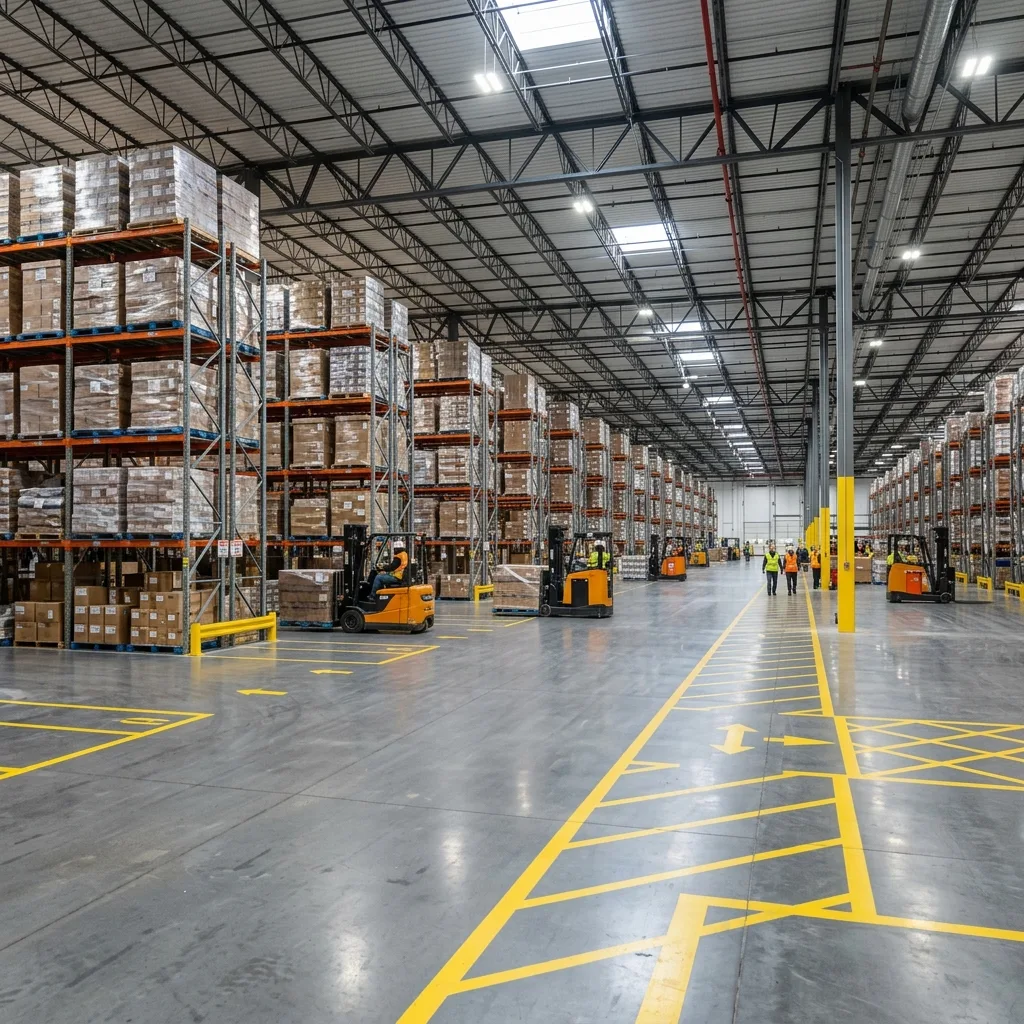
Industrial Epoxy Flooring in Ottawa & the National Capital Region
Heavy-build industrial epoxy for NCR manufacturing plants, distribution warehouses, food processing facilities, chemical storage, and automotive service operations. 80 to 100 mil broadcast systems rated for Class 1 to 3 forklift traffic, 12,000+ lb point loads, and chemical spill exposure. Pricing runs $3 per sq ft for open-plan warehouse epoxy up to $18 per sq ft for novolac chemical-resistant work. WSIB-certified, $2M liability, full compliance documentation.
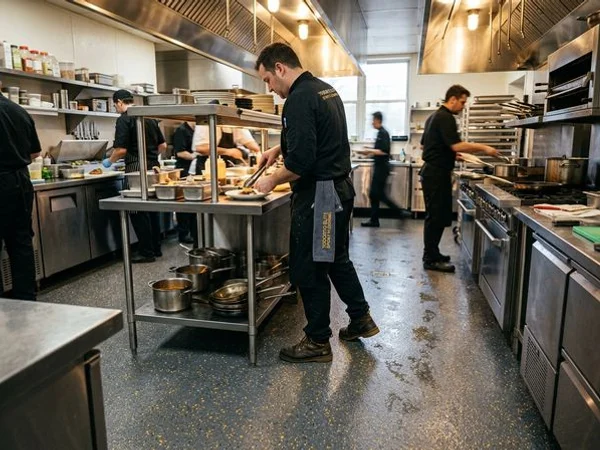
Commercial Kitchen Epoxy Flooring in Ottawa & the National Capital Region
For NCR restaurants and food-service operators, we build CFIA-compliant seamless epoxy floors with 4 to 6 inch integral coving, quartz anti-slip broadcast, and zero-VOC chemistry. Installed pricing typically sits at $5 to $11 per sq ft, with most kitchens wrapped inside two overnight shifts. Health-inspection documentation and off-hours scheduling are standard on every project.
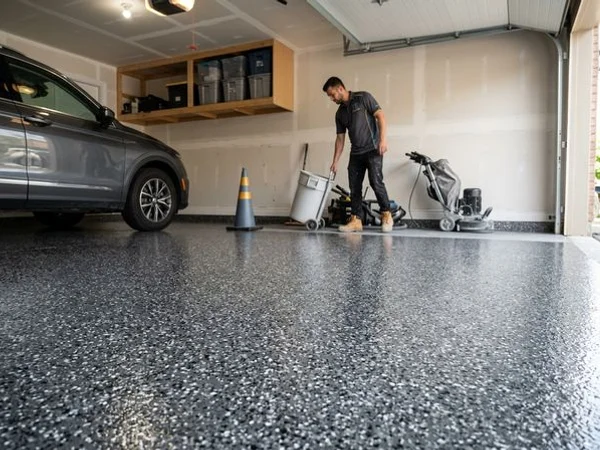
Automotive Service Bay Epoxy Flooring in Ottawa & the National Capital Region
Broadcast quartz and polyaspartic epoxy systems built for dealership service departments, quick-lube facilities, and independent workshops across the National Capital Region. Hoist pad reinforcement, petroleum decontamination, and ASTM D2047 anti-slip aggregate on every bay. Installed pricing sits between $6 and $12 per sq ft. Bay-by-bay overnight scheduling keeps the shop open. WSIB-certified with $2M liability.
Secondary Containment Coatings in Ottawa & the National Capital Region
Immersion-rated novolac epoxy, vinyl ester, and polyurea secondary containment coatings for fuel tank berms, chemical storage rooms, transformer pads, and industrial spill floors across Ottawa and the NCR. TSSA-compliant, chemical-profile-specific specifications. From $10 to $18 per sq ft installed with full compliance documentation, WSIB certification, and $2M liability on every project.
Cold Storage & Freezer Epoxy Flooring in Ottawa & the National Capital Region
Polyurea and polyaspartic freezer floor systems rated for -40 C continuous cryogenic service, sustained thermal shock cycling, and daily forklift traffic. Installed across cold storage warehouses, blast tunnels, pharmaceutical cold chain rooms, and industrial cryogenic facilities in the National Capital Region. Installed pricing lands between $8 and $15 per sq ft. WSIB-certified crews carry $2M liability on every contract.
Ready to Book Wash Bay Epoxy?
Same-day free on-site assessment. WSIB-certified, $2M liability on every project.