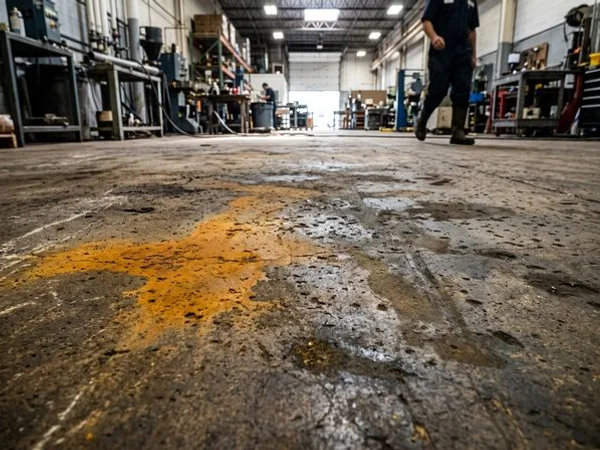
Secondary Containment Coatings in Ottawa & the National Capital Region - TSSA Tank Berm & Chemical Storage Systems
Across the National Capital Region, Ottawa Epoxy Flooring installs immersion-rated novolac epoxy, vinyl ester, and polyurea secondary containment coatings for fuel storage tank berms, chemical storage rooms, transformer and electrical equipment pads, industrial drum staging areas, and hazardous material spill containment systems. Every containment specification meets the 110 percent volume requirement under Ontario Regulation 675/98 (Liquid Fuels) and the TSSA Technical Standards and Safety Authority guidelines for above-ground storage tank secondary containment. Chemical resistance is validated for the specific fuel, chemical, or electrical fluid stored in the contained area.
Standard floor applications and secondary containment applications fail differently. A floor coating is designed for splash resistance. A containment system has to maintain liquid impermeability under static immersion. A containment berm by definition sits full of liquid after a spill event. When standard epoxy is applied to a moisture-vapour-emitting slab, hydrostatic backpressure at the coating bond line lifts the coating from below as the berm fills, and the contained liquid then attacks from both directions. Vinyl ester systems, used under NACE SP0892 and ASTM C722 for chemical plant containment, resist concentrated sulphuric, hydrochloric, and nitric acids, solvents, and petroleum hydrocarbons under full immersion where novolac epoxy would eventually give up. The CCME Environmental Code of Practice for aboveground and underground storage tank systems mandates impermeable secondary containment surfaces for petroleum and hazardous chemical storage across all Canadian provinces. Failure to keep containment intact leaves the owner liable for soil remediation costs that routinely exceed $50,000 to $500,000 per contaminated site.
Containment projects at 100 to 2,000 sq ft complete in one to three days depending on size and edge detailing. Pricing ranges from $10 to $18 per sq ft installed based on chemical resistance specification, coating system selection, and the compliance documentation package required. TSSA and CCME compliance documentation ships with every project.
Ottawa Epoxy Flooring covers Kanata, Nepean, Orleans, Barrhaven, Stittsville, Gatineau, Kemptville, Arnprior, Rockland, Carp, and Manotick for secondary containment work.
Secondary Containment Coatings in Ottawa
Across Ottawa and the National Capital Region, Ottawa Epoxy Flooring installs TSSA-compliant novolac epoxy, vinyl ester, and polyurea secondary containment coatings for fuel storage berms, chemical storage rooms, transformer pads, and industrial spill containment systems. Every immersion-rated containment system meets Ontario Regulation 675/98, TSSA Technical Standards, and CCME Environmental Code of Practice requirements, with the full compliance documentation package included on every project.
What Are Secondary Containment Coatings?
An immersion-rated epoxy or vinyl ester system applied to the floor and walls of containment berms, spill pads, and chemical storage areas. Its job is to stop petroleum or hazardous chemical from contaminating the surrounding concrete and soil in a spill event. Where standard floor coatings are engineered for splash resistance, containment systems have to maintain impermeability under static liquid immersion, holding the full berm load during a tank spill.
What Does a Secondary Containment System Include?
- ASTM F2170 moisture verification before application
- CSP 3 to 5 diamond-ground or blast-cleaned surface preparation
- Moisture-tolerant primer penetrant coat
- Vinyl ester or novolac epoxy base coat (immersion rated)
- Oil and chemical separator berm edge detailing
- Wall-to-floor junction sealing
- TSSA and CCME compliance documentation
How Much Do Secondary Containment Coatings Cost
$10 to $18 per sq ft installed in Ottawa and the NCR, driven by chemical resistance specification, coating system selected, and compliance documentation required. Most projects run 100 to 2,000 sq ft.
Why Our Industrial Facilities Need Properly Specified Containment
Fuel storage, chemical handling, and transformer installations across Ottawa’s industrial corridors, from Highway 417 through Nepean, out to the Kanata business parks, and into the federal government’s operational footprint, all fall under Ontario Regulation 675/98 for secondary containment. The regulatory requirement is unambiguous. Coating specification is where most facilities go wrong. A general contractor installing standard commercial epoxy on a fuel berm produces a system that looks compliant but fails under the hydrostatic immersion conditions of a real spill event.
Ottawa’s climate raises the bar on outdoor containment above what milder regions face. Winter runs 80 to 100 freeze-thaw cycles and subjects outdoor berms and transformer pads to expansion and contraction that cracks rigid coatings at every control joint. Road salt tracked into industrial areas by service vehicles piles chloride corrosion on top of that thermal load. Leda clay substrates under slab-on-grade industrial buildings across Kanata and Nepean push moisture vapour emission high enough that hydrostatic backpressure forms at the coating bond line, which is the exact failure mode that causes delamination when a berm fills during a spill. These conditions require elastomeric topcoats, moisture-tolerant primers, and ASTM F2170 verification that most regional containment installers do not perform.
Environmental and Regulatory Compliance
Containment coatings are engineered to meet both provincial and federal standards, including Ontario Regulation 675/98 and Technical Standards and Safety Authority (TSSA) guidelines. Manufacturing and chemical handling sites across Kanata, Nepean, and the rest of the NCR operate under both, and both drive our specifications.
Every containment design incorporates 110 percent spill volume capacity verification and oil or chemical separator berm detailing, in line with Environment and Climate Change Canada’s secondary containment expectations under the CCME Environmental Code of Practice. Working to the NACE SP0892 lining standard is what keeps surface preparation and application quality at the level regulatory audits and environmental reporting require.
For facility operators demonstrating due diligence, we log substrate moisture readings, coating thickness measurements, and system cure times. That verification package supports TSSA inspection readiness and aligns with ISO 14001 environmental management recordkeeping.
Chemical and Impact Resistance
Our industrial epoxy containment systems handle strong acids, caustics, and hydrocarbons that degrade uncoated concrete in a spill event. Formulated to ASTM C722 chemical-resistant mortar performance criteria, these coatings drop concrete permeability and hold adhesion under thermal cycling and mechanical vibration.
Vinyl ester coatings outperform novolac epoxy under full immersion in concentrated acid and solvent handling zones. The denser polymer crosslinks deliver sustained resistance to sulphuric, hydrochloric, and nitric acids, plus halogenated solvents, in tank farms, mixing pits, and chemical transfer areas where a berm fills completely during a spill event.
Impact resistance matters for maintenance efficiency over the long term. Our commercial-grade materials absorb equipment shock without fracturing the substrate, which protects pumps, neutralisation basins, and other assets from wear that would otherwise chip away at containment integrity.
Critical Installation Steps and Surface Preparation
Careful assessment, precise surface prep, and controlled installation are the three legs of every containment epoxy system. Hydrostatic pressure as a failure mode raises the substrate prep standard above what any standard floor coating requires.
Containment Volume Assessment and System Specification
Each project starts with an on-site assessment covering substrate condition, containment layout, stored substance profile, and regulatory exposure. Moisture readings, chemical compatibility verification, and volume calculations drive the design. This stage lands the system inside Ontario Reg 675/98 and TSSA requirements for containment capacity and spill management documentation.
Spill volume analysis confirms 110 percent containment capacity from wall height, containment footprint, and internal slope geometry. Coating thickness and primer type get specified against NACE SP0892 standards. A written scope covering resin system selection, basecoat thickness, and curing schedule reaches the client before any work starts.
Concrete Repair and Chemical-Resistant Joint Treatment
Immersion-rated epoxy adhesion needs a properly repaired foundation. Compressive strength testing precedes void filling, and failed coatings or hollow spots come out first. Structural cracks and cold joints get flexible sealants or epoxy injections rated under ASTM C722 for chemical-resistant mortars.
Oil and chemical separator berm details go into containment zones to manage spills and stop lateral migration into adjacent floor areas. Repairs finish flush so film thickness stays even during final coating application. Existing berms at Kanata chemical facilities and Nepean industrial plants generally need this repair phase before any recoat work.
Diamond Grinding and Surface Profiling (CSP 3-5)
Diamond grinding refines the surface to the correct mechanical profile: CSP 3 to 5 for secondary containment, higher than the CSP 3 standard used for regular floor coatings. That elevated profile is required because containment coatings experience hydrostatic backpressure from below that regular floor coatings never face.
Our grinding equipment is HEPA-filtered and dust-controlled, meeting jobsite safety and cleanliness standards. ASTM F2170 in-situ vapour testing follows grinding to confirm emission rates below 3 lb/1,000 sq ft/24 hr. Elevated vapour emission is the most common cause of containment coating failure, because moisture pressure from below delaminates the coating when the berm fills.
Coating Systems for Containment Solutions
Containment flooring specifications match resin chemistry to the specific chemical resistance requirement. Specifying the wrong system builds a containment surface that passes initial inspection but fails during the first significant spill event.
Industrial-Grade Novolac and Vinyl Ester Systems
Our industrial containment builds meet Ontario Regulation 675/98 and TSSA secondary containment guidelines. ASTM C722 chemical-resistant mortars and dense industrial resins deliver the fuel, acid, and alkali resistance required under full immersion.
Novolac epoxy is the correct system for petroleum product containment: fuel storage berms, transformer dielectric fluid pads, and waste oil sump areas where the chemical profile is petroleum-based. Vinyl ester is required when concentrated acids, strong caustics, or aggressive solvents are the stored substance. Chemical storage facilities across Kanata and Nepean with mixed profiles may need both systems within the same containment footprint, based on which zones face which substances.
| Feature | Specification |
|---|---|
| Chemical Resistance Standard | ASTM C722 Compliant |
| Regulatory Compliance | Ontario Reg 675/98, TSSA, CCME |
| Spill Capacity | 110% Verified |
| Lining Standard | NACE SP0892 |
| Liability Coverage | WSIB-Certified, $2M |
Polyurea Spray Systems for Rapid Return to Service
Operational downtime is the primary constraint on some facilities, and polyurea spray containment systems solve for that. Polyurea reaches mechanical service in 2 to 4 hours and full containment service in 24 hours, substantially faster than epoxy systems that need 5 to 7 days for full chemical immersion cure.
Polyurea also brings excellent crack-bridging capability for containment areas with existing joint movement or substrate cracking that would defeat rigid epoxy systems. The 300 to 400 percent elongation of polyurea accommodates substrate movement without delaminating at crack locations. That property is particularly valuable in older industrial facilities with concrete containment structures where complete crack repair before coating is not feasible.
Application Areas Across Industrial Sectors
Secondary containment coatings go into industrial environments across the NCR where petroleum, chemical, or hazardous material storage creates regulatory and environmental liability exposure.
Industrial Facilities and Manufacturing Plants
Plants handling chemicals, fuels, and wastewater get containment systems that deliver seamless protection meeting 110 percent spill volume capacity verification and resisting acids, caustics, and petroleum products under full immersion. Automotive, aerospace, food processing, and electronics manufacturing plants across the region all need containment systems for their chemical storage and transfer areas.
Oil and chemical separator berm detailing gets built into design layouts to maintain containment integrity and stop cross-contamination between zones. Properly applied containment linings extend containment structure service life 10 to 15 years under continuous service versus uncoated concrete, which starts absorbing chemical contamination from the first spill event.
Fuel Storage Berms and Transformer Pads
TSSA-regulated fuel storage berms are the most common secondary containment application across the industrial and commercial sectors. Above-ground storage tank (AST) berms have to be coated with an impermeable system meeting the 110 percent volume requirement under Ontario Reg 675/98. The system specification, installation, and compliance documentation package required for TSSA inspection come from us.
Transformer pad containment for dielectric fluid needs a petroleum-resistant coating with UV stability for outdoor installations and sufficient flexibility for the aggressive local freeze-thaw cycle. Novolac epoxy with elastomeric topcoat or polyurea systems fit this application depending on the thermal cycling profile and return-to-service window.
Commercial and Institutional Environments
Research centres, universities including Carleton University and the University of Ottawa, federal government buildings, hospitals, and utilities across the NCR need secondary containment for chemical storage rooms, generator fuel tanks, and laboratory chemical storage areas. These environments combine regulatory obligations with aesthetic standards, and our coatings maintain cleanable, semi-gloss surfaces that satisfy sanitation requirements alongside chemical resistance.
Each project ships with precise thickness verification, WSIB-certified installation records, and full compliance documentation. Organisations operating under combined food, pharmaceutical, or environmental regulations get documentation packages structured to satisfy multiple regulatory frameworks from a single installation.
Related Questions Facility Managers Ask
What is the most common failure mode in secondary containment coatings and how is it prevented?
Hydrostatic backpressure delamination. The coating lifts from below when the berm fills because moisture vapour pressure in the concrete slab exceeds the coating bond strength. It is the most preventable failure mode and the most commonly overlooked. Prevention has three requirements. First, ASTM F2170 moisture testing before application to confirm vapour emission is within tolerance. Second, a moisture-tolerant primer formulated to bond under residual moisture conditions. Third, CSP 3 to 5 surface profile to maximise mechanical bond strength. Leda clay substrates across the NCR make this failure mode more likely than in regions with sandy or granular soils, because clay-bound moisture migrates upward through the slab more aggressively.
Why does a TSSA inspection sometimes fail a system that looks intact?
TSSA inspectors assess containment integrity beyond visual appearance. They verify that the coating is the correct chemistry for the stored substance, that the berm geometry provides the required 110 percent volume, that wall-to-floor junctions are properly sealed without gaps or voids, and that installation documentation confirms the system was applied correctly. A visually intact coating of the wrong chemistry, standard floor epoxy instead of immersion-rated novolac, will fail TSSA inspection even with no visible defects, because it is not rated for the immersion conditions of a real spill event.
Can an active industrial facility install containment coatings without shutting down the contained area?
It depends on the size of the containment area and whether the stored substance can be temporarily relocated. Small fuel tank berms under 500 sq ft can usually be drained, cleaned, and recoated in a 48 to 72 hour window while tanks are temporarily emptied. Larger chemical storage room floors may require section-by-section phasing. We coordinate warm-up, drying, and installation scheduling against the facility’s operational constraints and deliver a written phase plan before work begins.
What is the typical remediation cost exposure if a containment coating fails and allows soil contamination?
Soil contamination from a containment failure in Ontario is governed by the Ontario Environmental Protection Act and the Records of Site Condition (RSC) requirements. Remediation costs turn on the extent of contamination, the substance involved, and whether the site triggers a mandatory RSC filing. For petroleum contamination from a fuel storage berm failure, remediation costs across the NCR typically range from $50,000 for a small contained spill to over $500,000 for contamination that has migrated into the water table. That cost exposure is the financial context for why the $10 to $18 per sq ft cost of a properly specified containment coating is a risk mitigation expenditure, not a maintenance cost.
Secondary Containment Pricing
Chemical resistance specification and compliance documentation package affect final price.
Why Ottawa Customers Choose Ottawa Epoxy Flooring for Secondary Containment
Vinyl Ester Where Novolac Isn't Enough
Vinyl ester takes over from novolac for concentrated acid, solvent, and aggressive chemical containment. Novolac handles petroleum and mild chemicals well, but under NACE SP0892 vinyl ester is the correct system for chemistries that would eventually defeat novolac under full immersion.
Hydrostatic Backpressure Design
When a berm fills, standard floor epoxy lifts because hydrostatic pressure from below beats the coating bond. Our specifications use moisture-tolerant primers and immersion-rated builds engineered for the backpressure condition that shows up in every real containment event.
110% Volume Verification in Writing
Containment capacity is calculated from wall height, floor area, and internal geometry against the largest stored vessel, and that verification document ships with the compliance package, not as a verbal assurance.
Regulatory Paperwork On Delivery
The TSSA inspection binder, Reg 675/98 certification, and EPA audit references are all packaged for handover before the last coat cures.
How Secondary Containment Works
Containment Volume & Chemical Assessment
Stored substance profile, container volumes, drainage layout, and applicable regulations (Ontario Reg 675/98, TSSA, CCME) are reviewed before specifying between novolac, vinyl ester, or polyurea chemistry.
CSP 3-5 Prep & Moisture Testing
Mechanical prep by diamond grinding or shot blasting to a CSP 3 to 5 profile, ASTM F2170 vapour testing below 3 lb/1,000 sq ft/24 hr, and crack treatment with ASTM C722 chemical-resistant mortar precede any primer application.
Immersion-Rated System Application
Moisture-tolerant primer penetrant, novolac or vinyl ester base coat, oil and chemical separator berm edge detailing, wall-to-floor junction sealing, and a UV-resistant topcoat go down in sequence.
Volume Verification & Compliance Documentation
The 110 percent containment capacity is confirmed by geometry calculation. Ontario Reg 675/98, TSSA, and CCME compliance documents plus chemical resistance data sheets are handed over at project close.
Ready for a Free On-Site Assessment?
Same-day quotes across Ottawa. WSIB-certified, $2M liability on every project.
What Customers Say About Our Secondary Containment
"Chemical storage facility in Stittsville. Concentrated sulphuric acid and sodium hydroxide are what we store, and the previous epoxy coating gave up under immersion after 18 months. Ottawa Epoxy came out and specified vinyl ester rather than standard novolac, which was the right chemistry for our profile. They confirmed the 110 percent volume calculation, documented everything for the environmental compliance file, and the coating has held through two simulated spill tests. First contractor we've worked with who actually understood what secondary containment requires."
"Fuel storage berms in Nepean, TSSA inspection flagged the existing coating as non-compliant. The Ottawa Epoxy crew replaced the whole system with a TSSA-compliant novolac build, delivered all the documentation for re-inspection, and confirmed the 110 percent volume requirement was met. The inspector reviewed the package and cleared us on the spot. Two days on site, no interruption to fuel operations."
"Transformer pad and oil containment in Kanata. Both dielectric fluid containment and resistance to the cleaning solvents used during transformer maintenance had to be handled. Ottawa Epoxy walked in knowing the compatibility question and specified the right system immediately. The berm-to-floor junction detailing is tight, and after 14 months of service, including one actual minor spill that the containment held correctly, there is no sign of lifting."
Secondary Containment FAQs
What coating goes on a containment berm?
Splash-resistant floor coatings do not qualify. Immersion-rated systems do. Vinyl ester, used under NACE SP0892 and ASTM C722 for chemical plant containment, resists concentrated acids, solvents, and petroleum under full immersion. Novolac epoxy is the correct system for petroleum and mild chemical containment. Standard 100 percent solid epoxy is not rated for static liquid immersion and will eventually give up under the hydrostatic backpressure of a full containment event.
How is the correct chemistry chosen?
By the stored substance. Petroleum and fuel: novolac epoxy with immersion rating. Concentrated acids (sulphuric, hydrochloric, nitric), caustics (sodium hydroxide), and solvents: vinyl ester under ASTM C722, because novolac eventually fails under prolonged immersion in those chemistries. Dielectric fluid (transformer oil) and glycol: novolac epoxy is adequate. Substance-specific review precedes system specification on every project, based on the full immersion scenario, not the typical spill scenario.
How does Ottawa's freeze-thaw affect containment coating selection?
Ottawa runs 80 to 100 freeze-thaw cycles per winter, and outdoor containment berms and pads take the full expansion, de-icing salt exposure, and thermal cycling that comes with it. Flexible epoxy or polyurea hybrid systems are the answer, since they hold adhesion over micro-cracks and block chloride intrusion into the concrete substrate. Outdoor fuel storage berms and transformer pads in the Kanata and Nepean industrial pockets get elastomeric-property systems with coating thickness often above 60 mils total build, especially where thermal shock from hot-wash or steam cleaning is also present. Indoor containment is less freeze-thaw exposed but still needs moisture-tolerant primers given Ottawa's seasonal humidity swing.
What surface prep is required before containment coatings?
CSP 3 to 5 mechanical profile, achieved through diamond grinding or shot blasting. That is higher than standard floor coating requires because the containment coating has to withstand hydrostatic immersion pressure. ASTM F2170 in-situ humidity testing must confirm below 75 percent RH and vapour emission below 3 lb/1,000 sq ft/24 hr before priming. Elevated vapour emission is what delaminates the coating when the berm fills. Cracks and cold joints receive ASTM C722 chemical-resistant mortar treatment before any coating layer.
What are typical cure times and return-to-service windows?
Standard novolac containment systems reach light foot traffic in 24 hours and full chemical immersion resistance in 5 to 7 days at 20 C. The containment area should not go back into active service before full chemical cure. Vinyl ester follows similar timelines. Fast-set polyurea spray systems reach mechanical service in 2 to 4 hours but still need full cure before immersion service. Low-VOC systems get installed in active facilities to keep odour down and stay compliant with Ontario air quality standards. Cure timeline documentation is part of the compliance package.
What is the regulatory requirement for secondary containment in Ontario?
Ontario Regulation 675/98 (Liquid Fuels) and TSSA Technical Standards require secondary containment for above-ground storage tanks with minimum 110 percent of the largest tank volume. CCME Environmental Code of Practice requires impermeable secondary containment surfaces for petroleum and hazardous chemical storage. NACE SP0892 sets the lining installation standard for containment systems. Failure to maintain intact containment leaves the property owner liable for soil contamination remediation under the Ontario Environmental Protection Act, and remediation costs routinely exceed $50,000 to $500,000 per contaminated site.
What does secondary containment coating cost in Ottawa?
Containment coatings run $10 to $18 per sq ft installed in Ottawa and the NCR. Chemical resistance specification, coating system (novolac versus vinyl ester), and compliance documentation package are the pricing drivers. Most containment projects run 100 to 2,000 sq ft and complete in 1 to 3 days. TSSA and CCME compliance documentation is included on every project.
Can containment coating be applied to an existing concrete berm?
Yes, provided the existing concrete is structurally sound, adequately cured (minimum 28 days for new berms), and free of cracks wider than 0.3 mm. Existing berms with delaminated or failed coatings require full removal to bare concrete before recoating. ASTM F2170 vapour testing precedes any containment coating application. Elevated vapour emission causes delamination under hydrostatic backpressure when the berm fills.
What is the difference between secondary containment and spill containment flooring?
Secondary containment refers to a dedicated berm or containment structure around a storage tank or chemical storage area, designed to hold 110 percent of tank volume in a spill event. Spill containment flooring refers to the floor of a chemical storage room or drum staging area that must be impermeable to prevent ground contamination from routine drips and small spills. Both require immersion-rated coatings. The differences are berm geometry versus flat floor geometry and the volume calculation method.
How long do containment coatings last?
A properly installed vinyl ester or novolac containment coating runs 10 to 20 years depending on chemical exposure frequency, UV exposure on outdoor installs, and inspection cadence. Annual inspection of berm edges, penetrations, and wall-to-floor junctions catches early delamination before it compromises containment integrity. Recoat cycles at 8 to 12 years maintain compliance and containment integrity.
Related Services
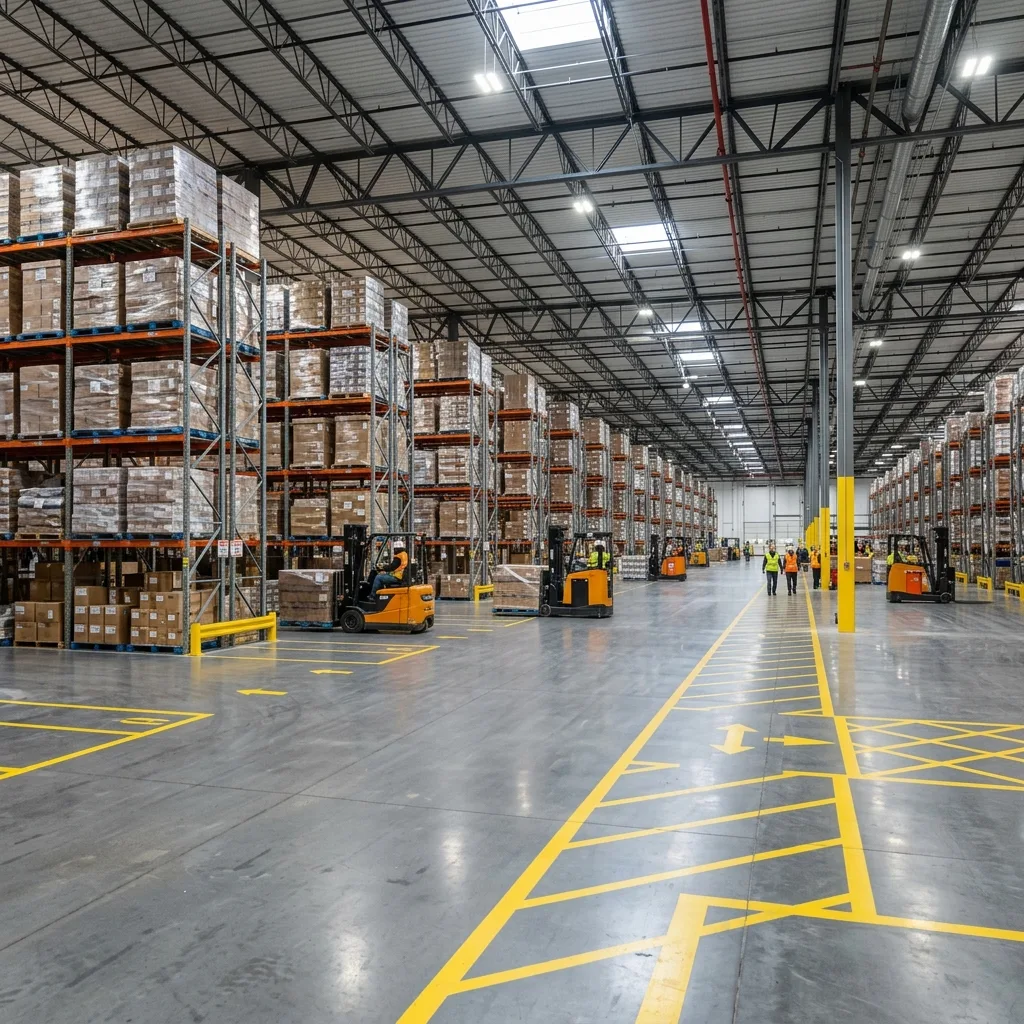
Industrial Epoxy Flooring in Ottawa & the National Capital Region
Heavy-build industrial epoxy for NCR manufacturing plants, distribution warehouses, food processing facilities, chemical storage, and automotive service operations. 80 to 100 mil broadcast systems rated for Class 1 to 3 forklift traffic, 12,000+ lb point loads, and chemical spill exposure. Pricing runs $3 per sq ft for open-plan warehouse epoxy up to $18 per sq ft for novolac chemical-resistant work. WSIB-certified, $2M liability, full compliance documentation.
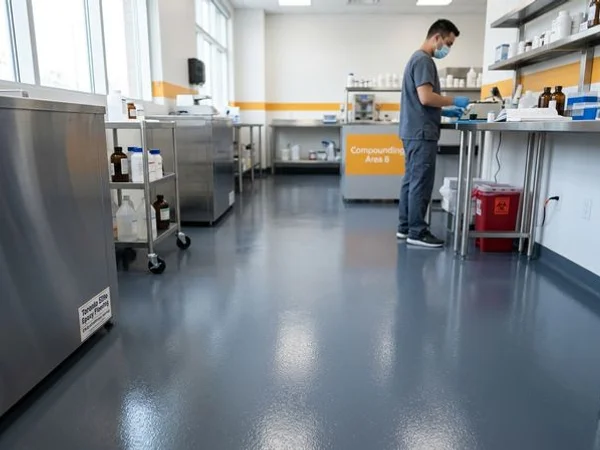
Laboratory Epoxy Flooring in Ottawa & the National Capital Region
Novolac chemical-resistant floor systems for federal research labs, university science facilities, clinical testing labs, and industrial materials analysis operations across the NCR. Rated against concentrated acids, bases, and solvents at real laboratory strength. Pricing runs $10 to $18 per sq ft installed. WSIB-certified, $2M liability, full compliance documentation.

Wash Bay & Washdown Epoxy Flooring in Ottawa & the National Capital Region
Polyurea and urethane cement floor systems for truck wash bays, fleet maintenance shops, food plant washdown zones, and industrial cleaning stations across Ottawa and the NCR. Rated for hot pressure washing, alkaline degreasers, and petroleum contamination. From $7 to $12 per sq ft installed, WSIB-certified with $2M liability.
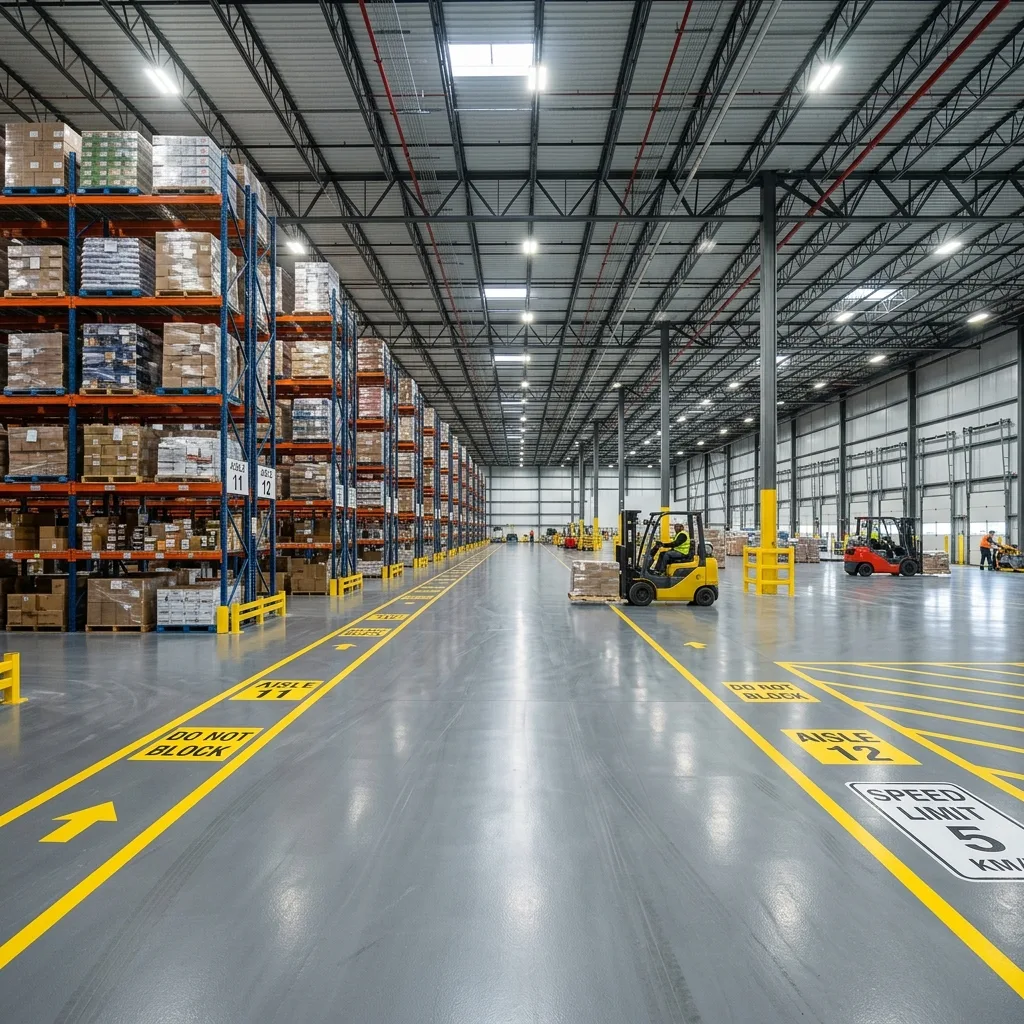
Warehouse Epoxy Flooring in Ottawa & the National Capital Region
Forklift-rated 100 percent solid epoxy systems with shot-blast prep, chemical-resistant topcoat, and embedded aisle marking for NCR distribution centres, logistics hubs, and federal warehouse operations. From $3 to $7 per sq ft installed, phased weekend windows keep operations running, WSIB-certified crews and $2M liability on every commercial project.
Commercial Epoxy Flooring in Ottawa & the National Capital Region
Commercial floor systems engineered around the regulatory frameworks that govern federal facilities, restaurants, hospitals, and tech-corridor manufacturing across the National Capital Region. CFIA-compliant kitchens, IPAC Canada coved medical floors, ISO 14644-1 cleanrooms, and high-crossing retail systems. Installed pricing from $5 per sq ft on open warehouses to $22 per sq ft on cleanroom builds. WSIB-certified, $2M liability, full compliance documentation.
Ready to Book Secondary Containment?
Same-day free on-site assessment. WSIB-certified, $2M liability on every project.