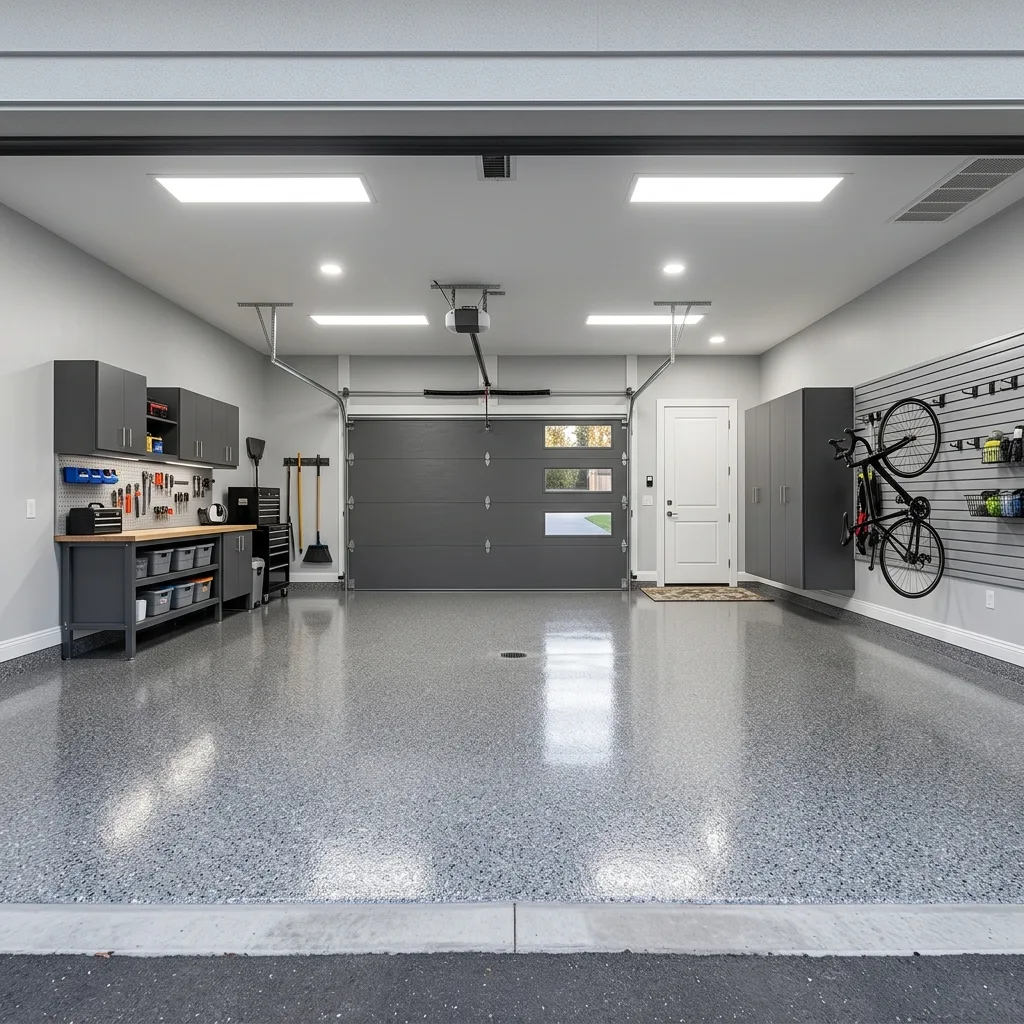
Residential Epoxy Flooring in Ottawa & the National Capital Region - Garage, Basement & Decorative Interior Floor Systems
For homeowners across the National Capital Region, Ottawa Epoxy Flooring installs residential garage floor epoxy, basement coatings, decorative metallic floor systems, polyaspartic finishes, and outdoor patio epoxy. Every residential scope opens with CSP 3 diamond grinding, ASTM F2170 in-situ moisture testing, and a system specification matched to the use and conditions on-site, from a single-car garage taking daily salt exposure to a Leda clay basement, to an open-plan living area finished in a decorative metallic.
Residential concrete in Ottawa faces a stack of stressors that make the wrong system a costly mistake. Ontario applies over 5 million tonnes of road salt to its highways and municipal streets each year according to Ministry of Transportation data, and that salt tracks directly onto garage and entryway slabs. Ottawa receives 224 cm of annual snowfall, among the highest of any major Ontario city, and salt-laden slush enters garages from November through April. Any system without a UV-stable polyaspartic cap yellows, chalks, and loses adhesion within 2 to 3 Ottawa winters. Basements in the region's Leda clay geology routinely test above 75 percent RH at the slab under ASTM F2170 probes, above the threshold that delaminates standard epoxy inside 12 to 18 months. Hot-tire pickup, the delamination of thin-film coatings caused by highway-heated tires cooling and bonding to the surface, destroys solvent-based and waterborne residential products in under a year. Understanding which failure mode applies to which floor is why correct system specification requires a site visit rather than a phone quote.
Residential epoxy pricing in Ottawa runs from $6.50 per sq ft on solid-colour single-car garage systems to $12 per sq ft on full decorative metallic interior floors. A standard 400 sq ft single-car garage lands at $4,000 to $6,000 installed and completes in 1 to 2 days. A 900 sq ft triple-car showroom floor with metallic and flake broadcast runs $11,700 to $31,500 across 2 to 3 days. Interior basement and living-area decorative floors are priced individually against pattern complexity and slab condition.
Coverage extends from central Ottawa out through Kanata, Nepean, Orleans, Barrhaven, Westboro, The Glebe, Rockcliffe Park, Stittsville, Gatineau, Kemptville, Arnprior, Manotick, Carp, and Rockland.
Residential Epoxy Flooring in Ottawa
Ottawa Epoxy Flooring is the NCR’s residential epoxy flooring specialist. We install garage floor epoxy, basement coatings, decorative metallic floors, and outdoor patio systems for homeowners across Ottawa, Kanata, Nepean, Orleans, and the surrounding communities. Every residential install is built on CSP 3 diamond grinding and ASTM F2170 in-situ moisture testing, the two steps most residential installers skip, and the two steps that determine whether the floor lasts two years or twenty.
Residential Epoxy Services We Install
- Garage Floor Epoxy - quartz broadcast, vinyl flake, solid colour, metallic
- Basement Epoxy Flooring - moisture-tolerant systems for Ottawa Leda clay slabs
- Decorative & Metallic Epoxy - 3D metallic, full-flake, custom colour systems
- Polyaspartic Floor Coating - 1-day install, cold-weather cure capable
- Outdoor & Patio Epoxy - ASTM C666 freeze-thaw rated for NCR winters
- Concrete Polishing - densifier-hardened, high-gloss interior finish
What Does Residential Epoxy Flooring Include?
- CSP 3 diamond-ground surface preparation
- ASTM F2170 in-situ moisture testing at the 75 percent RH threshold
- Moisture-tolerant primer on high-vapour basement slabs
- 100 percent solids epoxy base coat
- Decorative broadcast in quartz, vinyl flake, or metallic pigment
- UV-stable polyaspartic cap coat, hot-tire and road-salt rated
- Anti-slip grit finish
How Much Does Residential Epoxy Cost in Ottawa?
Solid-colour garage systems start at $6.50 per sq ft installed. Quartz broadcast and flake systems run $10 to $15 per sq ft. Decorative metallic interior floors run $13 to $18 per sq ft. Single-car garages finish in 1 to 2 days, and most residential projects complete inside 1 to 3 days.
Why Ottawa’s Climate Demands a Higher-Grade Residential Floor
Ottawa records 224 cm of annual snowfall and endures 80 to 100 freeze-thaw cycles each winter, both meaningfully higher than most other major Ontario cities. Salt tracks onto garage floors for nearly six months of the year, and thermal cycling is aggressive enough to crack and delaminate any system that lacks the film build and topcoat chemistry to handle repeated expansion and contraction. Standard box-store and contractor-grade waterborne epoxy fails inside 1 to 3 winters because it simply cannot absorb the combined exposure.
Moisture is the second local factor. Much of the city is built on Leda clay, a post-glacial marine clay deposit that retains water and drives elevated moisture vapour transmission through concrete slabs. Basements in Kanata, Barrhaven, Orleans, and Nepean routinely test above 75 percent RH at the slab, which is the threshold above which standard epoxy loses adhesion and delaminates. Any residential installer who skips ASTM F2170 moisture testing is coating blind against the region’s most common failure condition.
Epoxy Flooring Systems for Ottawa Homes
Every high-performance epoxy flooring system we install is built for the local climate and specific residential demands. Each configuration is engineered to handle chloride exposure, moisture drive, and temperature swings while holding a clean, modern finish.
Types of Residential Epoxy Applications
Residential epoxy configurations include garage floor epoxy, basement coatings, and interior concrete finishes. Each surface demands a different film build and profile. CSP 3 diamond grinding runs first to establish the mechanical bond between coating and substrate.
Garages get a 100 percent solids high-build epoxy base coat followed by decorative flake or quartz. Basements benefit from thin-film or metallic epoxy finishes that brighten the space and resist dampness, particularly important in Orleans and Barrhaven where Leda clay generates significant vapour pressure under slabs year-round. Interior living spaces often receive satin or matte seal coats for a refined finish.
ASTM F2170 moisture testing runs before installation. That step eliminates bonding risk from vapour pressure through the slab. Installation scheduling adapts to residential routines, with weekend completion offered so homeowners regain access on Monday.
High-Build Epoxy and Metallic Finishes
High-build epoxy delivers exceptional durability in garages and workshops running heavy traffic. The thick film forms a seamless barrier against road salt, chemical spills, and tire abrasion. In Ottawa homes, this configuration performs well through winter when slush and de-icing salts collect on vehicle tires from November through April.
Metallic epoxy uses aluminium or pearlescent pigments to create depth and light movement across the surface. That finish converts basements and living spaces into visually striking, low-maintenance areas. Westboro and Glebe homeowners finishing their basements as secondary living spaces are our most common metallic epoxy clients.
The most reliable configuration pairs a high-build base with a polyaspartic cap for stain resistance. Polyaspartic is rated for hot-tire contact and UV stability, holding both function and appearance over time.
Epoxy vs. Polyaspartic: Choosing the Right System
Choosing between epoxy and polyaspartic depends on the environment and usage. Epoxy cures more slowly, which allows detailed installations and thicker coatings that self-level cleanly. It is ideal for garages needing chemical and abrasion resistance.
Polyaspartic cures rapidly and holds clarity under sunlight. That makes it useful for exposed-entry garages and bright basement studios. In temperature-controlled interiors, an epoxy primer beneath a polyaspartic cap combines the film build and chemical resistance of 100 percent solids epoxy with the UV stability and surface hardness of polyaspartic.
Professional Installation Process
Every install follows a structured method built for bond strength, smooth finishes, and long-term durability under NCR climate conditions. Each phase runs against precise tooling and ASTM-backed protocols.
Surface Preparation and Diamond Grinding
Substrate preparation opens the job. Industrial diamond grinders mechanically profile the concrete to CSP 3, stripping surface contaminants, previous coatings, and weak concrete layers. That profile lets a 100 percent solids epoxy system penetrate the pore structure and lock in a strong mechanical bond.
Before grinding starts, ASTM F2170 in-situ relative humidity testing runs to confirm the slab meets coating specifications. Any concrete carrying high moisture gets a vapour barrier primer for additional protection. Detailed edge grinding around walls, drains, and control joints keeps adhesion uniform across the entire slab.
Crack and Surface Remediation
After grinding, close inspection runs under bright LED lighting. Cracks wider than 1/16 inch are cleaned and filled with industrial-grade epoxy repair mortar engineered for structural stability. That repair restores slab integrity and blocks future reflective cracking.
Spalled areas, pits, and surface irregularities receive a trowel-down patching compound that levels and smooths the surface. Once cured, the patched zones are reground to keep the surface even. Moisture-tolerant resins handle damp garage or basement conditions where they show up.
Epoxy Application and Curing
Coating runs in three stages: base epoxy, decorative layer, and protective cap coat. The first coat is rolled or squeegeed evenly to seal pores and anchor the system. Residential interiors get 100 percent solids epoxy for a dense, solvent-free finish.
Once the base cures, pigment chips or metallic effects go down for custom finishes. A polyaspartic cap coat engineered for road salt, chemicals, and hot-tire pickup lays over the top. Cure time runs 8 to 24 hours per layer based on temperature and environment.
Cost Factors and Value for Homeowners
Epoxy Flooring Cost Breakdown
Residential epoxy in Ottawa typically runs $6.50 to $22 per square foot installed based on scope complexity and materials. A two-car garage installation with full surface prep and cap coat lands between $5,000 and $7,500.
| Cost Factor | Typical Impact |
|---|---|
| Floor size | Larger spaces lower cost per sq ft |
| Concrete condition | Cracks, stains, or unevenness raise prep time |
| Epoxy type | 100 percent solids epoxy provides higher durability |
| Topcoat selection | Polyaspartic finishes add chemical and UV resistance |
| Design elements | Metallic or flake effects add labour and materials |
CSP 3 diamond grinding and ASTM F2170 moisture testing sit at the front of every project. Both steps raise upfront cost but block bubbling and delamination, the two outcomes that destroy both the floor and the homeowner’s confidence in epoxy as a category.
Longevity and Low Maintenance Benefits
Properly installed epoxy coatings last 10 to 20 years in garages and basements based on traffic and use. The polyaspartic cap coat holds up to road salt, moisture, and hot-tire contact, all key factors in garage applications where de-icing chemicals track in from November through April.
Maintenance is minimal. Broom and mild detergent handle regular cleaning without waxing or resealing. The hardened, non-porous surface resists oil, battery acid, and common household chemicals. Weekend installation scheduling minimises disruption, with vehicles back in the garage by Monday.
Related Questions Homeowners Ask
Why does the box-store epoxy I applied to my garage peel every year?
Box-store and contractor-grade waterborne epoxy products typically run 40 to 60 percent solids by volume. The balance is water or solvent that evaporates during cure, leaving a thinner final film than the label implies. Combined with acid-etch surface prep (which does not achieve the mechanical profile of diamond grinding) and no polyaspartic cap coat, these systems fail through hot-tire pickup, UV chalking, and moisture delamination inside 1 to 3 winters. The failure is the system specification, not the homeowner’s application technique.
Can I get epoxy flooring installed in my Ottawa garage during winter?
Yes, with caveats. Epoxy and polyaspartic systems each carry minimum application temperatures, typically 10 C for standard epoxy and -5 C for fast-set polyaspartic. For winter garage installs in Kanata, Barrhaven, or Orleans, temporary propane heaters bring the slab temperature above 10 C and hold it through the cure cycle. Low-temperature polyaspartic formulations allow installation and cure in near-freezing conditions. Slab and ambient temperature are assessed at the site visit, and the correct system for the season is specified accordingly.
How soon after a new concrete pour can epoxy be applied?
New concrete must cure a minimum of 28 days before any epoxy application. In colder weather below 10 C ambient, the effective cure period extends. ASTM F2170 testing at 28 days confirms whether the slab has reached the required RH threshold. New slabs in Barrhaven and Kanata new-build homes sometimes test above 85 percent RH even after 28 days if the pour ran late in the season, in which case the project is held and retested rather than coated at risk.
Does epoxy flooring add resale value to your home?
A professionally finished garage floor with a full decorative flake or metallic system consistently stands out in real estate listings and showings, particularly in Kanata and Barrhaven markets where buyers compare similar homes side by side. The practical appeal of a sealed, oil-resistant, easy-clean garage floor resonates especially with buyers who use the garage for storage or workshop space. The value-add is not a fixed dollar figure, but a quality floor finish differentiates a property in a market where two-car garages are common and finish condition matters.
Residential Epoxy Pricing
Solid-colour garage systems from $6.50/sq ft; decorative metallic from $13/sq ft.
Why Ottawa Customers Choose Ottawa Epoxy Flooring for Residential Epoxy
Substrate Read Before Chemistry
Ottawa's Leda clay pushes basement and slab-on-grade RH well past the 75 percent threshold on a regular basis. Every quote follows the in-slab probe reading, never a phone estimate.
Winter-Ready Cap Coat
The 224 cm annual snowfall and half-year of tracked salt is the design condition. Aliphatic polyaspartic on every residential system holds gloss and adhesion through 80-plus freeze-thaw cycles.
Highway-Tire Resistance
The classic box-store failure is a warm tire cooling onto thin solvent-based film and lifting it clean. A 100 percent solids epoxy anchor under a polyaspartic cap blocks that failure mode entirely.
Weekend In, Monday Out
Grind and prime Friday evening, base coat Saturday, cap Sunday, cars back Monday morning. The garage or basement is only offline for the weekend.
How Residential Epoxy Works
Site Visit & Moisture Assessment
ASTM F2170 in-situ probe testing, slab age and condition review, crack survey, and system selection. No system is recommended until the slab's actual moisture content is known.
CSP 3 Diamond Grinding & Crack Repair
Industrial diamond grinder to CSP 3 profile, HEPA-filtered dust extraction, epoxy injection crack repair with trowel-down patching, and regrind of patched areas for uniform adhesion.
Primer, Base Coat & Decorative Broadcast
Moisture-tolerant primer where the slab tests above 75 percent RH, 100 percent solids epoxy base coat, and optional vinyl flake or metallic pigment broadcast for decorative work.
Polyaspartic Topcoat & Return to Service
UV-stable polyaspartic cap coat rated for hot-tire contact and Ontario road salt, with anti-slip grit finish. Light foot traffic returns in 24 to 48 hours; vehicles in 72.
Ready for a Free On-Site Assessment?
Same-day quotes across Ottawa. WSIB-certified, $2M liability on every project.
What Customers Say About Our Residential Epoxy
"Two-car garage in Kanata. A previous contractor put in a box-store system three years ago and it started peeling in the first winter. Ottawa Epoxy ground the slab back to bare concrete, ran the moisture test, and laid down a proper 100 percent solids system with a polyaspartic cap coat. Two Ottawa winters later, no bubbles and no lifted edges. The CSP 3 grinding and moisture test they explained actually made sense of why the first job failed. Worth every dollar to get it right this time."
"Basement floor in Orleans. I was skeptical because of every epoxy horror story I had read about moisture peeling. The Ottawa crew ran the ASTM F2170 moisture probe before quoting, showed me the 78 percent RH reading, and explained exactly why a moisture-tolerant primer was needed before the epoxy. The metallic finish is stunning, and 18 months later there is zero peeling or bubbling. The moisture testing step was what earned my trust over the other bids I collected."
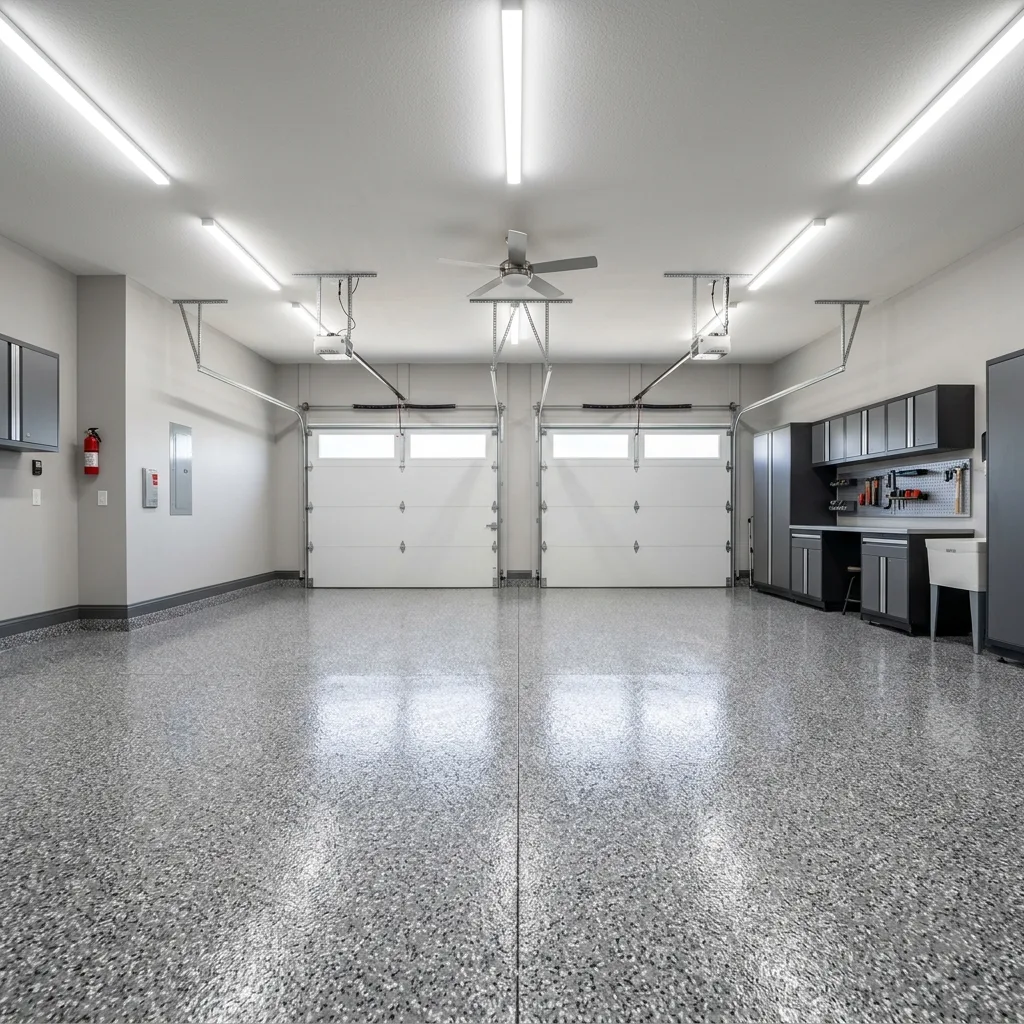
"Triple-car garage in Barrhaven with a full decorative flake system. Diamond grinding Saturday morning, base coat and flake broadcast Saturday afternoon, polyaspartic cap Sunday morning, cars back in Sunday evening. The floor looks show-quality. The quartz broadcast hides any scuff or tire mark, and the finish still looks the same after the first winter of road salt. Highly recommend for anyone who wants it done right the first time."
Residential Epoxy FAQs
What residential epoxy systems do you install in Ottawa?
Garage floor epoxy (solid colour, quartz broadcast, vinyl flake, metallic), basement coatings engineered for Ottawa Leda clay slabs, decorative metallic interior floors, outdoor patio systems, polyaspartic coatings, and concrete polishing for homeowners across the NCR.
What does residential epoxy flooring cost in Ottawa?
Installed pricing runs $6.50 per sq ft on solid-colour single-car garages up to $12 per sq ft on full decorative metallic interior floors. A standard 400 sq ft single-car garage lands at $4,000 to $6,000 installed. A 900 sq ft triple-car showroom floor with metallic and flake broadcast runs $11,700 to $31,500. Pricing tracks system type, slab size, and slab condition.
How long does residential epoxy flooring last in Ottawa?
A properly installed residential system built on CSP 3 preparation with a UV-stable polyaspartic cap coat runs 10 to 20 years in an Ottawa garage or basement. Systems without a polyaspartic cap yellow, chalk, and lose adhesion inside 2 to 3 winters due to road salt, UV, and the 80 to 100 freeze-thaw cycles the region logs each winter. Surface prep, not the coating brand, is what drives long-term adhesion.
Why do Ottawa basement epoxy floors fail?
Ottawa basements sit on Leda clay, a marine clay geology that generates high moisture vapour transmission. ASTM F2170 probe testing routinely returns elevated RH at the slab, frequently exceeding the 75 percent threshold that delaminates standard epoxy. Installers who skip the moisture test and apply straight to a wet slab see delamination in 12 to 18 months. Every basement install runs ASTM F2170 first, and moisture-tolerant primer chemistry is specified for slabs above the threshold.
Can residential epoxy be installed in occupied homes?
Yes. 100 percent solids, low-VOC chemistry runs on residential interior projects. Garage and basement scopes allow return to the space within 24 to 48 hours for light foot traffic, with vehicles at 72 hours. For occupied interior scopes such as basement rec rooms or main-floor open-plan areas, section-by-section installation keeps the home functional throughout.
How do I choose between solid colour, quartz broadcast, and metallic epoxy for my garage?
Solid colour is the lowest-cost option and delivers a clean, professional look. Quartz and vinyl flake broadcast systems add non-slip texture, mask tire marks and stains, and are the most durable option for heavy-use garages. Metallic epoxy delivers a high-end 3D appearance for showroom-style residential garages. Usage, traffic, and aesthetic priorities are discussed at the site visit and matched to the correct system.
How long does a residential epoxy install take end to end?
A typical single-car garage of 400 sq ft finishes in 1 to 2 days, with grinding and prep on day one and base coat plus topcoat on day two. Light foot traffic returns within 24 hours of the final coat. Two-car garages run 2 days. Basement and interior projects follow a similar timeline. Weekend scheduling is offered specifically so homeowners can have vehicles back Monday without burning a weekday.
Which system performs best through Ottawa freeze-thaw winters?
A 100 percent solids epoxy base combined with a UV-stable polyaspartic cap coat is the correct configuration for Ottawa garages and basements. Polyaspartic holds hardness and adhesion through the 80 to 100 freeze-thaw cycles the region sees each winter, resists chloride corrosion from road salt, and does not yellow under UV the way aromatic epoxy topcoats do. Solvent-based and waterborne residential products fail inside 1 to 3 winters because they lack both the film build and the topcoat chemistry to handle combined salt, UV, and thermal cycling.
Residential Epoxy Flooring by city
Local pages with area-specific detail across the NCR:
Residential Epoxy Flooring in Ottawa
Local residential epoxy for Ottawa homes and businesses.
Learn more →Residential Epoxy Flooring in Kanata
Local residential epoxy for Kanata homes and businesses.
Learn more →Residential Epoxy Flooring in Nepean
Local residential epoxy for Nepean homes and businesses.
Learn more →Residential Epoxy Flooring in Barrhaven
Local residential epoxy for Barrhaven homes and businesses.
Learn more →Residential Epoxy Flooring in Orleans
Local residential epoxy for Orleans homes and businesses.
Learn more →Residential Epoxy Flooring in Gatineau
Local residential epoxy for Gatineau homes and businesses.
Learn more →Residential Epoxy Flooring in Rockcliffe Park
Local residential epoxy for Rockcliffe Park homes and businesses.
Learn more →Residential Epoxy Flooring in Vanier
Local residential epoxy for Vanier homes and businesses.
Learn more →Residential Epoxy Flooring in Westboro
Local residential epoxy for Westboro homes and businesses.
Learn more →Residential Epoxy Flooring in The Glebe
Local residential epoxy for The Glebe homes and businesses.
Learn more →Related Services
Garage Floor Epoxy in Ottawa & the National Capital Region
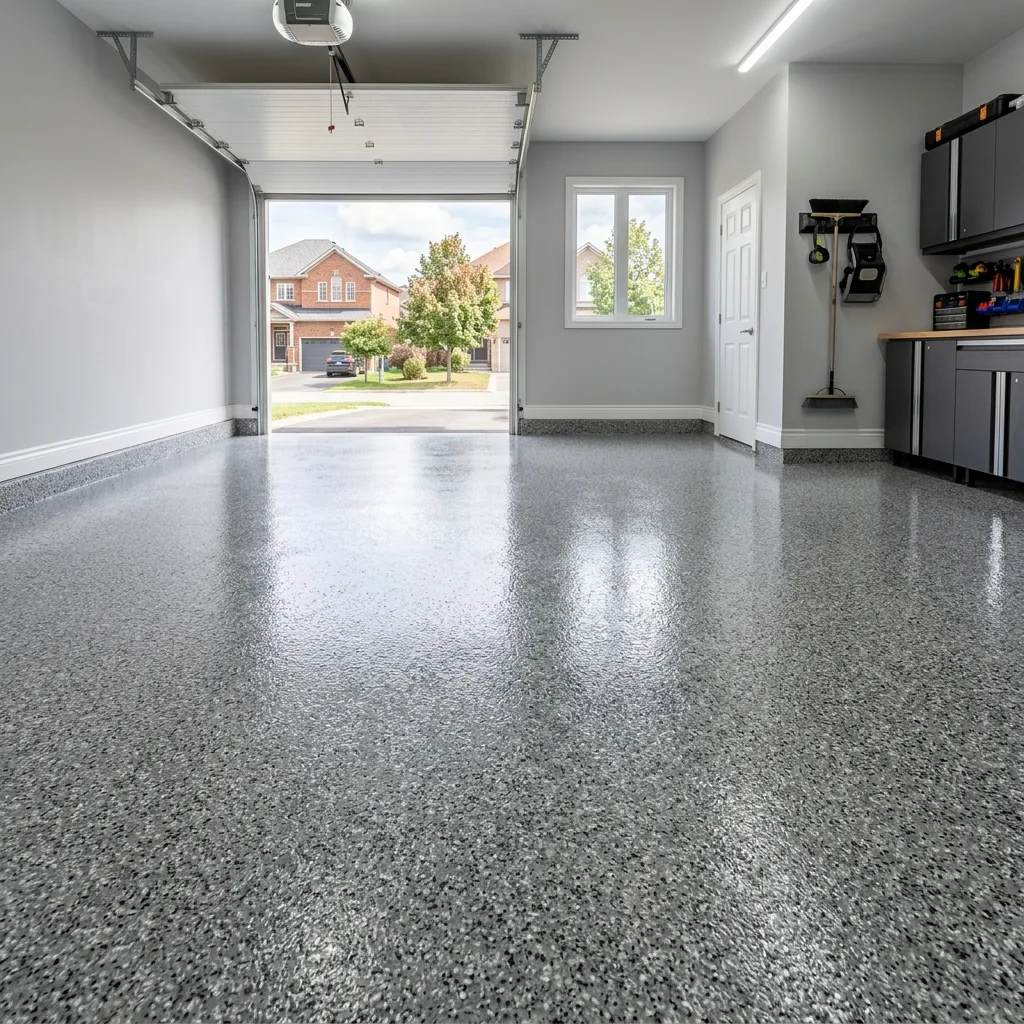
Salt-proof, hot-tire-resistant garage floor systems built for NCR winters. Diamond-ground to CSP 3, ASTM F2170 moisture verified, 100% solid epoxy base with quartz or metallic flake, and a UV-stable polyaspartic topcoat. A 400 sq ft single-car garage runs roughly $2,400 to $3,800 installed and wraps in one to two days. Anti-slip grit and WSIB coverage standard.
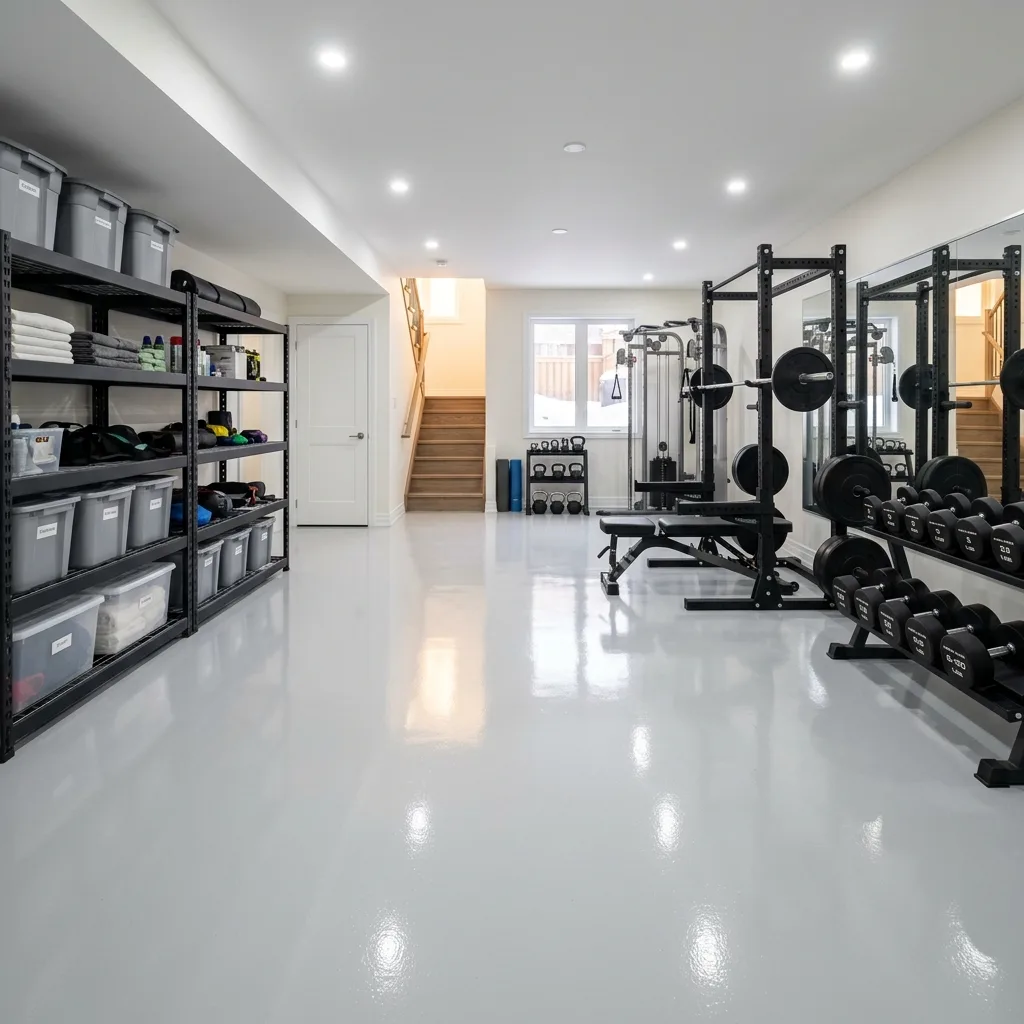
Basement Epoxy Flooring in Ottawa & the National Capital Region
Seamless zero-VOC epoxy floors for NCR basements, engineered around the Leda clay vapour drive that destroys ordinary coatings below grade. Every slab gets 72 hours of ASTM F2170 in-situ humidity testing before a drop of primer goes down. Pricing runs $4 to $13 per sq ft installed, most 600 sq ft basements finish in two working days, and the zero-VOC chemistry stays safe for occupied homes. WSIB-certified crews on every install.
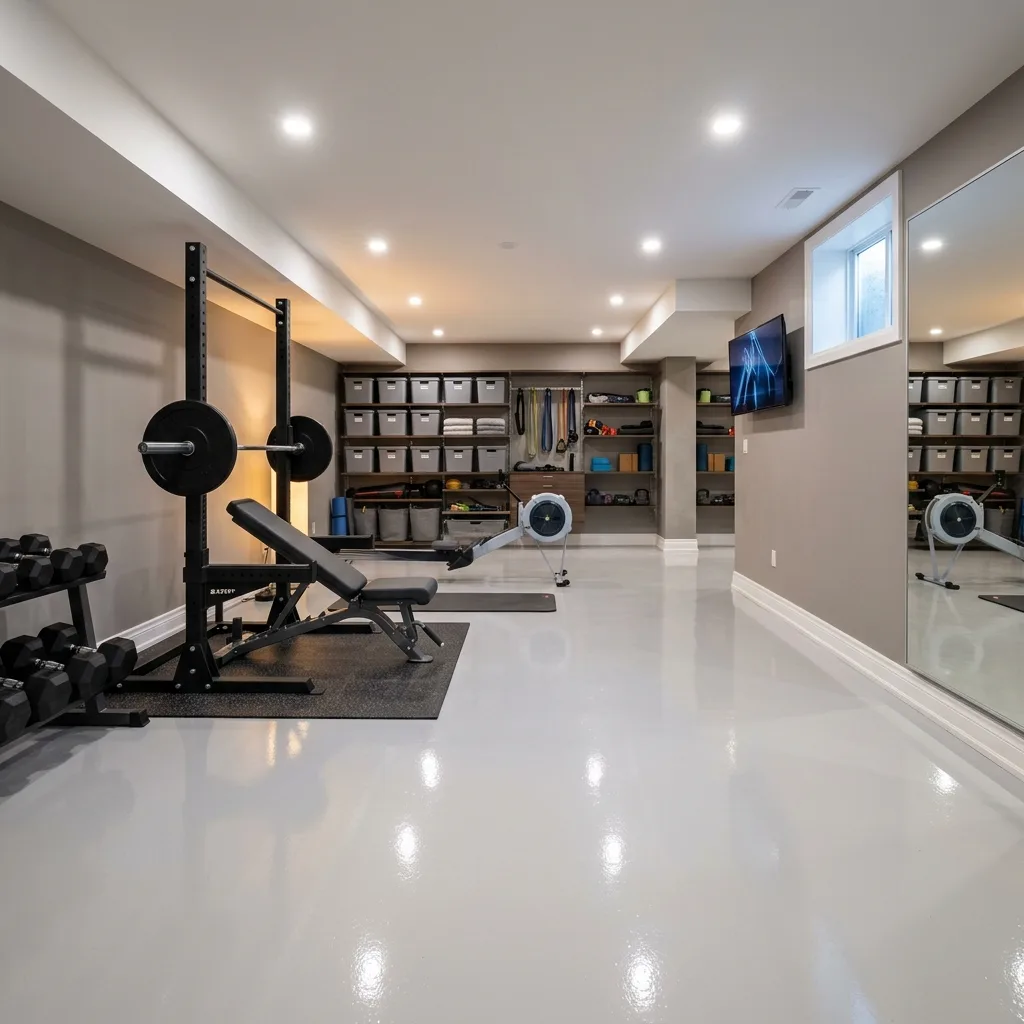
Decorative Metallic Epoxy Flooring in Ottawa & the National Capital Region
Hand-manipulated metallic pigment builds deliver a 3D liquid-art surface where no two floors are ever identical. Installed pricing runs $13 to $35 per sq ft; a 500 sq ft basement or showroom wraps in 2 to 3 days. A UV-stable aliphatic polyaspartic topcoat holds colour vivid under Ontario sun and retail LED lighting past the 15-year mark.
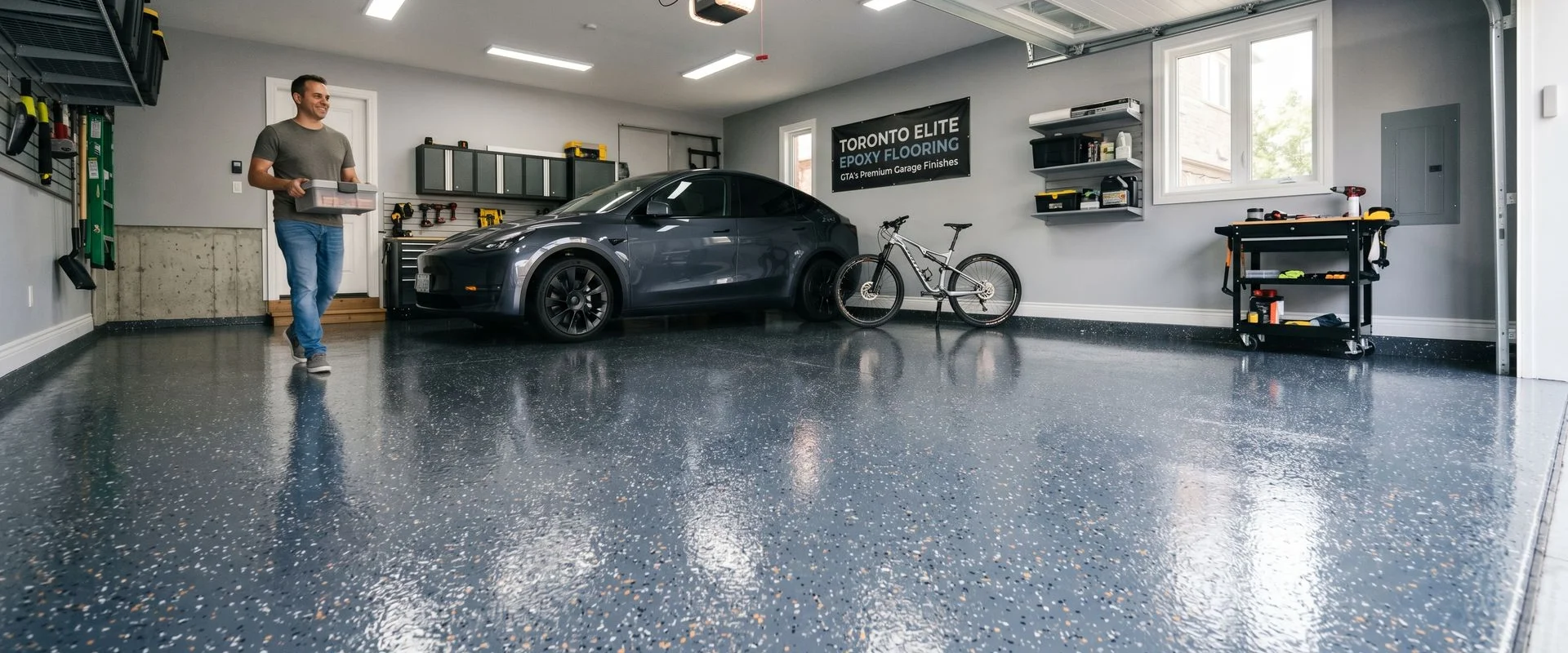
Polyaspartic Floor Coating in Ottawa & the National Capital Region
Aliphatic polyaspartic returns most residential garages to vehicle traffic inside 24 hours, roughly four times harder than a standard epoxy topcoat with full UV stability and cold-weather application down to -20 C. Installed pricing runs $5.50 to $9 per sq ft; a typical two-car garage finishes in a single day. WSIB coverage and $2M commercial general liability on every NCR install.
Outdoor Patio Epoxy Coating in Ottawa & the National Capital Region
For NCR pool decks, patios, and walkways, our aliphatic polyaspartic exterior coating is engineered to survive 80 to 100 freeze-thaw cycles per winter, road salt chloride loads, and pool chemistry without amber yellowing. A 400 sq ft residential deck typically completes in 2 days at $2,400 to $4,400 installed, including sealed expansion joints and quartz aggregate broadcast for wet-area traction.
Ready to Book Residential Epoxy?
Same-day free on-site assessment. WSIB-certified, $2M liability on every project.