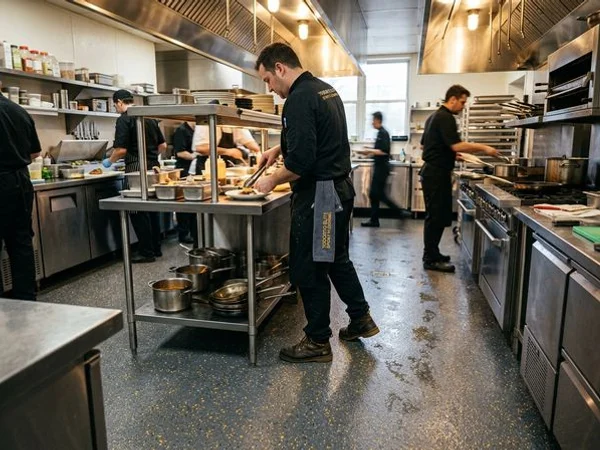
Commercial Kitchen Epoxy Flooring in Ottawa & the National Capital Region - CFIA-Compliant Seamless Floor Professionals
Serving federal and residential clients across the National Capital Region, Ottawa Epoxy Flooring builds seamless anti-slip quartz systems, engineered slope-to-drain layouts, and 4 to 6 inch integral coving for restaurants, ByWard Market food-service tenants, federal cafeteria kitchens, and institutional prep areas throughout Ottawa, ON. Zero-VOC chemistry lets us work in occupied buildings, overnight scheduling protects your service hours, and hot-water and degreaser-rated topcoats are matched to the sanitiser programme you actually use on site.
A commercial kitchen is one of the few environments where standard flooring materials all fail on the same timeline. Daily hot-water washdowns cycling between 60 and 82 degrees C fracture grout and lift vinyl adhesive inside 18 months. At 200 to 400 ppm, quaternary ammonium sanitisers combined with daily bleach degreaser use will strip the sheen off a standard polyurethane topcoat and leave a chalky, absorbent surface that traps grease. Ottawa Public Health inspectors working under Ontario Regulation 493/17 (Food Premises) treat open grout joints, absent wall-to-floor coving, and cracked tile as critical violations that trigger immediate re-inspection.
Kitchen scopes generally run 200 to 3,000 sq ft and wrap in one to three overnight shifts, depending on how the drains are laid out and how tall the coving needs to run. Installed pricing lands between $8 and $15 per sq ft, driven by drain engineering, quartz grit spec, coving height, and topcoat chemistry. A compliance package for your next health inspection is bundled into every quote.
Ottawa Epoxy Flooring provides commercial kitchen epoxy flooring to Ottawa, ON and surrounding communities, including Kanata, Nepean, Orleans, Barrhaven, Gatineau, Westboro, The Glebe, Stittsville, Carp, Rockland, Kemptville, and Arnprior.
Why Kitchen Floors Fail, and What Fixes Them
Four demands land on a commercial kitchen floor at once. It must pass health inspection, grip underfoot when wet, absorb continuous heat and grease exposure, and survive aggressive washdown with hot water and sanitisers. Tile loses on the grout. Sheet vinyl loses at the seams. A properly specified commercial kitchen epoxy in Ottawa answers all four demands.
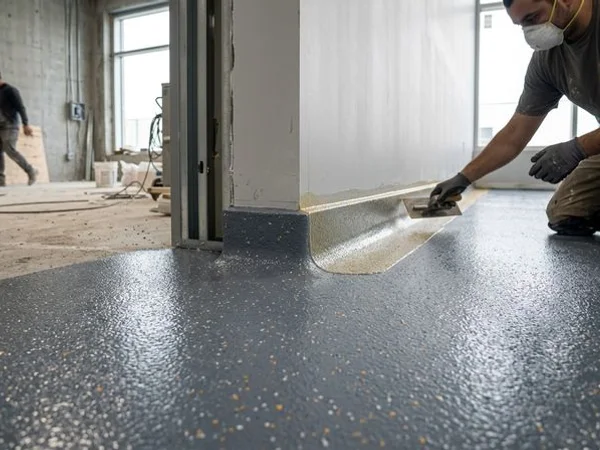
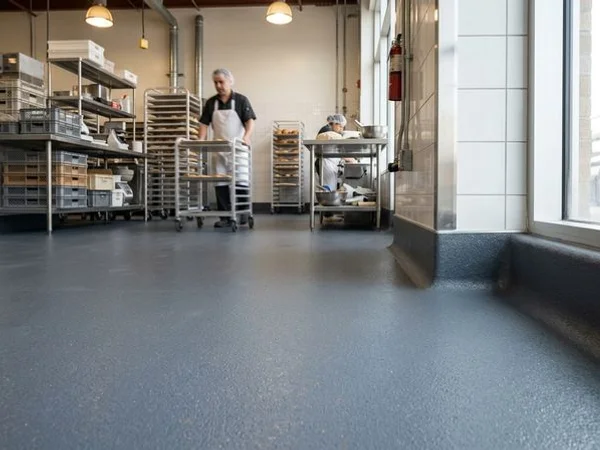
Coving is carried 4 to 6 inches up every wall, killing the wall-to-floor joint where biofilm typically settles. The main slab receives a 100% solids zero-VOC epoxy base with quartz aggregate broadcast in for grip, sealed by a food-safe topcoat matched to your sanitiser chemistry. Every floor drain and trench drain gets a detailed edge, closing off any pathway for water under the coating.
Scheduling is built around your service hours, so overnight or weekend windows keep the kitchen open for the next shift. As Ottawa’s full-spectrum epoxy flooring contractor, the kitchen system shares its sanitary coving and chemical-resistant build with our broader commercial and industrial coatings.
What is Included
- CFIA-compliant, zero-VOC materials throughout
- Seamless coving (4-6”) up the walls
- Shot-blast or diamond-grind surface prep
- 100% solid epoxy base coat
- Quartz broadcast for anti-slip texture
- Food-safe topcoat matched to cleaning chemistry
- Detailed integration with floor drains and trench drains
- Off-hours installation around your service hours
- Health-inspection-ready handover
CFIA and Ontario Health-Code Compliance
Under CFIA guidance, food-facility floors must read as smooth, non-absorbent, easily cleanable, and free of cracks or open joints. Every one of those criteria is satisfied by a 100% solids epoxy system laid over correctly prepped concrete. Quarry-tile grout and sheet-vinyl seams fail the non-absorbent and easily cleanable tests directly. Ontario Regulation 493/17 (Food Premises) is applied by Ottawa Public Health inspectors to every restaurant, catering operator, and food processor in the city on the same standard.
At the federal level, CFIA’s Meat Hygiene Manual of Procedures Chapter 3 calls for impervious, non-slip, easily cleanable surfaces and requires wet-processing floors to drain without pooling. Our kitchen build hits each point: integral coving removes the wall-to-floor joint, the topcoat is impervious, and drain perimeters are detailed to eliminate standing water.
Restaurants along Bank Street and in the ByWard Market that swapped grout-jointed tile for seamless epoxy consistently report cleaner re-inspection pass times. The same Ontario Food Premises Regulation applies regardless of scale: a Kanata catering prep kitchen and an Orleans ghost kitchen face identical requirements to a full-service downtown restaurant.
Quartz Anti-Slip Broadcast and Integral Coving
Slip-resistance in a commercial kitchen is best solved by quartz broadcast. Dry aggregate at 20 to 40 mesh is cast into the wet base coat, the excess is swept, and a food-safe topcoat locks the aggregate down. The finished surface delivers a wet coefficient of friction above 0.6, which is the threshold most Ontario WSIB slip-and-fall investigations reference.
Integral coving is the other non-negotiable. Standard practice runs a 6-inch cove up every wall and around every floor penetration, formed in epoxy mortar and sealed with the same topcoat as the deck. That single detail closes off the largest bacterial harbourage in a kitchen and is the single most-cited correction in health inspection reports for facilities still running tile.
Sequence matters as much as materials. For a mechanical-bond system taking commercial kitchen loads, the concrete surface profile (CSP) per ICRI Technical Guideline 310.2R should reach CSP 3 to 4. We prep with shot-blasters, not acid etch, because residual salts left by etching progressively undermine long-term bond strength.
Kitchen Epoxy vs Quarry Tile
For decades quarry tile was the go-to commercial kitchen floor, valued for durability, heat tolerance, and inspector familiarity. It also carries three failure modes epoxy avoids. Grout joints crack under thermal cycling and rolling load, and once cracked they cannot be cleaned back to a bacteriologically acceptable state. The wall-to-floor joint accumulates grease and biofilm no matter how often it is scrubbed. And retiling shuts a kitchen for days.
On direct cost, quarry-tile installation on a 1,200 sq ft restaurant kitchen currently runs $17,000 to $34,000 in the Ottawa market. An equivalent epoxy build, shot-blast prep, quartz broadcast, food-safe topcoat, and 6-inch coving, comes in at $8,800 to $20,000 for the same slab. Epoxy also installs in one to three overnight shifts, versus three to five days of full closure for tile.
On chemical resistance, epoxy also wins when the sanitiser programme is aggressive. Quaternary ammonium compounds, sodium hypochlorite at standard dilution, and most food-service degreasers are fully compatible with a food-safe epoxy topcoat. Where the cleaning programme uses caustic compounds at high concentration, a novolac epoxy or aliphatic polyurea topcoat extends chemical tolerance further.
Ottawa Climate Considerations
Ottawa winters push commercial kitchen floors through temperature swings other Canadian markets do not see. On a kitchen with loading-dock access, the slab near the dock door can sit well below freezing during a January delivery while the cook-line stays above 25 degrees C. Across a single kitchen slab, that thermal gradient generates differential expansion stress that cracks rigid tile grout and can peel poorly bonded coatings.
Prepped correctly by shot-blast and installed as a 100% solids system, epoxy bonds mechanically across the full temperature range. On kitchens where the dock area sees wide seasonal swings, we spec a polyaspartic or polyurea topcoat rated for higher flexibility so the transition zone absorbs thermal movement without cracking.
Ottawa Kitchen Epoxy Costs and Timelines
Pricing on a kitchen quote is driven by floor area, existing slab condition, and the downtime the facility can absorb. On a sound slab, a standard 300 to 600 sq ft ghost kitchen or small restaurant kitchen in the NCR typically installs at $5,000 to $9,000 CAD all-in including coving. Larger federal or institutional cafeterias in Orleans, Kanata, or downtown Ottawa, where 2,000 to 5,000 sq ft is common, are priced per sq ft and generally land at $7 to $13 depending on slab condition and drain complexity.
Overnight installs in Ottawa are only possible because of fast-cure polyurea and polyaspartic chemistry. A conventional 100% solids epoxy base needs 8 to 12 hours between base and topcoat at 20 degrees C. Polyaspartic systems cure to foot traffic at 4 to 6 hours, which is what makes a properly staged overnight install ready to walk by 5 am and back in full service for the morning open.
Questions Restaurant Owners Ask
What should we budget per sq ft for commercial kitchen epoxy?
Installed pricing for a commercial kitchen epoxy typically lands at $8 to $18 per sq ft. Coving lineal footage and drain count push the number more than floor area does. A simple rectangular kitchen with two floor drains sits at the lower end; a kitchen with equipment alcoves and multiple trench drains climbs toward the top of the range.
How many overnight shifts does a kitchen install take?
Under 1,000 sq ft, plan on two overnight shifts. Night one is shot-blast prep and concrete repair. Night two covers coving, base coat, broadcast, and topcoat. Between 1,000 and 2,500 sq ft, three nights is typical. The schedule is locked in at the site survey and built around your service hours.
Does this work for a commissary or shared-kitchen buildout?
Yes. Commissary kitchens and shared food-prep facilities fall under the same Ontario Food Premises Regulation as any dedicated restaurant, and the same coving and quartz-broadcast spec applies. Because shared kitchens usually see more complex drain layouts and heavier rolling traffic, we typically upsize the base coat.
Our Kitchen Epoxy Results in Ottawa
Kitchen Epoxy Pricing
Pricing depends on coving lineal footage, drain detailing, and chemistry.
Why Ottawa Customers Choose Ottawa Epoxy Flooring for Kitchen Epoxy
Inspection Package Included
Every install ships the cove-detail spec, antimicrobial datasheet, and zero-VOC certificate that Ottawa Public Health and CFIA auditors ask for.
R11 Slip Grade in the Wet
Broadcast quartz sealed under the food-safe wear coat holds grip through washdown and grease without turning into a mop trap.
Between-Service Windows
Overnight and Sunday scheduling means dinner service closes on time and breakfast service opens as planned.
Cove-Sealed Drain Perimeters
The resin is troweled down onto every point drain and trench edge for a monolithic seal, cutting off the classic bacterial ingress line.
How Kitchen Epoxy Works
Site Survey
We measure coving runs, map drain locations, and confirm the sanitiser and food-contact chemistry your team uses.
Off-Hours Shot-Blast Prep
Prep runs overnight so the kitchen is open for the next service.
Cove + Base + Anti-Slip
Coving carried 4 to 6 inches up the wall, a 100% solids base coat, then a quartz-broadcast anti-slip layer.
Cure + Reopen
Fast-cure chemistry has your kitchen back in service inside 24 hours.
Ready for a Free On-Site Assessment?
Same-day quotes across Ottawa. WSIB-certified, $2M liability on every project.
What Customers Say About Our Kitchen Epoxy
"Our old tile floor was a health-code liability. Ottawa Epoxy pulled it up, coved 6 inches on every wall, laid a seamless quartz system, and had us back trading by the next morning service. Cleaning time is roughly half what it was."
"Overnight coat in our Kanata catering commissary. Crew shot-blasted to CSP 3, laid a full solids base, broadcast quartz, then topcoated. WSIB paperwork was ready before start, and the health inspector had zero notes."
"A weekend was all it took to coat our Westboro retail food unit. High gloss, gripping underfoot, and finished ahead of Monday open."
Kitchen Epoxy FAQs
Will this floor pass CFIA and Ontario health-code inspection?
Yes. Our commercial kitchen builds carry 4 to 6 inch integral coving, zero-VOC resin, and food-safe topcoats that meet both CFIA guidance and Ontario public-health code requirements.
Do you need us to close for the installation?
No. Installs run off-hours, either overnight or across your normal closure. Most kitchens are done in one to three nights with the floor ready for the next service.
How does it grip when the floor is wet?
A quartz aggregate is broadcast into the base and locked under a food-safe topcoat, giving you a textured surface that stays grippy through washdown, grease, or tracked ice. Slip resistance is engineered into the system from day one.
What happens at the drains and trench drains?
The coating is detailed directly into the drain perimeter so no seam sits where bacteria can settle or water can migrate under the floor. Trench drains get an upgraded detail to handle continuous washdown.
What should we budget for kitchen epoxy in Ottawa?
Quotes are built after an on-site survey. Cost drivers are floor area, coving lineal footage, drain count, and the sanitiser chemistry your team runs.
How does the cost stack up against retiling with quarry tile?
Installed epoxy generally runs $8 to $18 per sq ft depending on coving and drain count. A quarry-tile install for the same kitchen typically lands at $15 to $30 per sq ft once you add setting mortar, grout, and labour. You also skip the two-to-five year grout resealing and replacement cycle.
What warranty backs a commercial kitchen epoxy floor?
We warranty the full system, coving, base coat, broadcast, and topcoat, for 5 years against adhesion failure and delamination under normal commercial use. The warranty is a system warranty rather than a per-component one. Undisclosed chemical exposure beyond the rated tolerance voids it.
What is the install timeline for a commercial kitchen?
Kitchens up to 1,500 sq ft typically wrap in one to three overnight shifts. Facilities that need significant concrete repair or that exceed 1,500 sq ft can push to four or five nights. Schedules are built around your service hours so no revenue days are lost.
Will epoxy hold up to heavy kitchen equipment and constant foot traffic?
Yes. A correctly specified 100% solids build handles rolling loads up to 10,000 lbs per wheel, non-stop foot traffic, and dropped equipment. The embedded quartz broadcast also shields the coating from grit tracked in off loading docks.
Which cleaning chemicals are compatible with the topcoat?
Topcoat chemistry is matched to your sanitiser programme during the site survey. Standard topcoats are compatible with quaternary ammonium sanitisers, diluted bleach, and most food-service degreasers. Caustic cleaners above pH 12 or undiluted solvent degreasers need a novolac topcoat, which we spec when needed.
Do you serve Gatineau and Kanata food-service locations?
Yes. Our service footprint covers the full National Capital Region, Gatineau across the river included, along with Kanata, Nepean, Orleans, and Barrhaven. Site surveys are free and each location's schedule is built around its own service hours.
When can the kitchen reopen after the coating goes down?
Standard systems are walk-ready at 24 hours and cleared for full equipment loading and washdown at 48 to 72 hours. Fast-cure polyaspartic and polyurea topcoats can shorten return-to-service to 12 to 18 hours when a same-night reopening is required.
Commercial Kitchen Epoxy Flooring by city
Local pages with area-specific detail across the NCR:
Commercial Kitchen Epoxy Flooring in Ottawa
Local kitchen epoxy for Ottawa homes and businesses.
Learn more →Commercial Kitchen Epoxy Flooring in Kanata
Local kitchen epoxy for Kanata homes and businesses.
Learn more →Commercial Kitchen Epoxy Flooring in Nepean
Local kitchen epoxy for Nepean homes and businesses.
Learn more →Commercial Kitchen Epoxy Flooring in Barrhaven
Local kitchen epoxy for Barrhaven homes and businesses.
Learn more →Commercial Kitchen Epoxy Flooring in Orleans
Local kitchen epoxy for Orleans homes and businesses.
Learn more →Commercial Kitchen Epoxy Flooring in Gatineau
Local kitchen epoxy for Gatineau homes and businesses.
Learn more →Commercial Kitchen Epoxy Flooring in Rockcliffe Park
Local kitchen epoxy for Rockcliffe Park homes and businesses.
Learn more →Commercial Kitchen Epoxy Flooring in Vanier
Local kitchen epoxy for Vanier homes and businesses.
Learn more →Commercial Kitchen Epoxy Flooring in Westboro
Local kitchen epoxy for Westboro homes and businesses.
Learn more →Commercial Kitchen Epoxy Flooring in The Glebe
Local kitchen epoxy for The Glebe homes and businesses.
Learn more →Related Services
Commercial & Industrial Epoxy Flooring in Ottawa & the National Capital Region
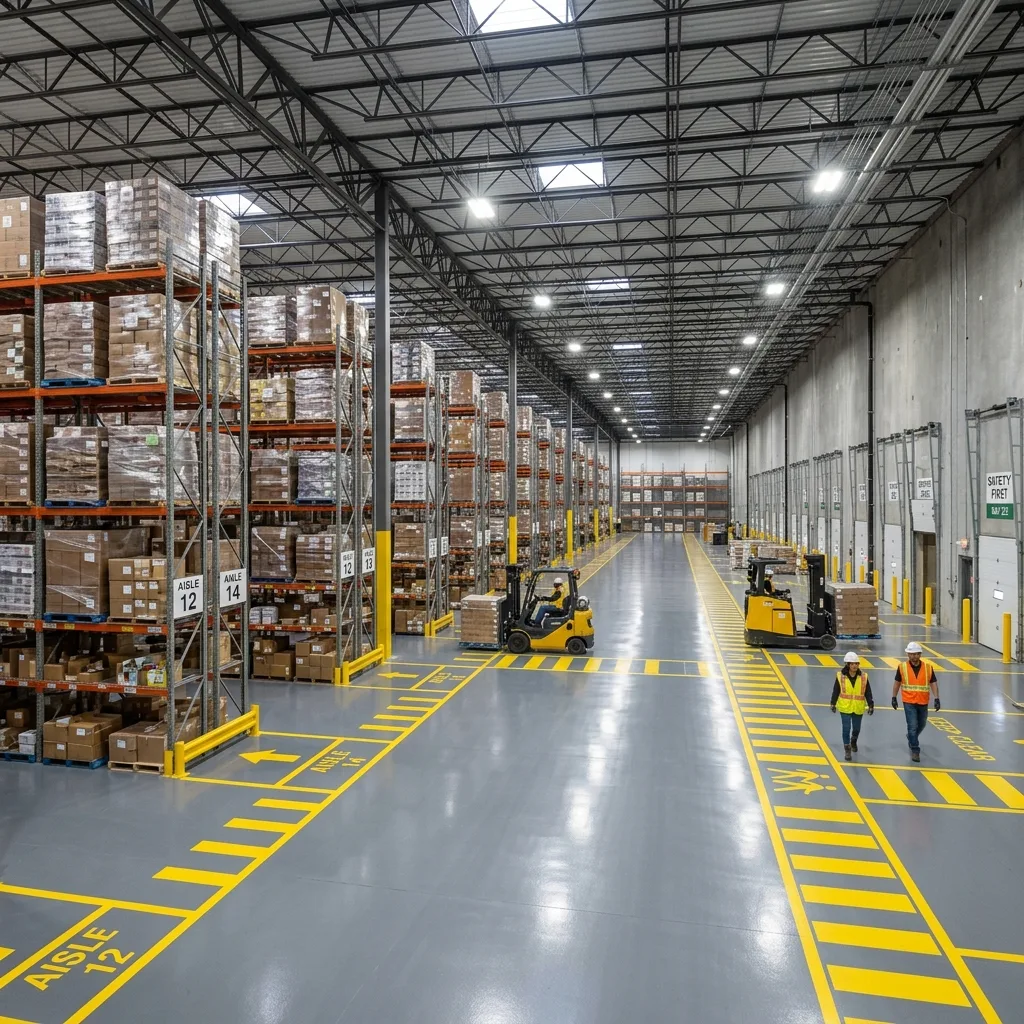
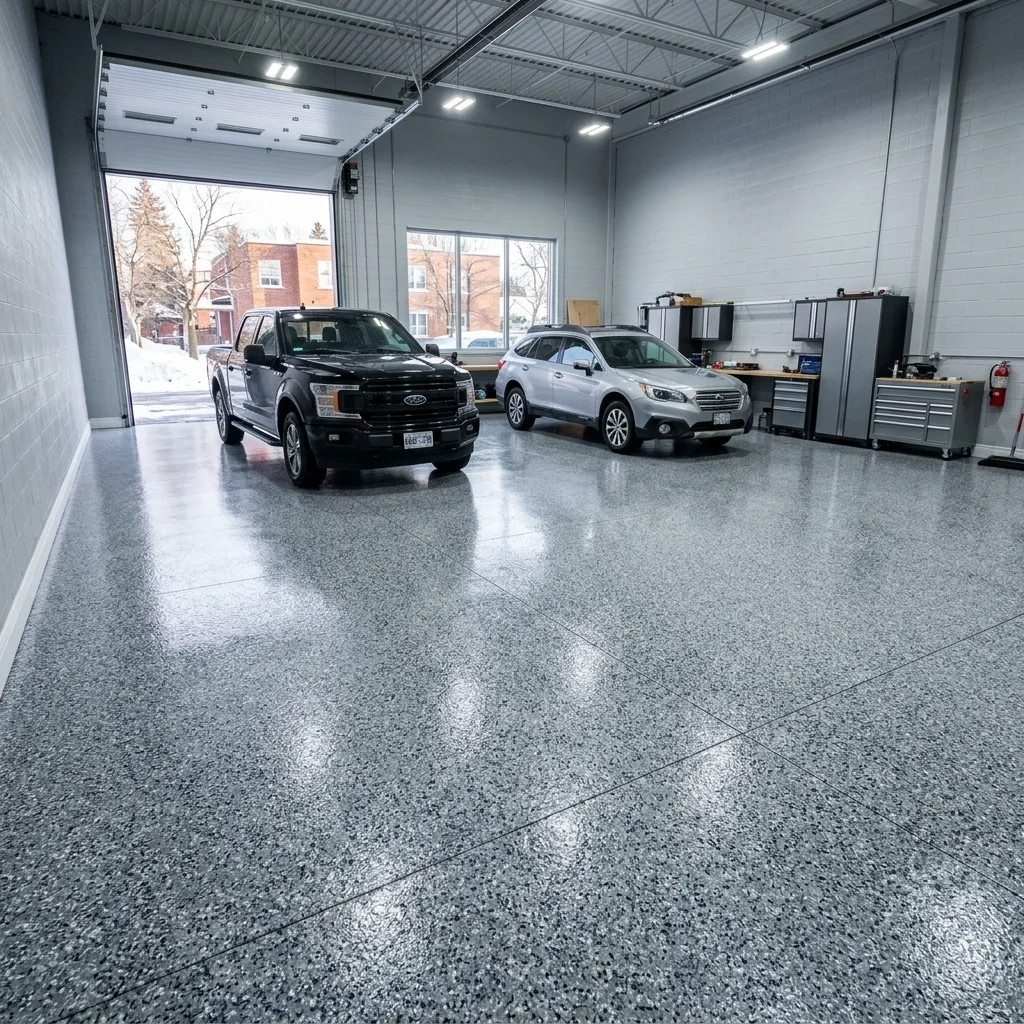
Shot-blasted 100% solid commercial-grade epoxy systems built for manufacturing plants, distribution centres, and 24-hour food operations across Ottawa. Installed pricing runs $10 to $15 per sq ft with off-hours scheduling that returns your floor before the next shift starts. WSIB-certified crews, $2M liability, and full compliance documentation on every project.
Institutional & Medical Epoxy Flooring in Ottawa & the National Capital Region
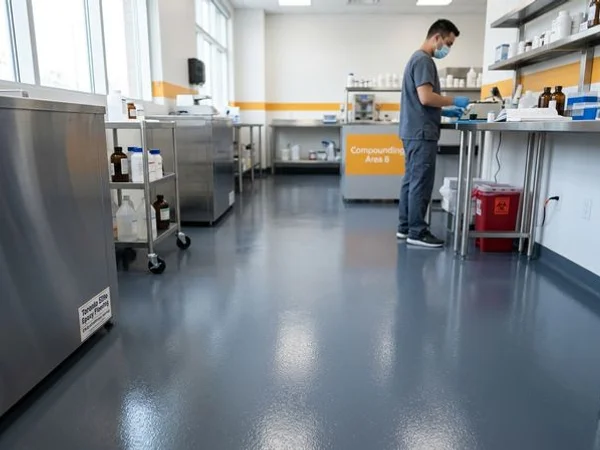
Seamless antimicrobial epoxy with 4 to 6 inch integral wall coving and zero-VOC chemistry for Ottawa hospitals, clinics, schools, and long-term care operators. Installed pricing $6 to $12 per sq ft; section-by-section scheduling keeps the facility running. WSIB-certified crews, $2M liability, and full IPAC Canada compliance paperwork on every project.
Retail Showroom Epoxy Flooring in Ottawa & the National Capital Region
For NCR retail spaces: high-gloss epoxy with RAL-matched pigments, logo inlays, and an aliphatic polyaspartic finish built for sustained retail traffic without scuff or amber shift. Overnight scheduling closes the gap between shift change and opening. From $4 to $13 per sq ft installed, WSIB-certified, $2M liability on every NCR install.
Ready to Book Kitchen Epoxy?
Same-day free on-site assessment. WSIB-certified, $2M liability on every project.